Where to Stay for the Grand Canyon: Williams vs Flagstaff vs Tusayan
Tusayan puts you minutes from the park gate, Williams gives you Route 66 and the train, and Flagstaff has the most beds, food, and side trips. Here is how the three bases really compare.
 Written with Daniel Begay, Southwest canyon-country tour guide & Navajo cultural specialist
Short answer
Stay in Tusayan if you want the shortest possible drive to the South Rim gate, Williams if you want to ride the Grand Canyon Railway and sleep on Route 66, and Flagstaff if you want the widest choice of hotels and restaurants plus an easy Sedona side trip. In-park lodging is the dream option, but it books out many months ahead.
I have driven every road into the South Rim more times than I can count, usually with the heater on before dawn and the windows down by ten. Canyon country is my home ground, and the question friends ask most is never about the canyon itself. It is about where to sleep the night before. Three towns split that answer between them, and they are not interchangeable.
Which town is the best base for the Grand Canyon South Rim?
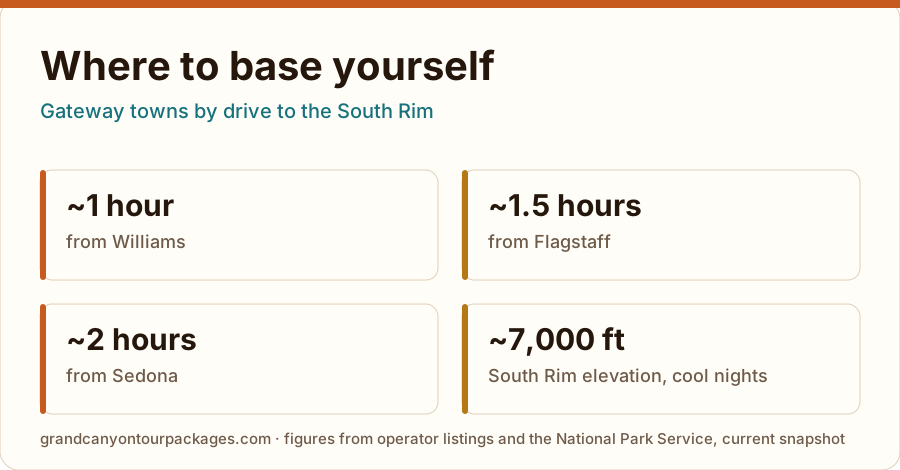
Tusayan is the closest base, sitting minutes from the South Rim entrance, but it is small and the priciest of the three. Williams is about an hour out and home to the Grand Canyon Railway. Flagstaff is roughly ninety minutes away with the biggest choice of hotels, restaurants, and side trips.
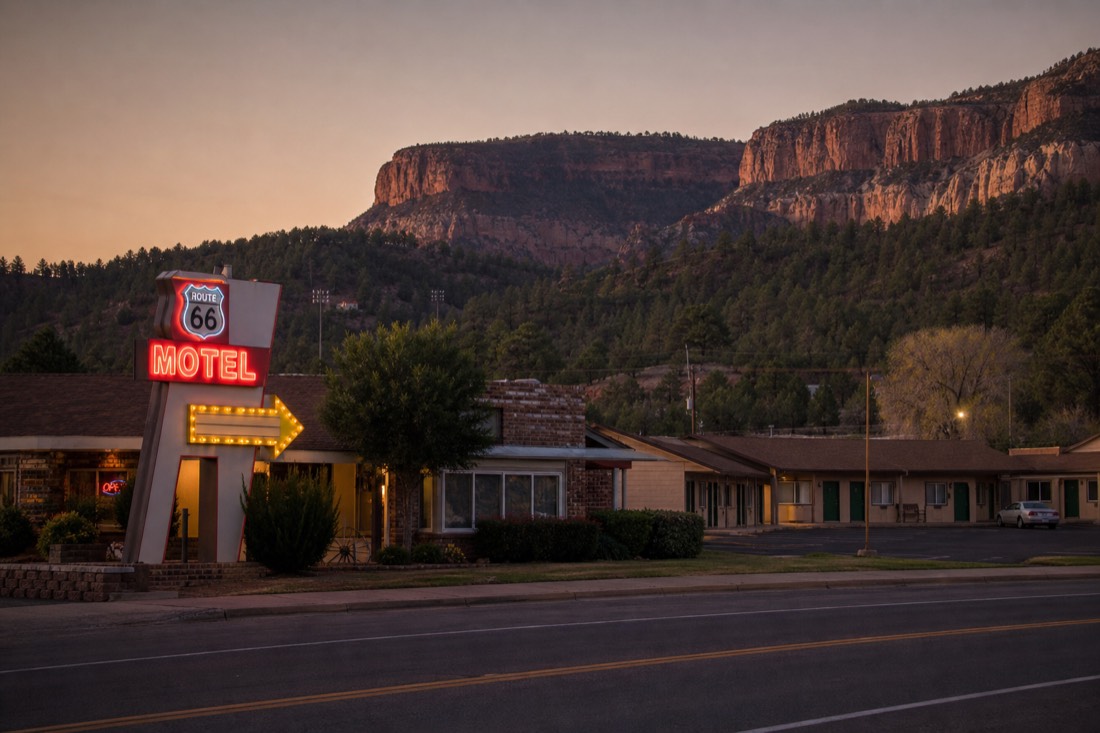
Each town solves a different problem. Tusayan solves distance. Williams solves the drive itself, because the train replaces it. Flagstaff solves choice, since it is a real city with everything that comes with one. None of them is wrong, but picking the wrong one for your trip means either overpaying for convenience you will not use or adding two hours of driving to a day that was already full. Your entrance fee is the same from any of them: the park charges $35 per vehicle at the gate, with the details on the National Park Service fees page.
| Tusayan | Williams | Flagstaff | |
|---|---|---|---|
| Drive to South Rim gate | Minutes | About 1 hour | About 1.5 hours |
| Town size | Tiny, one strip | Small railway town | Biggest of the three |
| Price level | Highest | Middle | Widest range |
| Food and evening options | Limited | Route 66 diners, saloons | Most restaurants and breweries |
| Signature draw | Airport for air tours | Grand Canyon Railway | Sedona about 45 minutes away |
| Best for | Sunrise chasers | Train families | Road trippers wanting choice |
Is Williams a good place to stay for the Grand Canyon?
Yes, and for one specific reason: the Grand Canyon Railway leaves from the Williams depot around 9:45am daily and rolls into the park about 2 hours 15 minutes later, so your car stays parked all day. Add the Route 66 main street and it is the most atmospheric of the three bases.
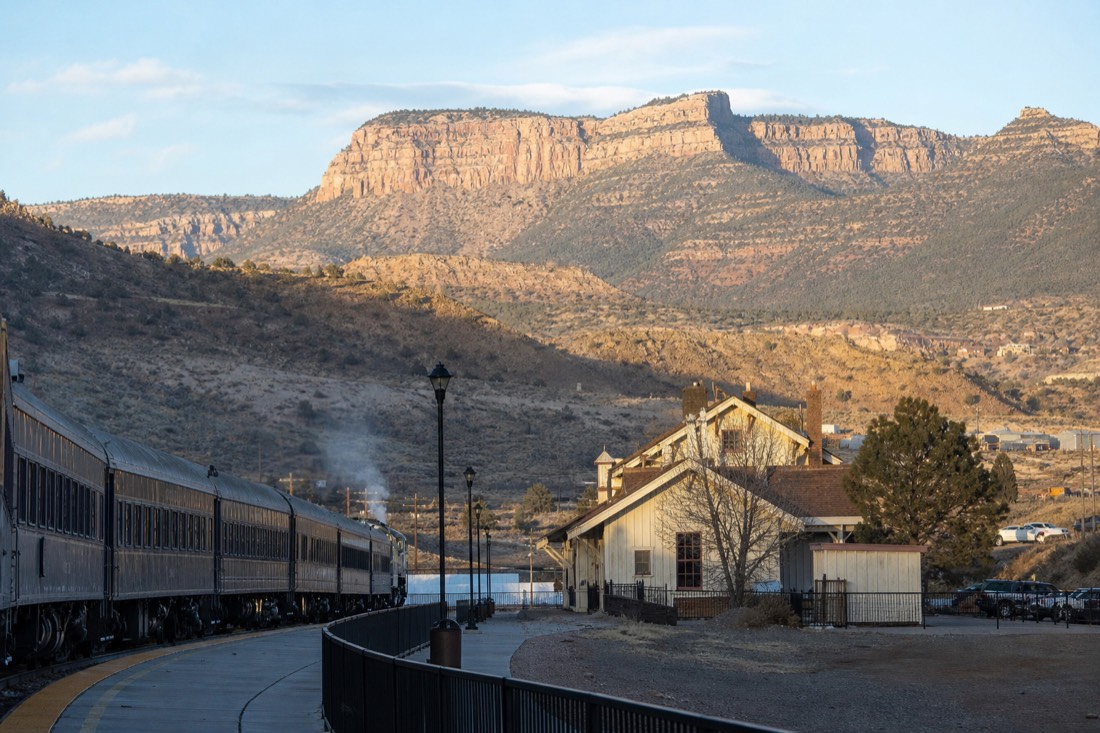
Williams built its identity around two things, the Mother Road and the train, and both still work. The town is walkable in an evening, the neon comes on at dusk, and the depot sits right off the main drag. The railway's own schedule and packages confirm the daily departure, and in the cold months the same rails run the Polar Express, a separate seasonal event from November into January that sells to families all over the state.
The trade-off is honest: an hour is an hour. If you want to be at the rim for first light, Williams means a very early alarm or skipping sunrise entirely. Most train riders do not care, because the whole point is arriving at the historic depot in Grand Canyon Village around midday, walking the rim for a few hours, and riding home. I cover what that day actually feels like in the railway ride-along post, and the train tour page compares the rail options side by side. When you are ready to lock a date, you can check live availability and prices on GetYourGuide for the round trip.
Is it better to stay in Flagstaff or Williams?
Flagstaff wins on almost every count except distance and charm. It has far more hotels across every price bracket, the best food scene in northern Arizona, and Sedona is only about 45 minutes south. Williams wins if the railway is your plan or you want to walk to dinner on Route 66.
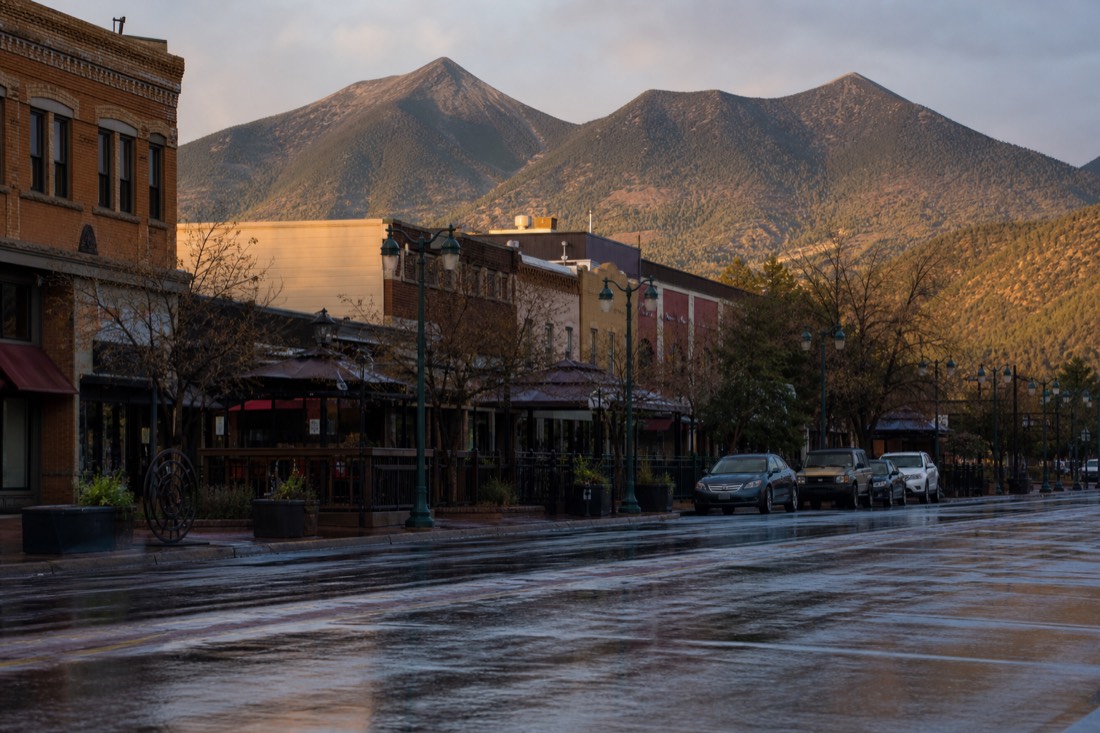
This is the head-to-head people actually agonize over, so here it is straight.
| Williams | Flagstaff | |
|---|---|---|
| Drive to the park | About 1 hour | About 1.5 hours |
| Hotel inventory | Limited, fills in summer | Large, all brackets |
| Evening out | One walkable strip | Full downtown, breweries, live music |
| The train | Departs here | Not from here |
| Side trips | Bearizona, Route 66 stops | Sedona, Walnut Canyon, Lowell Observatory |
| Feel | Nostalgic small town | College mountain city |
My own bias: if the canyon is the only thing on the itinerary, take Williams and the train. If the canyon is one stop on a bigger loop through red rock country, Flagstaff is the smarter hub, because you can point the car at Sedona one day and the South Rim the next without changing hotels. Budget matters too, and the gap between the towns shows up fast when you price the whole trip; the full cost breakdown walks through what each piece really runs.
Should I stay in Grand Canyon Village or Tusayan?
Stay inside the park at Grand Canyon Village if you can get a room, because nothing beats walking to the rim at sunrise. The catch is that in-park lodging books out months ahead. Tusayan is the fallback, minutes from the gate, small, and the most expensive town of the three.
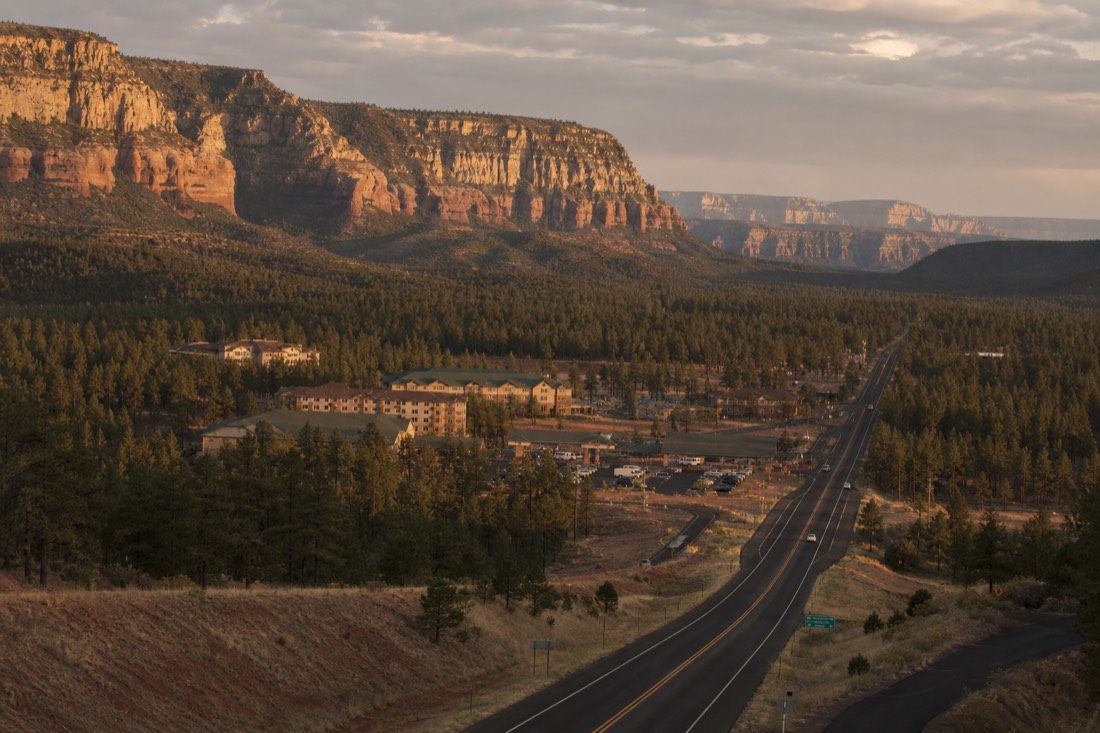
The village lodges are the only beds with the canyon itself in walking range, and travelers know it, which is why the calendar empties so far in advance. If your dates are close and the village shows nothing, do not treat that as a failure. Tusayan exists exactly for this. It is a one-strip town in the pines with hotels, a handful of restaurants, an IMAX, and one asset nobody else has: the Grand Canyon Airport, where the fixed-wing air tours take off. If a flight over the canyon is on your list, sleeping in Tusayan puts the airfield five minutes away, and the aerial tour comparison explains which aircraft suits which traveler.
What Tusayan does not have is atmosphere or bargains. You are paying for the gate, not the town. For a one-night stay built around sunrise at Mather Point, that trade is worth it every time.
How do the drives compare on a sunrise or sunset day?
From Tusayan you can be at the rim in under twenty minutes, so a 5am alarm buys you first light. From Williams budget a full hour and from Flagstaff closer to ninety minutes, which in summer means leaving in the dark to catch a South Rim sunrise.
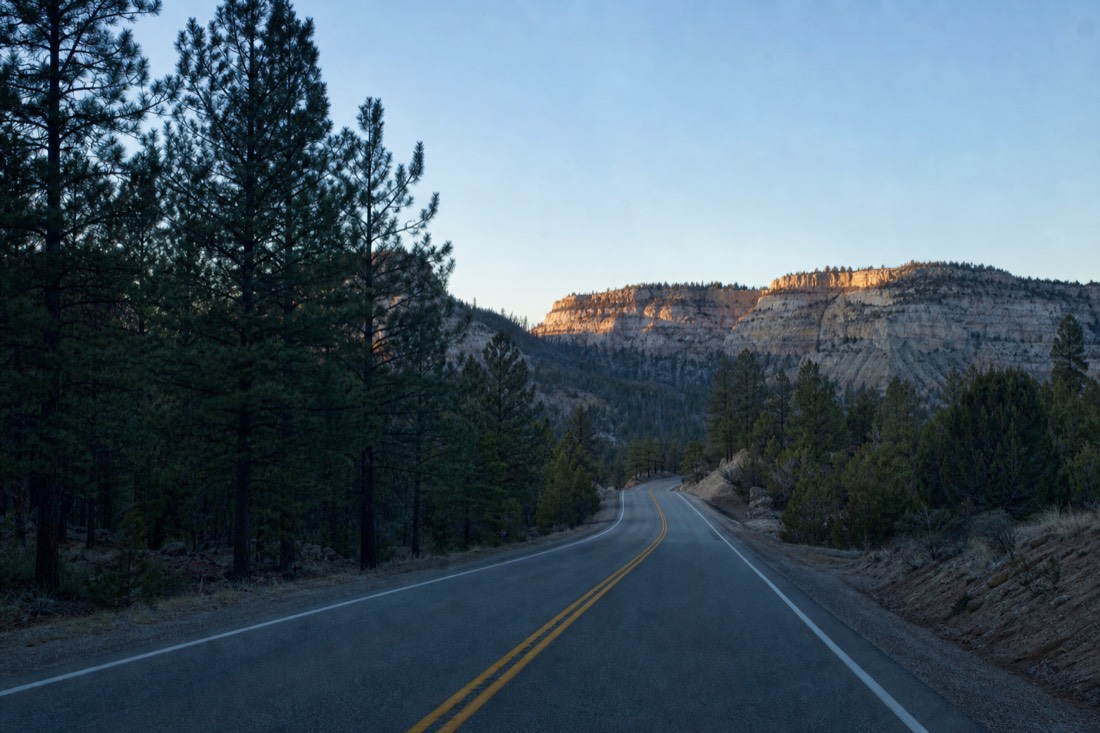
The math is unforgiving. Summer sunrise at the South Rim lands near 5:15am. Work backward from there and you get wake-up calls that look like this.
| Base | Drive to rim | Wake-up for summer sunrise | Realistic sunset return |
|---|---|---|---|
| In-park lodging | Walk or short shuttle | 4:45am | Minutes after dark |
| Tusayan | 15 to 20 minutes | 4:15am | Around 8:30pm |
| Williams | About 1 hour | 3:30am | 9:30pm or later |
| Flagstaff | About 1.5 hours | 3:00am | Close to 10pm |
Nobody enjoys a 3am alarm on vacation. If golden hour is the whole reason you are coming, and for photographers it usually is, that table is the strongest argument for Tusayan or the village. If you would rather sleep and catch the softer late-morning light, the far towns cost you nothing. Season changes the calculus too, since winter sunrise comes almost three hours later; the month-by-month timing guide lays out when each window falls.
Which base fits which kind of traveler?
Families riding the railway should sleep in Williams. Photographers and one-nighters chasing light belong in Tusayan or the village. Road trippers folding Sedona into the loop, and anyone who wants real restaurant choice, will be happiest in Flagstaff.
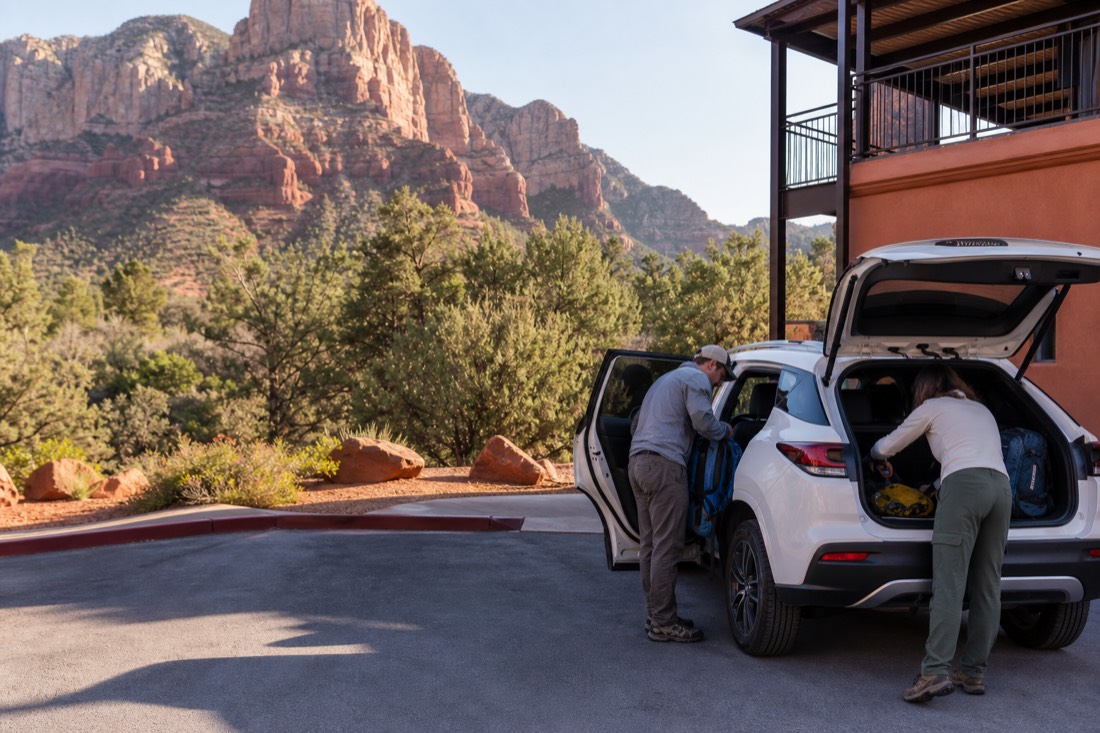
Match the town to the trip, not the other way around. A family with young kids gets more from the train and a pool in Williams than from a pricey Tusayan room they only sleep in. A couple with one night and a camera gets more from Tusayan than from the best restaurant in Flagstaff. And if the South Rim is round one of a Vegas-based trip that also touches the Skywalk side, read the South Rim vs West Rim comparison before booking anything, because those two rims are hours apart and demand different bases entirely. Whichever town you pick, the South Rim tour lineup shows what runs from each side.
Which hotels actually sit in each of these towns?
Tusayan's strip holds The Grand Hotel and a Holiday Inn Express. Williams has the Grand Canyon Railway & Hotel beside the depot and The Lodge on Route 66 downtown. Flagstaff spreads widest, with Little America and the High Country Motor Lodge among the known names. Inside the park you are looking at Yavapai Lodge, El Tovar and Bright Angel Lodge.
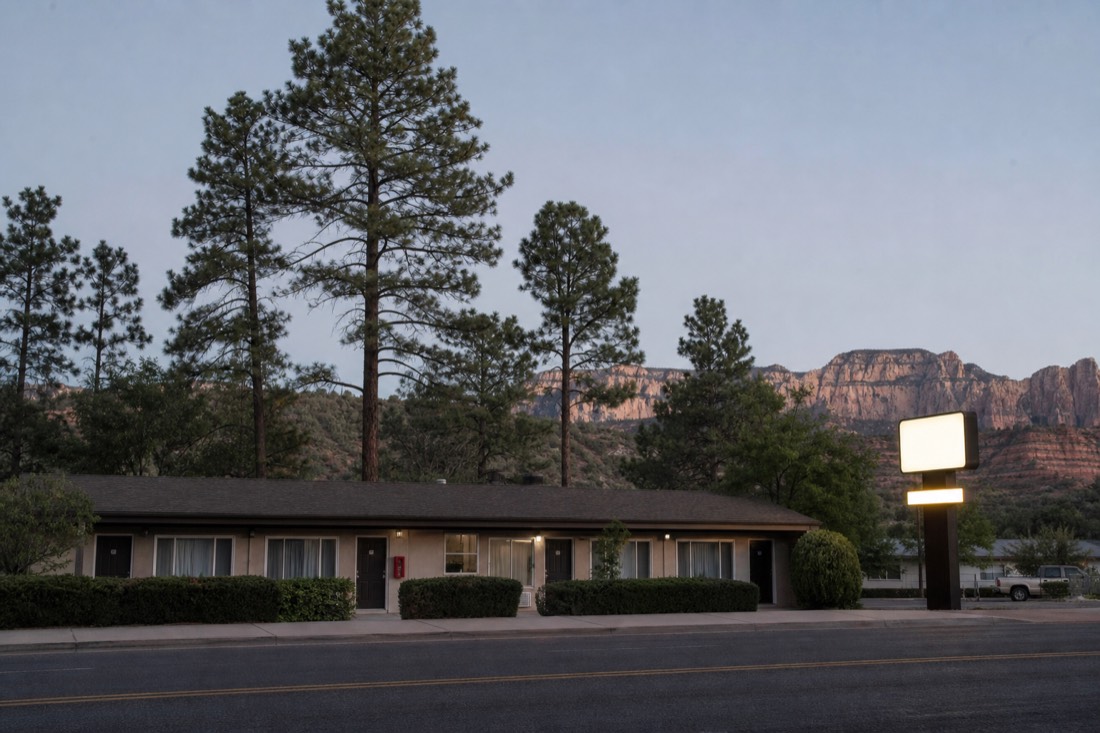
Naming the properties matters more than it sounds, because none of these towns is deep enough to hide a bad choice. In Tusayan the entire inventory lines one highway, so "walkable to town" simply means walkable to everything there is. Williams parks its best-known beds next to the platform, which deletes the morning drive outright if the train is your plan. Flagstaff is the only base where you get to choose a part of town rather than just a building.
The in-park lodges run on a separate system. El Tovar and Bright Angel Lodge are Xanterra properties booked direct rather than through the usual aggregators, and Yavapai Lodge sits back among the trees near the market plaza instead of on the edge. That last detail catches people out every year. Booking "inside the park" does not automatically buy you a canyon view from the pillow, and several in-park rooms look at forest.
| Property | Base | Distance story | Booking route |
|---|---|---|---|
| El Tovar | In-park, Grand Canyon Village | Walk to the rim | Xanterra, direct only |
| Bright Angel Lodge | In-park, Grand Canyon Village | Walk to the rim and the trailhead | Xanterra, direct only |
| Yavapai Lodge | In-park, near the market plaza | Shuttle or a longer walk to the edge | In-park lodging system |
| The Grand Hotel | Tusayan | Minutes from the south entrance | Usual booking channels |
| Holiday Inn Express | Tusayan | Minutes from the south entrance | Usual booking channels |
| Grand Canyon Railway & Hotel | Williams | Beside the depot, about an hour from the gate | Usual channels, rail packages exist |
| The Lodge on Route 66 | Williams | On the main street, about an hour out | Usual booking channels |
| Little America | Flagstaff | About 1.5 hours from the gate | Usual booking channels |
| High Country Motor Lodge | Flagstaff | About 1.5 hours from the gate | Usual booking channels |
What does each town feel like once the sun goes down?
Tusayan is quiet by nine, a short run of lit signs with a lot of black forest around it. Williams keeps neon and bar noise going later along one walkable street. Flagstaff behaves like a small city, with patios busy on a Tuesday and a downtown you can wander without a plan.
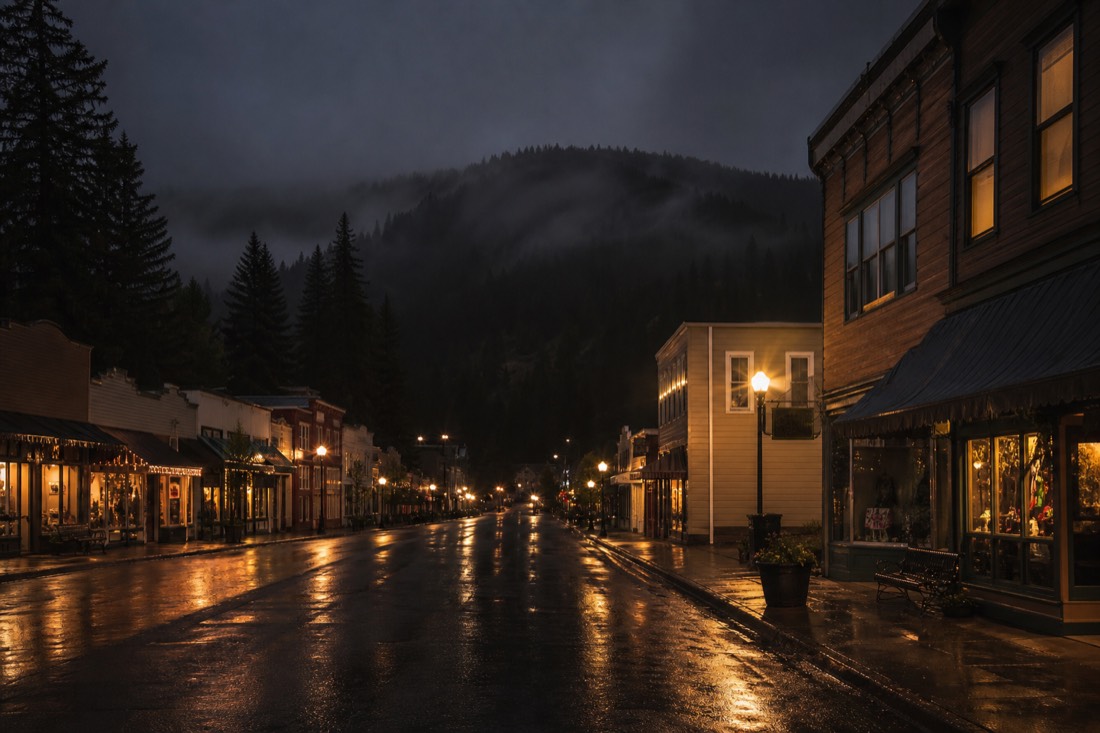
Daniel Begay, who guides across the Colorado Plateau out of Monument Valley, puts it plainly. "People book on drive time and then discover they have nothing to do at seven in the evening. That is a real part of the trip. If your group wants a night out, do not sleep in Tusayan. If your group wants to be asleep by nine because you are up at four, do not sleep in Flagstaff, because you will be up at three instead."
He also flags the thing nobody packs for. "It gets cold up here after dark, even in July. This is high pine country, not Phoenix. I have watched people walk out of a restaurant in Williams in shorts in August and sprint back to the car. And on any of these roads at night, drive like something is going to step out in front of you, because eventually something does."
The atmosphere gap is real and it cuts both ways. Williams sells you a mood: the neon, the saloons, the train whistle. Flagstaff sells you options, which is a different pleasure entirely. Tusayan sells you fifteen minutes of extra sleep before sunrise and asks you not to expect anything else. For a single night built around dawn at the rim, that is a fair deal. For three nights with teenagers, it is a slow evening repeated three times.
How far ahead should you book each base?
Treat in-park lodging as a many-months-ahead booking, and summer dates as close to a year out. Tusayan's small inventory tightens next, then Williams once railway season peaks. Flagstaff holds availability longest, which makes it the reliable base for a late decision.
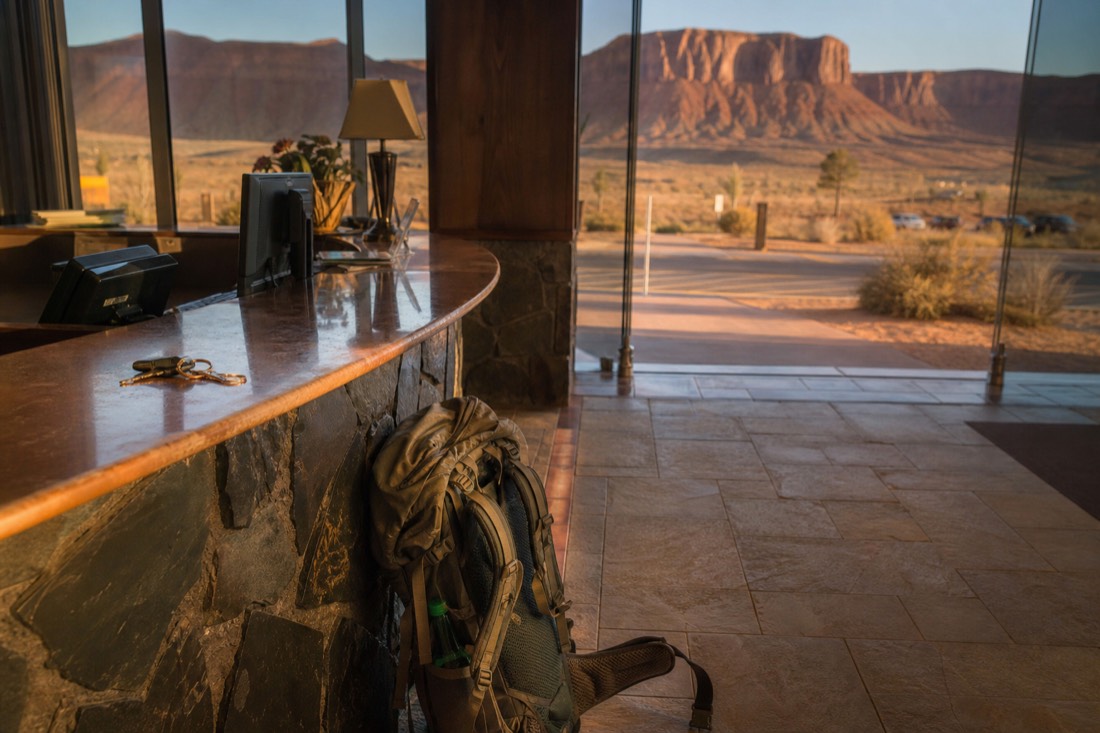
These are planning allowances rather than guarantees. Inventory moves, cancellations appear, and a Tuesday in February behaves nothing like a Saturday in July. Still, the pattern below is stable enough to plan against.
| Season | Months | Pressure on beds | Planning allowance | What else is happening |
|---|---|---|---|---|
| Quiet winter | November to February, holidays excepted | Lightest of the year | A few weeks is usually enough | Snow and ice reach rim roads and trails; Route 64 and 180 can close in storms |
| Holiday weeks | Late December into January | Sharp, short spikes | Book alongside your flights | The Polar Express runs out of Williams from November into January |
| Spring shoulder | April to May | Climbing fast | Two to three months | One of the two sweet spots for weather |
| High summer | June to August | Heaviest | Close to a year for in-park, several months for the towns | Sunrise near 5:15am, severe heat below the rim |
| Monsoon overlap | July into September | Heavy, then easing | Several months | Afternoon storms build and break |
| Fall shoulder | September to October | Strong but workable | Two to three months | The other sweet spot |
If your dates are locked and the village calendar is empty, work outward in that order: Tusayan, then Williams, then Flagstaff. The one thing not to do is hold out for an in-park cancellation while the towns fill behind you.
What do the park fees add on top of your room?
Nothing at the gate depends on where you slept. The South Rim charges $35 per vehicle, $30 per motorcycle, or $20 per person on foot or bike, valid seven days. The America the Beautiful annual pass is $80. From January 1 2026, non-US residents aged 16 and over pay an extra $100 each unless they hold a qualifying pass.
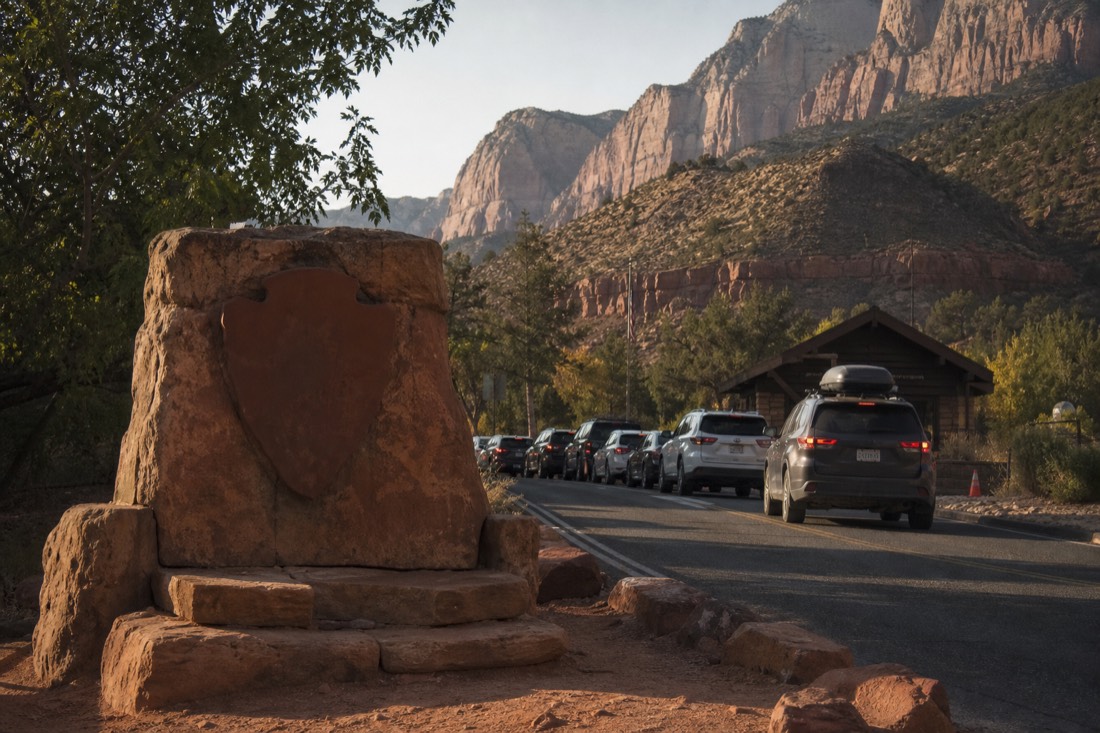
The seven-day validity is the part that changes how you use a base town. Entry is priced per trip, not per day, so a Flagstaff stay that drives up twice pays once. A Tusayan stay that pops in for sunrise and again for sunset pays once too.
| What you pay | Amount | What it covers | When it makes sense |
|---|---|---|---|
| Private vehicle | $35 | Everyone in the car, 7 days | The default for any of these three towns |
| Motorcycle | $30 | The bike and its riders, 7 days | Route 66 riders |
| On foot or bicycle | $20 per person | That person, 7 days | Arriving without a car |
| America the Beautiful annual pass | $80 | A year of federal fee sites | Three or more park entries in twelve months |
| Non-resident annual pass version | $250 | The same access, priced for non-residents | A multi-park US trip |
| Non-resident surcharge, from Jan 1 2026 | $100 per person, age 16+ | Applies on top unless a qualifying pass is held | Budget for it; several tour listings exclude it |
Two wrinkles worth catching before you pay twice. Some packaged trips already fold entry into the ticket, the Williams railway round trip among them, so read the inclusions line first. And a solo traveller arriving on foot pays $20 while a family of four in one car pays $35, which quietly makes the car the cheapest way through the gate. The full trip cost breakdown shows where fees sit against everything else.
Does sleeping this high change how the trip feels?
The South Rim stands at about 7,000 feet, and the towns that serve it sit in the same high pine country. Expect dry air, faster dehydration, a shorter breath on day one, and nights that stay genuinely cold long after the desert reputation suggests otherwise.
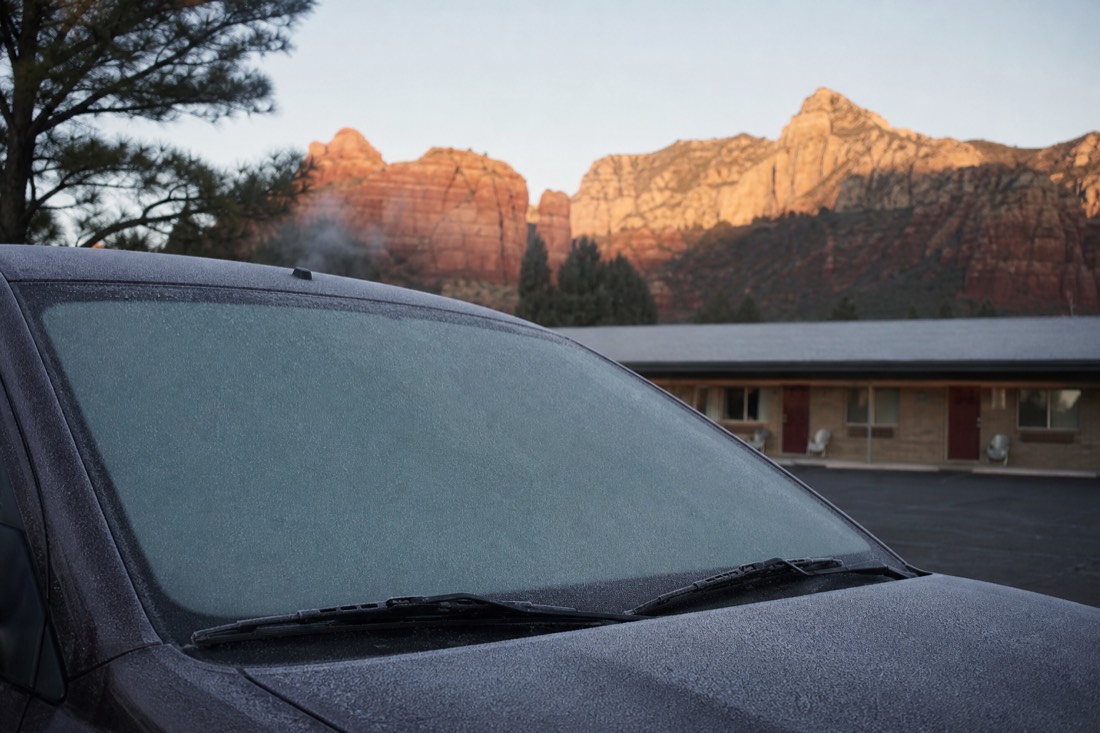
Daniel Begay has watched this catch out more visitors than any road hazard. "People fly into Phoenix, drive up, and think the only adjustment is a jacket. Then they wonder why the first afternoon flattened them. It is not the walking. It is the altitude plus the dryness, and it hits hardest on your first night, which is exactly the night you were planning to sleep well before a four-thirty alarm."
His advice is unglamorous. Drink more water than you think you need on the drive up, not once you arrive. Go easy on alcohol the first evening, because it lands differently up here. And if you can, arrive a day before the canyon day rather than the morning of, so your body gets a night to catch up.
There is a planning consequence too. If your itinerary runs Phoenix to South Rim to Sedona in three days, you are climbing several thousand feet and dropping back down inside 72 hours. Choosing Flagstaff over Tusayan will not change that arc, but choosing a base you can reach by early evening will, because the difference between checking in at six and checking in at ten is the difference between a rested sunrise and a miserable one.
Who should skip all three towns entirely?
Anyone whose canyon day is the West Rim should sleep in Las Vegas, roughly two hours out, not in Arizona. Travellers coming from Sedona or Phoenix can day-trip without relocating. And if the route continues east toward Page or Monument Valley, sleep on that side rather than backtracking.
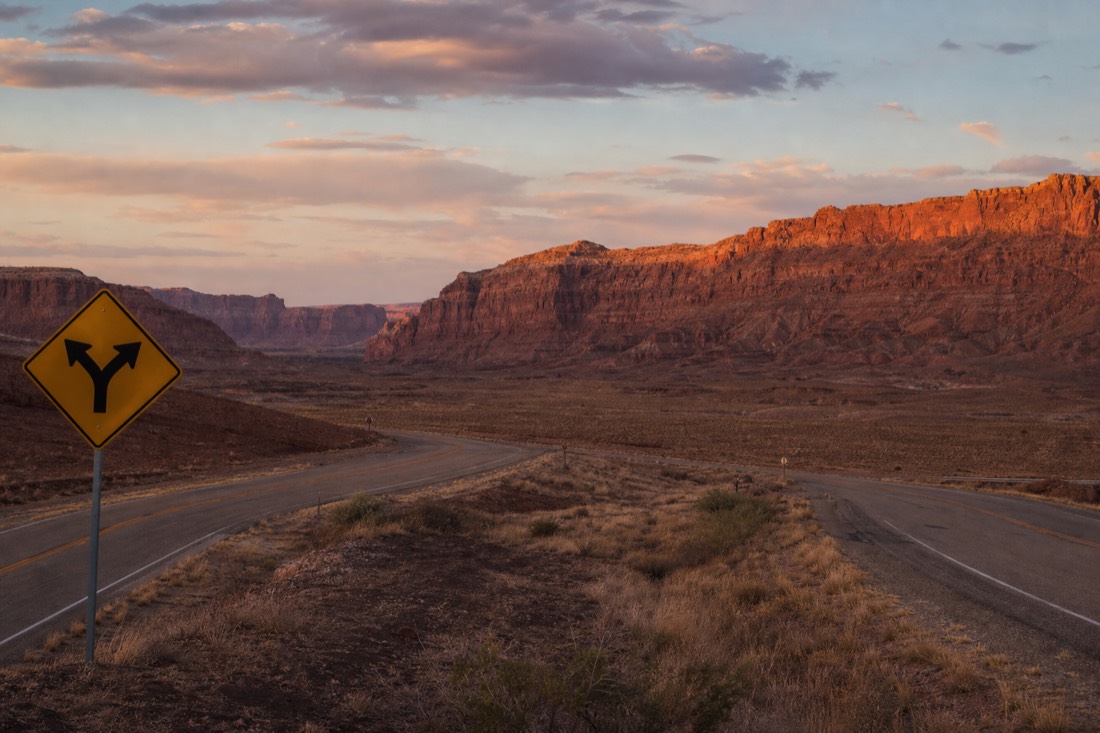
The three-town question assumes the South Rim is the target. Plenty of trips it is not, and forcing an Arizona base onto a Vegas itinerary produces the worst version of both. Grand Canyon West sits on Hualapai tribal land about two hours from the Strip with its own admission, and the South Rim versus West Rim comparison sorts out which one your trip is actually pointed at.
| Where you are starting | Drive to the South Rim | Better move |
|---|---|---|
| Las Vegas | About 4 to 4.5 hours | Keep the Vegas base and take the West Rim, about 2 hours out |
| Phoenix | About 3.5 to 4 hours | Long day trip works, or break the drive in Flagstaff |
| Sedona | About 2 hours | Day trip; there is no need to change hotels |
| Flagstaff | About 1.5 hours | Already one of the three bases |
| Williams | About 1 hour | Already one of the three bases |
| Tusayan | Minutes | Already one of the three bases |
One more group belongs on this list: anyone continuing east after the canyon. The Desert View road leaves the park at the east entrance and points at Page and Monument Valley, so a night booked back west in Williams means driving the same 50 miles twice. Sleep in the direction you are heading.
Can I stay in Las Vegas and visit the South Rim?
You can, but it is a very long day, roughly 275 miles each way. Vegas works far better as a base for Grand Canyon West. If the South Rim is the goal, sleep in one of these three towns and save yourself ten hours of round-trip driving.
Do I need a car if I stay in Williams?
Not necessarily. The railway delivers you into Grand Canyon Village, and free park shuttles cover the main viewpoints from there. You will want a car for everything else in the region, but the canyon day itself can be car-free.
How far ahead should I book in-park lodging?
Many months, and for summer dates the popular rooms go close to a year out. If the village calendar is empty for your dates, check Tusayan first and Williams second.
Make the day fit your trip
Check your date before arranging the rest
Initial editorial suggestion. Use the optional choices to narrow this article’s shortlist; confirm individual eligibility with the operator.
Grand Canyon Railway round trip
Historic rail travel from Williams to Grand Canyon Village with a same-day return.
About eight hours overall; own arrival at Williams Depot. Choose coach or first class. Meals and hotel pickup excluded. Under-twos ride on a lap. Arrange any boarding assistance in advance; confirm current park charges.
Compare options and tailor this choice
Why choose an alternative?
Grand Canyon Railway round trip · Williams · 8 hours to allow
Historic rail travel from Williams to Grand Canyon Village with a same-day return. About eight hours overall; own arrival at Williams Depot. Choose coach or first class. Meals and hotel pickup excluded. Under-twos ride on a lap. Arrange any boarding assistance in advance; confirm current park charges.
South Rim sunset safari · Tusayan · 3 hours to allow
An off-road forest approach and South Rim viewpoints, finishing at Grandview Point at sunset. Meet at 408 AZ-64 in Tusayan; English guide and water included. No hotel pickup. Nonresident park charges and tips extra. Bumpy vehicle; not recommended during pregnancy or for spinal or cardiovascular conditions. Minimum booking: two guests.
Sedona or Flagstaff South Rim day trip · Sedona / Flagstaff · 11 hours to allow
A small-group day linking volcanic country, Cameron Trading Post and East and South Rim viewpoints. English guide and hotel return: about 11 hours from Sedona or 9 from Flagstaff. Hotel details required 72 hours ahead. Bring your own car/booster seat for children eight and under. Meals, tips and nonresident fees extra; moderate fitness required.
Las Vegas West Rim coach tour · Las Vegas · 11 hours to allow
Hotel transport, an IHOP breakfast and canyon time without driving the desert return yourself. Selected Las Vegas hotel pickup; English guide, breakfast and water included. Skywalk and lunch depend on the option. Plan around 11 hours; confirm mobility arrangements with the operator.
Compare your own quotes
Enter totals for the same party and inclusions, in one currency. Include transport, entry, meals and extras in both quotes.
Viator scheduled departures
Select a date to see the published schedule. Seats, final price and booking are confirmed on Viator.
Affiliate booking link: we may earn a commission at no extra cost to you.