The Best Time to Visit the Grand Canyon in 2026 (Month by Month)
Spring and fall give you mild rim weather and steady skies. Summer brings crowds and afternoon lightning, winter brings snow and empty overlooks. Here is how each month really behaves at 7,000 feet.
 Written with Daniel Begay, Southwest canyon-country tour guide & Navajo cultural specialist
Short answer
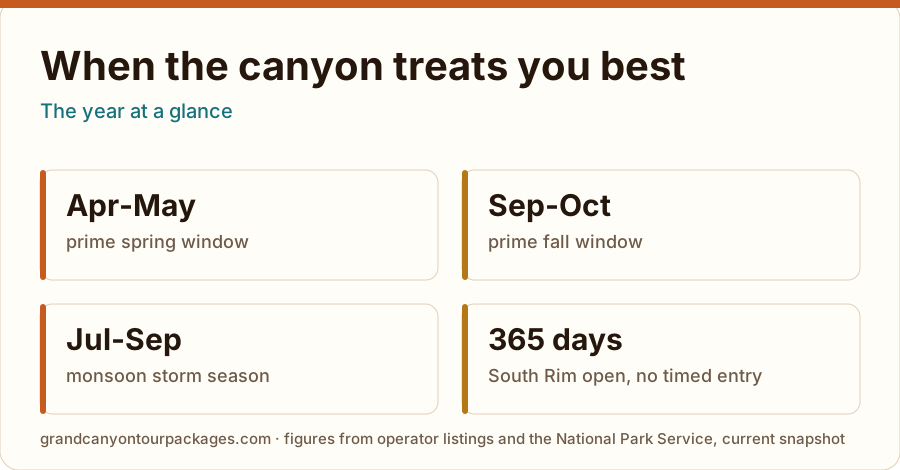
Spring (April to May) and fall (September to October) are the best times to visit, with mild rim temperatures and manageable crowds. Summer is peak season with afternoon monsoon storms from July into September, and winter at the South Rim is cold, quiet, and the cheapest stretch of the year.
People picture the Grand Canyon as desert, so they pack for Phoenix. Then they step out of the car at the South Rim in April and the wind cuts straight through a t-shirt. I have lived on the Colorado Plateau my whole life, out by Monument Valley, and I drive these highways in every season. The single most useful thing I can tell you about timing a canyon trip is this: the South Rim is high country. Almost everything else follows from that.
When is the best time of year to visit the Grand Canyon?
Spring (April and May) and fall (September and October) are the sweet spots: mild days at the rim, steadier skies, and crowds you can work around. June through August is peak season with afternoon monsoon storms from July on, while winter is cold, quiet, and cheap. The South Rim stays open all year.
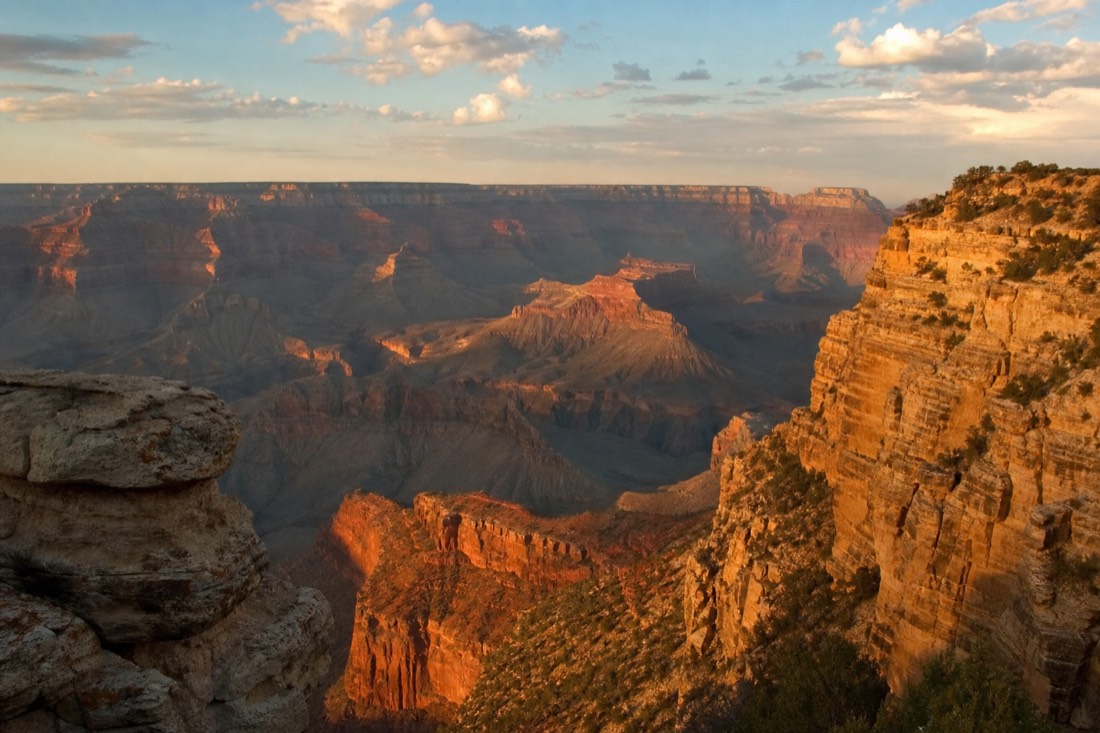
Every month gives you the canyon. What changes is the light, the temperature swing, and how many people are standing at Mather Point with you. If your dates are flexible, aim for the shoulder weeks on either side of summer and skip the parking scramble that defines July.
Here is the year at a glance. I give temperature as a feel rather than a number, because a plateau afternoon can swing thirty degrees from dawn to dusk.
| Month | How it feels at the South Rim | Crowds | What to know |
|---|---|---|---|
| January | Cold, snow possible | Very quiet | Lowest room rates, icy rim mornings |
| February | Cold, thawing midday | Quiet | Clear air, long shadows, cheap rooms |
| March | Cool, windy | Building | Spring break bump, dust on windy days |
| April | Mild, jacket mornings | Busy | One of the two best windows |
| May | Warm, pleasant | Busy | Long days, reliable skies |
| June | Hot below the rim, warm on it | Peak begins | Driest month, intense sun |
| July | Warm rim, brutal inner canyon | Peak | Monsoon storms most afternoons |
| August | Warm, humid afternoons | Peak | Monsoon continues, dramatic skies |
| September | Warm, easing | Busy | Storms fade, excellent light |
| October | Mild, crisp nights | Moderate | The other best window |
| November | Cold, quiet | Quiet | Rates drop, first snows possible |
| December | Cold, short days | Quiet, holiday spike | Snow on red rock, holiday weeks book out |
Why is the South Rim colder than people expect?
The South Rim sits at roughly 7,000 feet on the Colorado Plateau, so it is high country, not low desert. Winters are genuinely cold with real snow, spring and fall nights flirt with freezing, and summer at the rim stays pleasant even while the inner canyon turns dangerous with heat.
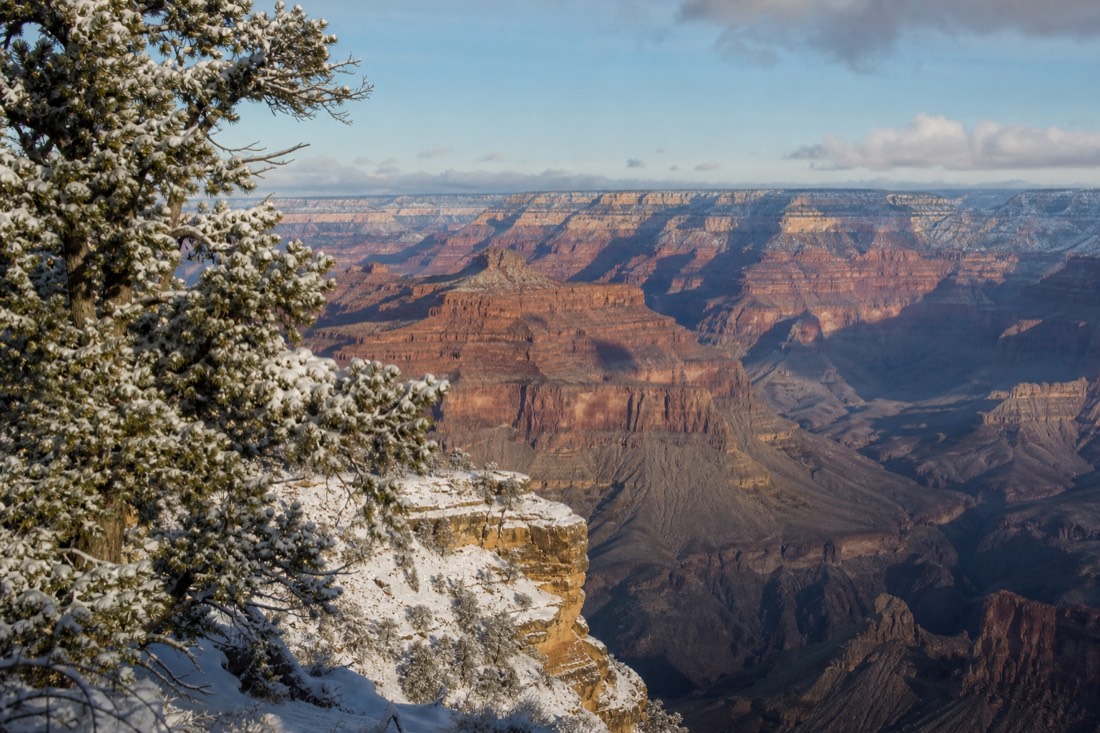
The canyon is a mile-deep slice through the plateau, and that vertical drop creates two climates stacked on top of each other. The rock layers the canyon exposes sit under a rim of ponderosa forest, not cactus. So while Phantom Ranch at the bottom can hit dangerous summer highs, the rim above it stays twenty-plus degrees cooler, and in January the same rim gets snowplows.
Pack for the elevation, not the state. A down layer earns its space in your bag from October through April. Even in June I keep a jacket in the truck for sunrise, because the plateau lets its heat go the moment the sun does.
What is summer really like at the Grand Canyon?
Summer means peak crowds from June through August and monsoon thunderstorms most afternoons from July into September. The rim itself stays comfortable, but heat below the rim is brutal and the West Rim, which sits much lower, cooks. Plan mornings for the views and treat afternoons as flexible.
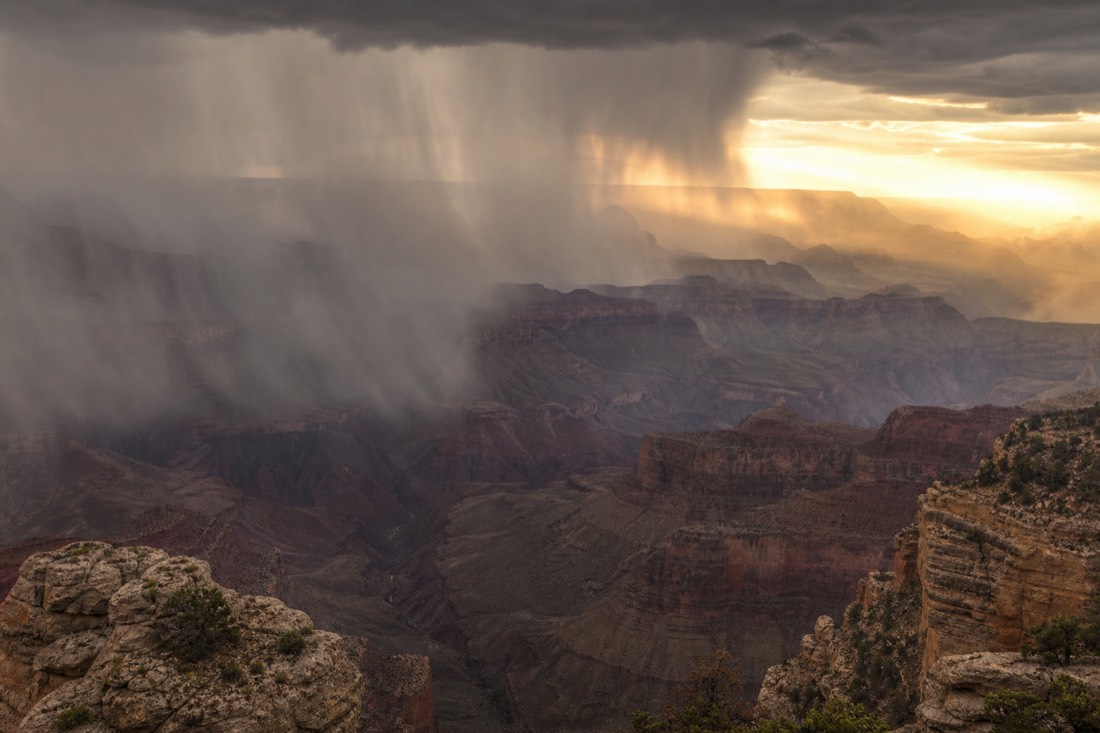
I grew up with the monsoon and I still stop to watch it. Moisture builds through a July day, and by two or three in the afternoon the cells break loose: lightning, a hard burst of rain, then clear air and the best light of the month. It is beautiful and it is serious. Lightning kills at exposed overlooks, so when a cell rolls in, get inside a building or a vehicle and wait it out. The storms usually pass within the hour.
Two more summer truths. First, whatever the rim is doing, double the punishment below it; rangers spend every summer pulling overheated hikers off the trails. Second, the West Rim near Las Vegas sits far lower than the South Rim, so a summer Skywalk day is a genuinely hot one. Water, hat, early start.
Is winter a good time to visit the Grand Canyon?
Yes, if you dress for it. The South Rim stays open year-round, the overlooks empty out, and November through February (outside the holidays) is the cheapest stretch, with room rates well below summer. Snow on the red rock is spectacular. Watch for storm closures on Routes 64 and 180.
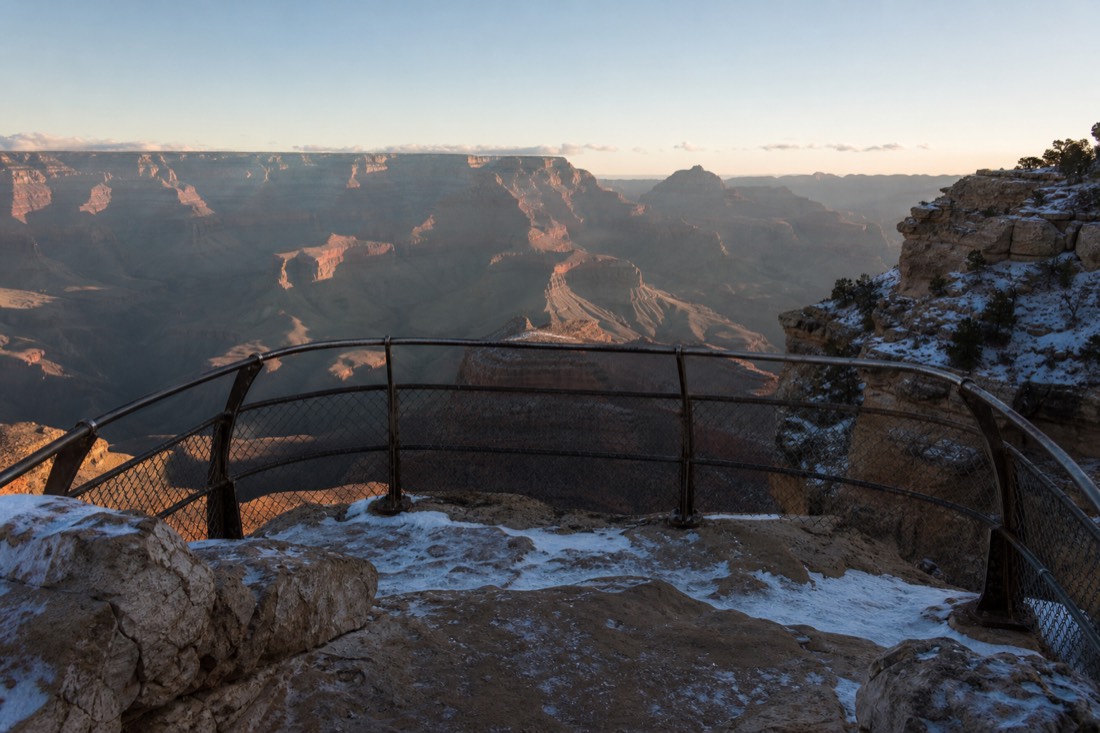
Winter is my recommendation for anyone who cares more about the canyon than the weather. You share sunrise with a handful of photographers instead of a crowd. Lodging in Tusayan and Williams drops to its yearly low, which matters once you start adding up what a canyon trip really costs.
The trade-offs are real but manageable. Days are short, rim mornings are bitter, and a winter storm can temporarily close Highway 64 from Williams or Highway 180 from Flagstaff until the plows get through. Build one flex day into a winter itinerary and carry chains or good tires if you are driving yourself. Winter tours put those road decisions on a professional driver, which in January is worth something.
Which rim should you pick for your season?
The South Rim is the classic canyon and works year-round. The West Rim near Las Vegas is lower, hotter, and best in the cooler months. Select North Rim areas reopened on May 15, 2026. There is no in-park overnight lodging; the North Kaibab Trail is closed following August flooding. Check current NPS access before travel.
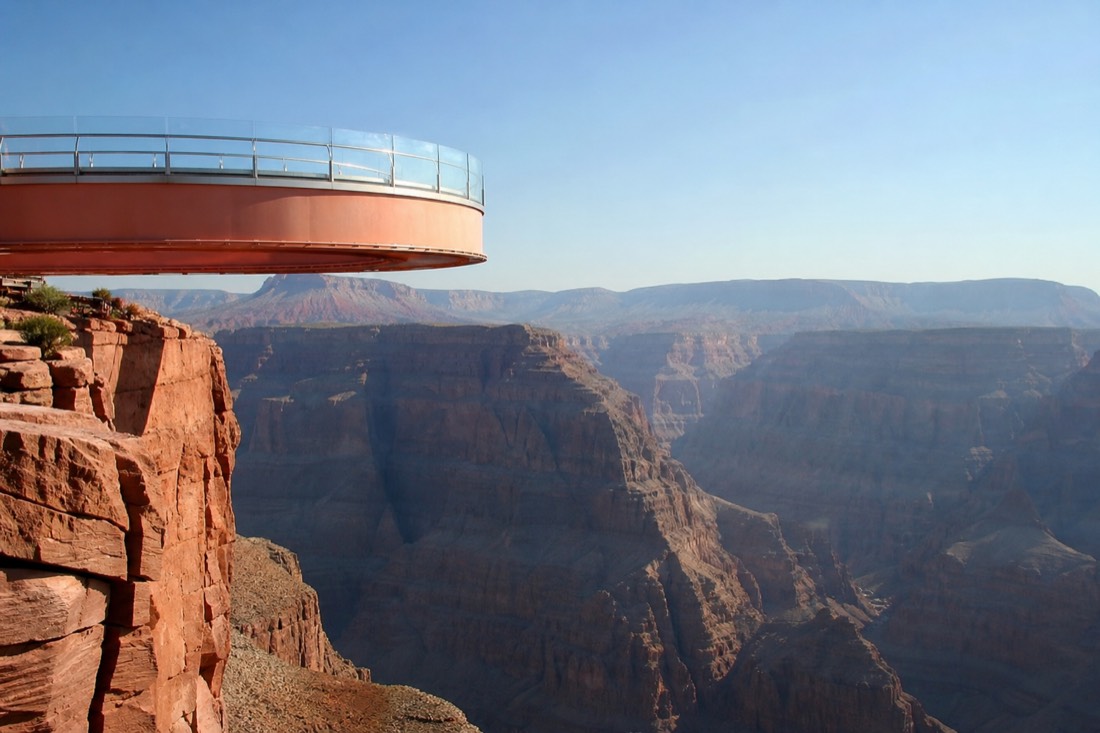
The three developed rims are far enough apart that your season should help pick between them.
| Rim | Elevation & climate | Best months | Season notes |
|---|---|---|---|
| South Rim | ~7,000 ft, four real seasons | Apr-May, Sep-Oct | Open year-round; snow and road delays possible in winter |
| West Rim (Skywalk) | Much lower, true desert heat | Oct-Apr | Summer days are very hot; closest to Las Vegas |
| North Rim | Highest of the three | Seasonal access | Select areas open; confirm access and closures |
The North Rim closure changed a lot of 2026 plans; I wrote up what the fire left behind separately. For most first-timers the choice is really South versus West, and season is a fair tiebreaker: summer favors the high South Rim, deep winter can favor the milder West. If you are starting in Vegas, compare the tours from Las Vegas and check live availability and prices on GetYourGuide for the Grand Canyon and Hoover Dam day trip with Skywalk options.
Which month matches your kind of trip?
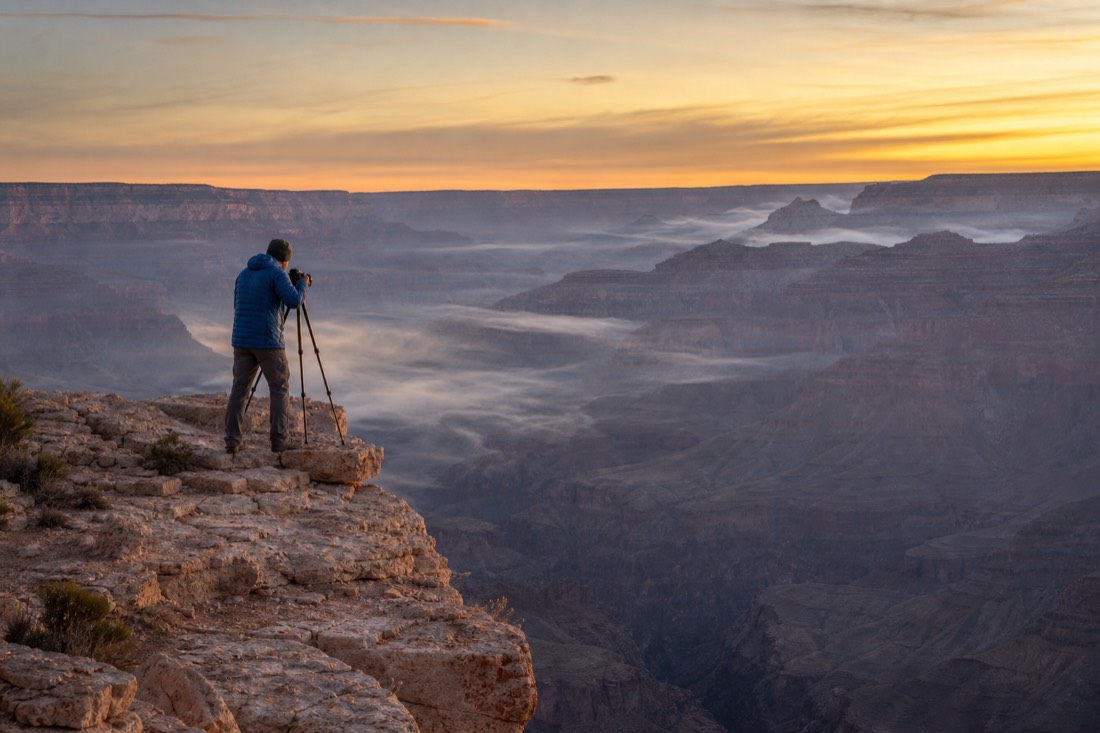
Match the month to the goal. For the lowest prices, go November through February and skip the holiday weeks. For hiking below the rim, choose April, May, September, or October. For storm photography, July and August deliver. For solitude and snow, deep winter is unbeatable.
| Your goal | Best window | Why |
|---|---|---|
| Lowest room rates | Nov-Feb, excluding holidays | Winter shoulder is when prices drop hardest |
| Hiking below the rim | Apr-May, Sep-Oct | Inner-canyon heat is survivable, trails clear |
| Fewer people | Nov-Feb, midweek | Empty overlooks, easy parking |
| Dramatic skies | Jul-Aug | Monsoon cells, rainbows, shafts of light |
| Snow on red rock | Dec-Feb | Rare, brief, worth chasing |
| First visit, easiest all round | Apr-May, Sep-Oct | Mild, long days, everything open |
One planning note that surprises people: there is no timed-entry reservation at the South Rim, so the month choice is about comfort and cost, never permits.
What do the shoulder weeks actually feel like?
Late April and early October are the weeks people mean by shoulder season, and they behave nothing alike. April still carries winter wind and freezing dawns under warm afternoons. October holds heat at midday, then drops hard once the sun goes. Both hand you clear skies and overlooks you can stand at.
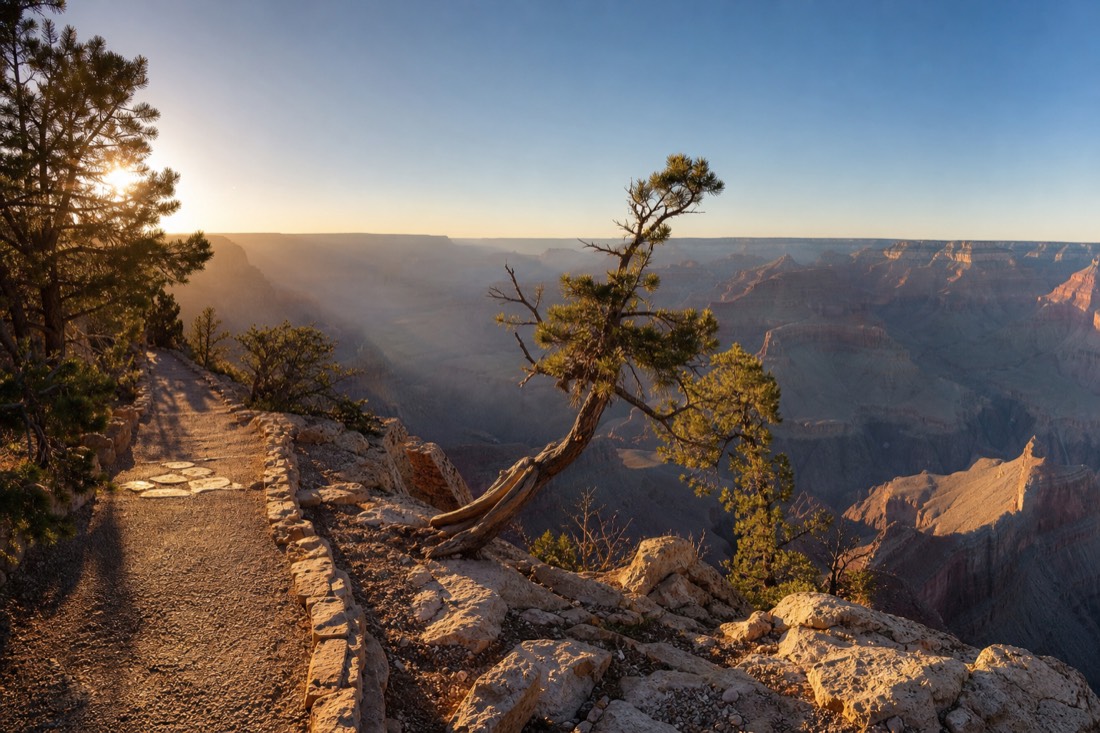
The word shoulder flattens two very different experiences into one recommendation. Standing on the rim tells you otherwise. April is a month still arriving. The plateau has not finished letting go of winter, so a dawn in the low thirties gives way to a pleasant afternoon, and then the wind picks up and pushes dust across the highways east of the park. Bring the jacket you would bring to a mountain, not the one you would bring to Phoenix.
May settles down. The wind eases, the days stretch out, and evening light lasts long enough that you can walk a stretch of rim after dinner. That combination is why May fills up faster than April even though both sit in the same bracket.
Then the autumn half. September is the month monsoon lets go of, usually in its second or third week, and the storms leave behind the cleanest air of the year. Late September and the first two weeks of October are, to my eye, the single best fortnight on the calendar: warm noon, cold stars, and the crowd already thinning because American school terms have started. By late October the nights are properly cold and the first snow is a real possibility.
The practical upshot is simple. If you want warm evenings, lean autumn. If you want long daylight and can dress for the wind, lean spring. Either way you avoid both the July parking scramble and the January road closures, and the viewpoint choices open up because you are not fighting anyone for railing space.
How do you plan a day around a monsoon afternoon?
Load the day front to back. Monsoon cells build through the morning and break in the afternoon from July into September, so put viewpoints, rim walking and any below-rim taste before noon. Keep the afternoon flexible and treat a scenic flight as a slot that may move rather than a fixed appointment.
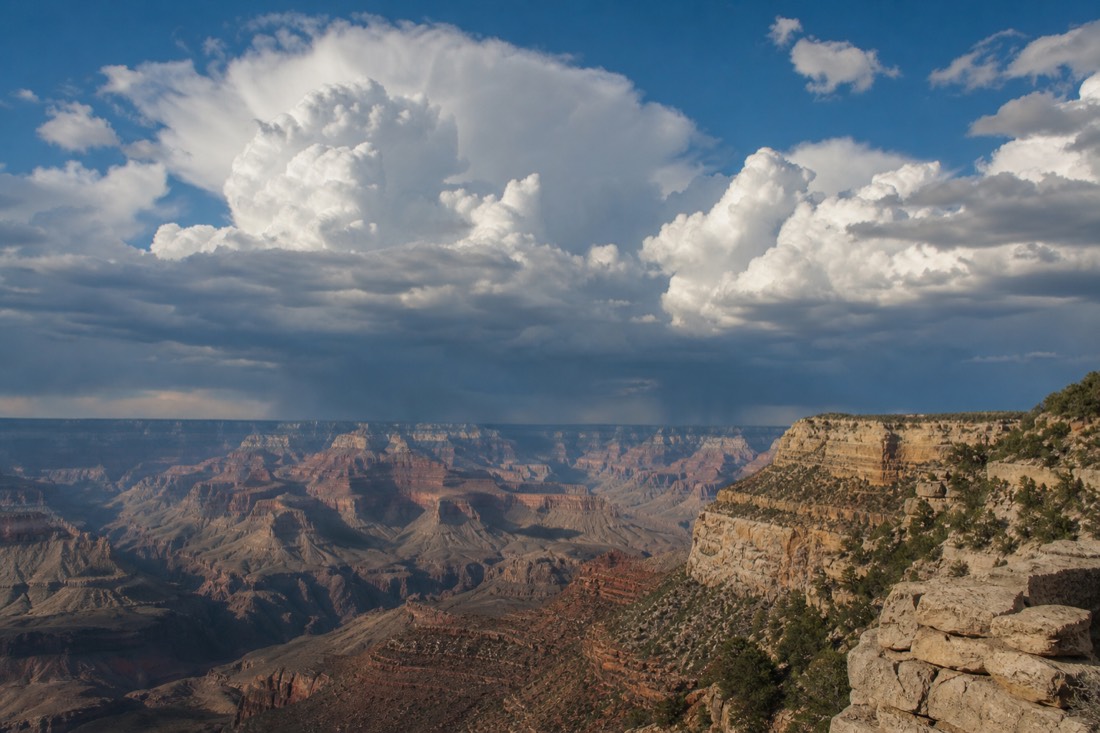
Monsoon is a daily rhythm, not a washout. Mornings in July are frequently glorious. You watch the towers build over the plateau through late morning, and somewhere between one and four in the afternoon the cell you have been watching lets go. It rains hard for a while. Then it stops, and the light that follows is the best light the canyon gets all year.
Lightning is the part to take seriously. An overlook railing is an exposed place to stand on a high plateau, and the safe move when a cell approaches is a building or a hard-topped vehicle, not a tree and not the shelter of a rock overhang. Wait it out. It rarely lasts an hour.
Air tours feel this most. Operators reschedule when cells sit on the corridor, so a midday flight booked in August may shift, and free-cancellation windows matter more in those months than in April.
| Part of the day | What to schedule in monsoon months | Allowance to build in |
|---|---|---|
| Dawn to 10am | Sunrise viewpoints, rim walking, a short below-rim taste | The clearest sky of the day, use it |
| 10am to noon | Museums, village, early lunch, driving legs | Watch the towers stack up over the plateau |
| Noon to 5pm | Keep it flexible: indoor stops, vehicle time, waiting out a cell | Storms usually clear inside an hour |
| After the cell passes | Photography, rainbows, shafts through the gorge | Wet roads, washed air, the best light of the month |
| Any flight booking | Assume the slot can move | Check the cancellation terms before you book |
What changes in the packing list from season to season?
The rim sits near 7,000 feet, so pack for high country rather than desert. A warm layer earns its space in all twelve months. Winter adds traction and real insulation, spring adds a wind shell, and summer adds sun cover plus far more water than most visitors think to carry.
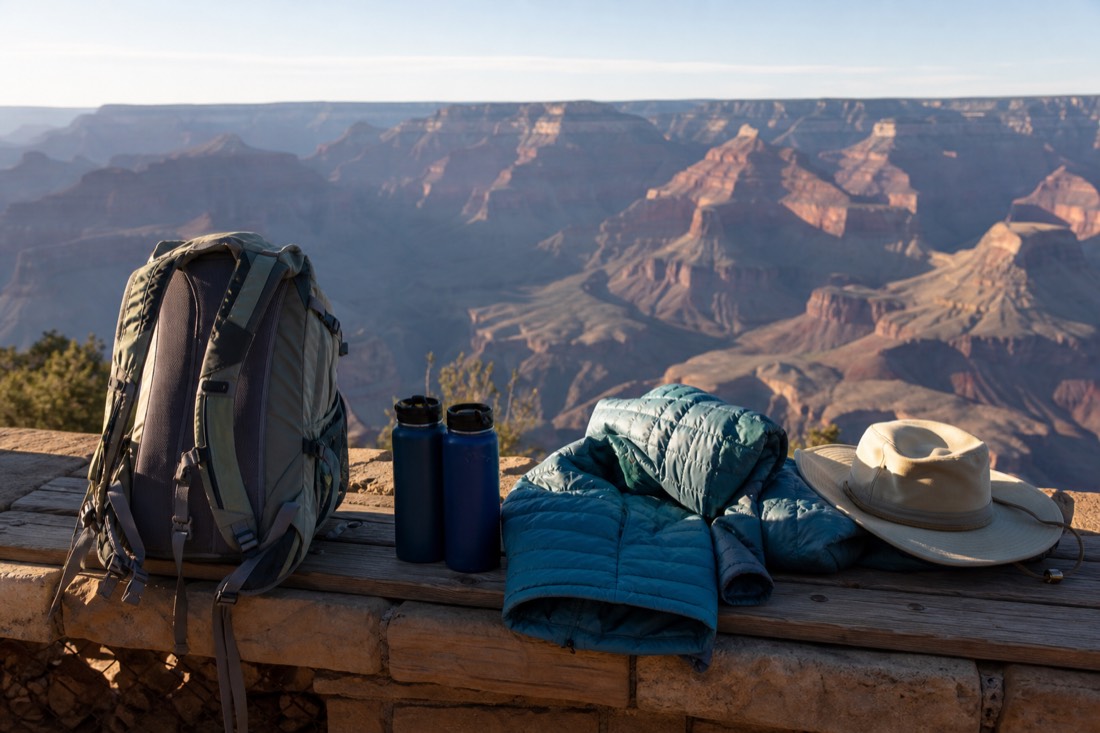
Almost every uncomfortable visitor I pass on the rim is uncomfortable for the same reason: they packed for the state instead of the elevation. Arizona is a big place, and the difference between Phoenix and the South Rim in February is the difference between a shirt and a parka.
| Item | Months it earns its space | Why |
|---|---|---|
| Warm mid layer | All twelve | Rim mornings run cold even in July |
| Insulated jacket, hat, gloves | October to April | Freezing dawns and real snow on the rim |
| Traction for icy paths | December to February | Paved rim paths glaze overnight and thaw late |
| Wind shell | March to May | Spring wind carries dust and cuts through fleece |
| Rain layer | July into September | Afternoon cells arrive faster than you can walk back |
| Sun hat and high-SPF cover | May to September | Thin air at altitude, and overlooks have no shade |
| More water than feels necessary | Year-round, doubled in summer | Dry air pulls moisture out of you quietly |
Two extras worth a line. Winter driving on Route 64 from Williams or Route 180 from Flagstaff can meet snow, so decent tires or chains belong in the plan rather than in hope. And in any month, a headlamp turns a pre-dawn walk to the railing from a fumble into the best half hour of the trip.
What do I see visitors get wrong about canyon weather?
The recurring mistakes are all versions of the same error: treating the South Rim as desert. Underdressed arrivals in April, ignored altitude on day one, photographs taken from an exposed railing during a lightning storm, and rental cars pointed at Route 64 during a February snow warning. None of them are exotic problems.
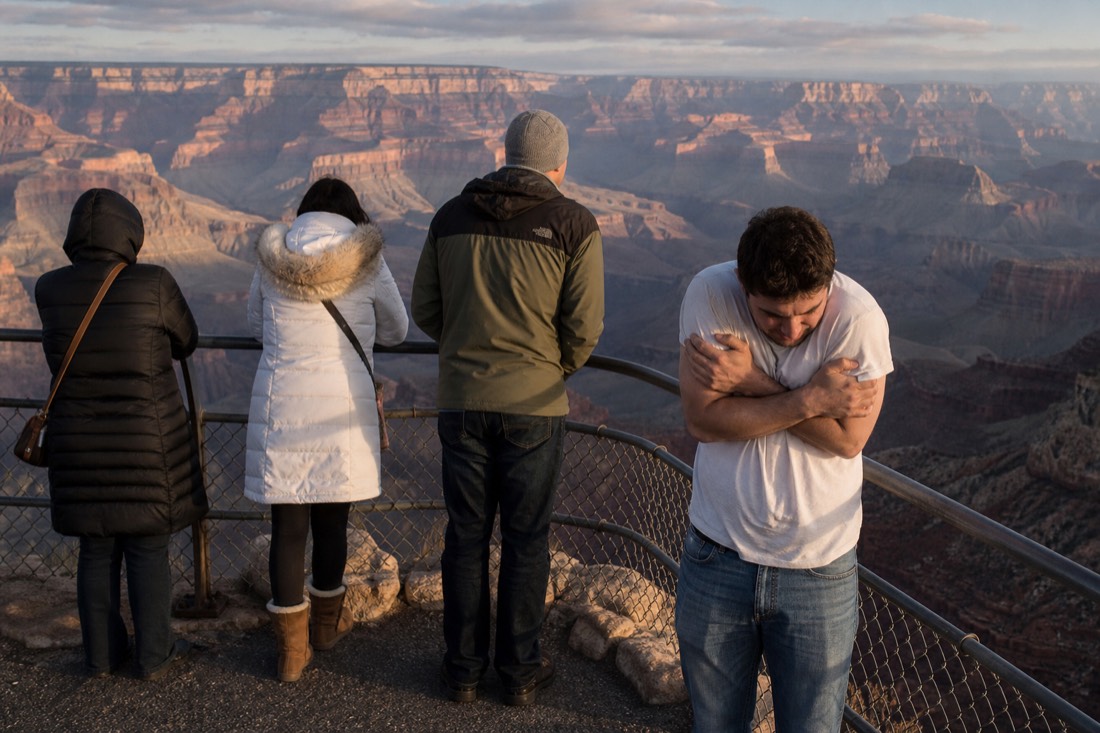
I have driven these highways in every season since 2022, and I grew up out by Monument Valley, so the plateau's habits are not news to me. They are news to most of the people I meet. Here is what I watch happen, in rough order of frequency.
People step out of the car in April dressed for a warm state and last about twenty minutes at the railing before they retreat. The canyon rewards standing still, and you cannot stand still while shivering. Then there is altitude. Seven thousand feet is not mountaineering, but if you flew in from sea level that morning, the first flat paved mile will feel oddly hard and you will sleep badly. Go easy on the first afternoon and drink more water than you want.
The monsoon mistake is the dangerous one. A dark cell moving up the canyon is genuinely spectacular, and I understand the urge to stay out for the photograph. Lightning does not negotiate with a good composition. Get behind glass or metal and shoot from there.
Winter brings the last one. Visitors treat Route 64 and Route 180 as guaranteed. They are not, and a storm can close them until plows get through. If you are driving yourself in January, keep a flex day. If you would rather hand that decision to somebody who does it professionally, that is exactly what a guided day buys you in winter.
Which tour formats suit which season?
Season sorts the formats. Coach day tours run all year and absorb winter road decisions for you. The railway from Williams turns snow into an asset and adds a Polar Express season from November to January. Canyon-landing helicopters fly from the lower, hotter West Rim, which is far more pleasant outside high summer.
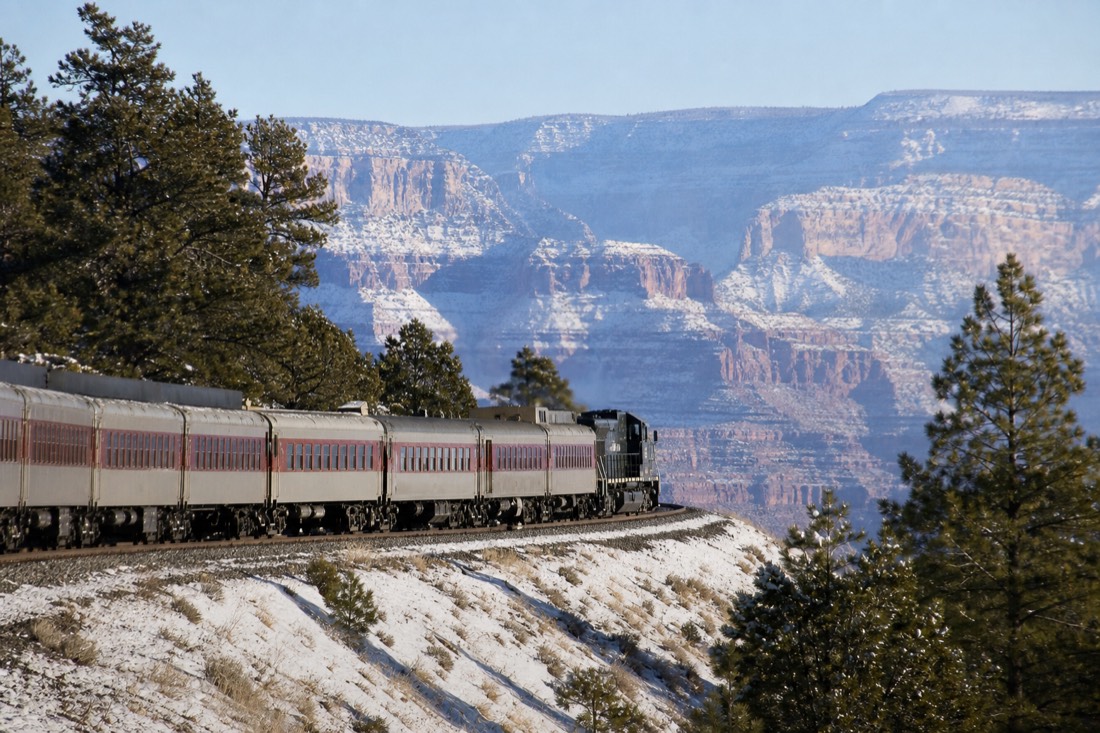
Choosing a format by season is an easier decision than choosing a month, because the formats fail in predictable ways. Anything airborne is weather-dependent. Anything on rails is not. Anything at Grand Canyon West is exposed to real desert heat.
| Format | Season that suits it best | What the season changes |
|---|---|---|
| Coach day tour from Las Vegas | Year-round | A professional driver handles winter roads and the long summer daylight |
| Grand Canyon Railway from Williams | Year-round, with Polar Express from November to January | Departs around 9:45am, about 2 h 15 each way, roughly 3 h 15 at the rim |
| Canyon-landing helicopter at the West Rim | October to April | The landing site sits far lower than the South Rim and cooks in summer |
| South Rim airplane tour from Tusayan | Year-round | Monsoon afternoons can reshuffle midday slots |
| Multi-day Southwest loop | Spring and fall | Zion, Bryce and Antelope Canyon are all at their most pleasant |
The railway deserves a special mention for winter travelers who do not want to drive. It leaves Williams daily, holds a 4.7 rating across 940 GetYourGuide reviews, includes the park entrance fee on that ticket, and its cancellation window is three days rather than the 24 hours most day tours use. Compare the train options if February roads are the thing making you hesitate.
Once the month is set, the next questions are length and budget. Work out how many days you really need, then squeeze the plan into a one-day itinerary if that is all the calendar allows.
Is the Grand Canyon open in winter?
The South Rim is open every day of the year, including winter. Snowstorms can temporarily close Highway 64 from Williams or Highway 180 from Flagstaff until plows clear them, so build a little flex into winter dates. The West Rim near Las Vegas also operates year-round.
When is monsoon season at the Grand Canyon?
Roughly July into early September. Storms build through the day and break as short, intense afternoon thunderstorms with lightning. Mornings are usually clear, so plan views and hikes early and keep afternoons flexible.
Is the North Rim open in 2026?
Select North Rim areas reopened on May 15, 2026. There is no in-park overnight lodging; the North Kaibab Trail is closed following August flooding. Check current NPS access before travel. The South and West Rims were unaffected by that fire.
Make the day fit your trip
Check your date before arranging the rest
Initial editorial suggestion. Use the optional choices to narrow this article’s shortlist; confirm individual eligibility with the operator.
South Rim sunset safari
An off-road forest approach and South Rim viewpoints, finishing at Grandview Point at sunset.
Meet at 408 AZ-64 in Tusayan; English guide and water included. No hotel pickup. Nonresident park charges and tips extra. Bumpy vehicle; not recommended during pregnancy or for spinal or cardiovascular conditions. Minimum booking: two guests.
Compare options and tailor this choice
Why choose an alternative?
South Rim sunset safari · Tusayan · 3 hours to allow
An off-road forest approach and South Rim viewpoints, finishing at Grandview Point at sunset. Meet at 408 AZ-64 in Tusayan; English guide and water included. No hotel pickup. Nonresident park charges and tips extra. Bumpy vehicle; not recommended during pregnancy or for spinal or cardiovascular conditions. Minimum booking: two guests.
Grand Canyon Railway round trip · Williams · 8 hours to allow
Historic rail travel from Williams to Grand Canyon Village with a same-day return. About eight hours overall; own arrival at Williams Depot. Choose coach or first class. Meals and hotel pickup excluded. Under-twos ride on a lap. Arrange any boarding assistance in advance; confirm current park charges.
Las Vegas West Rim coach tour · Las Vegas · 11 hours to allow
Hotel transport, an IHOP breakfast and canyon time without driving the desert return yourself. Selected Las Vegas hotel pickup; English guide, breakfast and water included. Skywalk and lunch depend on the option. Plan around 11 hours; confirm mobility arrangements with the operator.
Three-day Southwest parks tour · Las Vegas · 3 days
Zion, Bryce Canyon, Monument Valley and the South Rim over three days instead of one rushed day. English guide, transport and Navajo-guided Jeep tour included; select camping or lodging. Own arrival at the Las Vegas meeting point. Antelope Canyon, helicopter flight, dinners, tips and nonresident fees extra. Check seasonal dates.
Three-day winter Southwest tour · Las Vegas · 3 days
A winter route through Zion, Monument Valley and the South Rim, including a canyon sunset. Hotel lodging, English guide, transport and Navajo-guided Jeep tour included. Return to Las Vegas. Antelope Canyon, helicopter flight, evening meals, tips and nonresident fees extra; published winter departures only.
Compare your own quotes
Enter totals for the same party and inclusions, in one currency. Include transport, entry, meals and extras in both quotes.
Viator scheduled departures
Select a date to see the published schedule. Seats, final price and booking are confirmed on Viator.
Affiliate booking link: we may earn a commission at no extra cost to you.