Grand Canyon Helicopter or Airplane Tour: Which Flight Fits?
Helicopters fly low and, at the West Rim, actually land on the canyon floor. Airplanes fly higher, steadier and cheaper per minute in the air. Where you start from decides most of this choice for you.
 Written with Daniel Begay, Southwest canyon-country tour guide & Navajo cultural specialist
Short answer
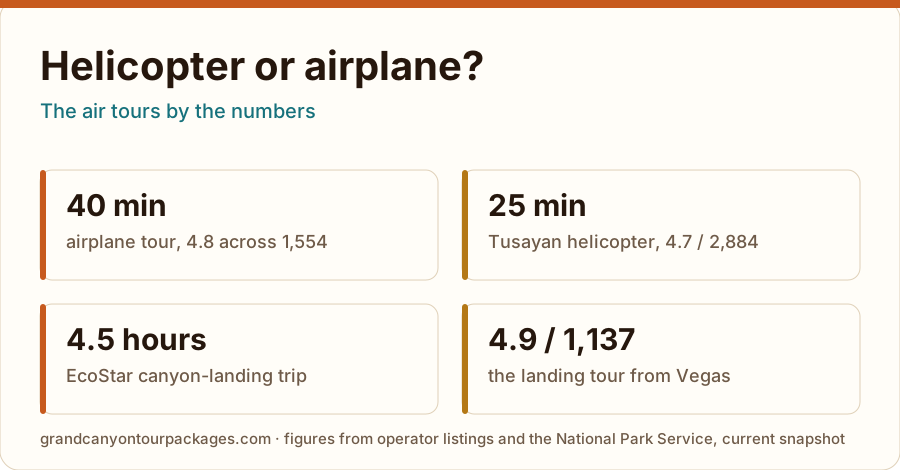
From Las Vegas, book a helicopter landing tour; they set down below the rim on Hualapai land at the West Rim, the only place canyon-floor landings are allowed. From the South Rim, the 40-minute Grand Canyon Airlines airplane tour covers the most canyon per dollar, while helicopters there fly about 25 minutes and never land.
From the mesa country where I guide, I watch tour aircraft work the horizon most clear mornings, helicopters low and deliberate, airplanes higher and arrow-straight. They are doing different jobs. People email me asking which one to book over the canyon as if it were one decision, but it is really two: where are you starting, and do you need to stand on the canyon floor or just see the thing whole?
Should you book a helicopter or an airplane over the Grand Canyon?
Start with geography. From Las Vegas, helicopters win because they land on the canyon floor at the West Rim, the only place landings below the rim are allowed. From the South Rim, the 40-minute airplane tour covers far more canyon than the 25-minute helicopter, at a lower cost per minute in the air.
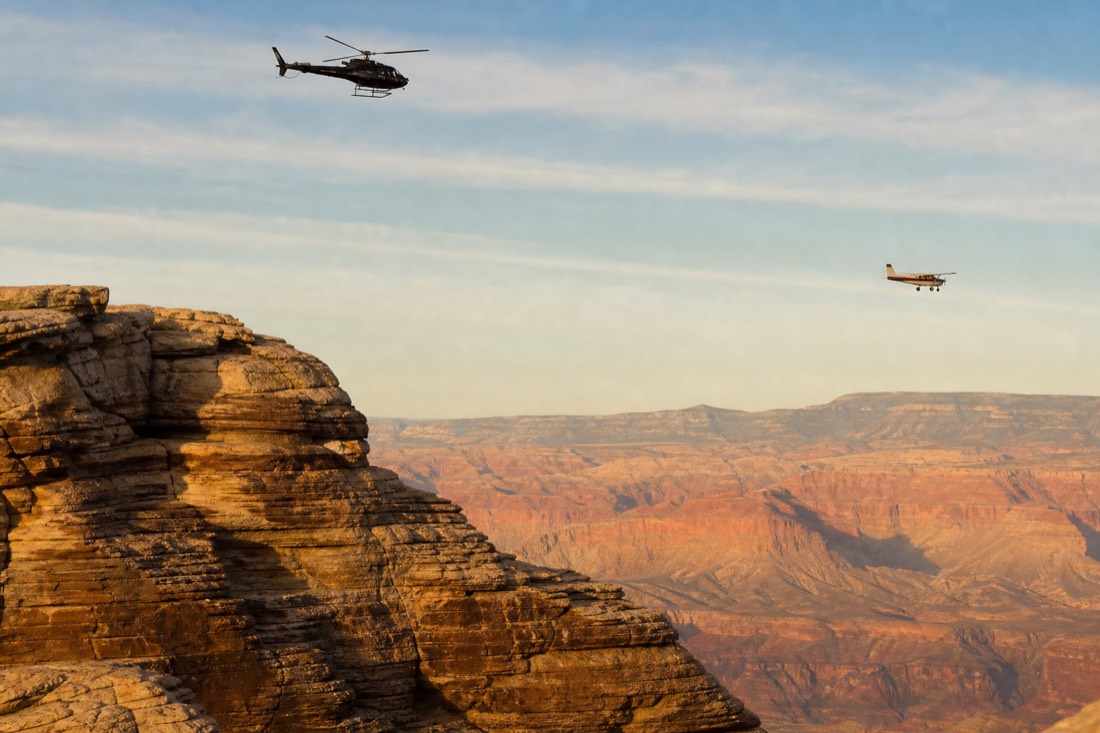
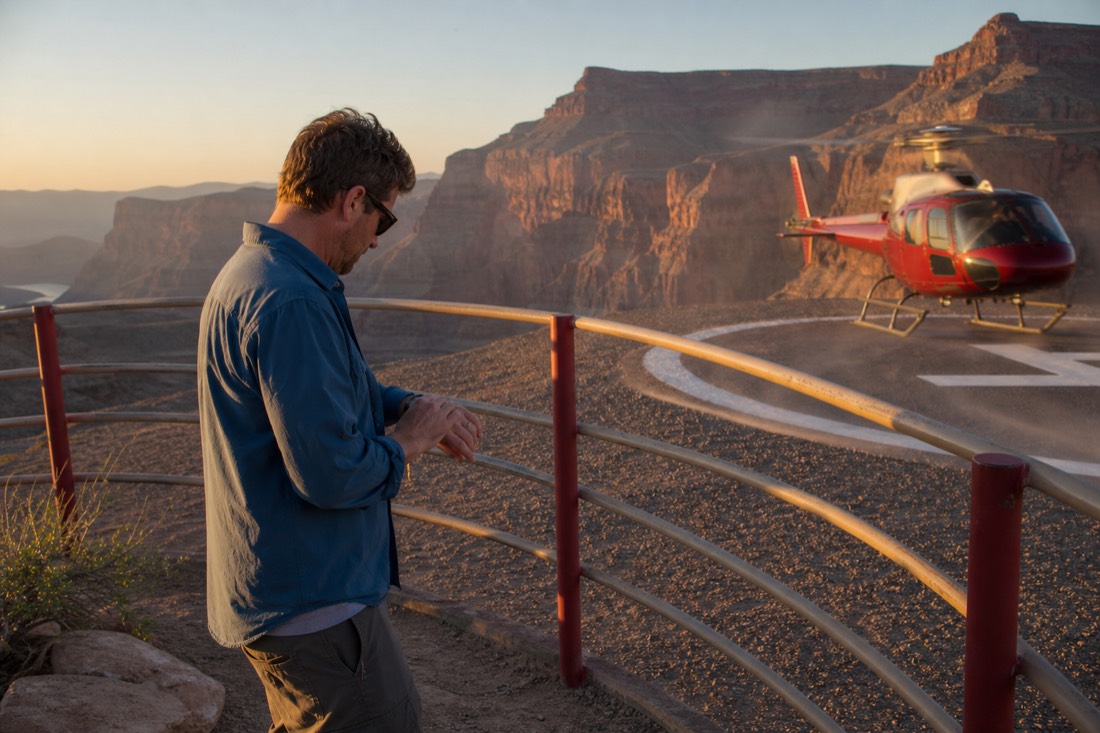
The two aircraft give you two different canyons. A helicopter flies low, banks into the scenery, and at the West Rim descends past a billion years of rock to a pad by the Colorado River. An airplane rides higher and steadier, which turns the 277-mile length of the canyon into something you can actually comprehend from a window seat. Neither is the lesser trip. They answer different appetites.
| Helicopter | Airplane | |
|---|---|---|
| Altitude and feel | Low, immersive, banks with the terrain | Higher, steadier, panoramic |
| Canyon-floor landing | Yes, West Rim only, on Hualapai land | Never |
| Motion sensitivity | More movement | Smoother ride |
| Cost per minute aloft | Higher | Lower |
| Typical flight time | 25 minutes (South Rim) to landing tours (Vegas) | 40 minutes (South Rim Discovery) |
What do the Las Vegas helicopter landing tours actually include?
Three stand out. The Papillon EcoStar landing tour, 4.8 across 1,666 reviews, runs about 4.5 hours with transfers and includes a champagne picnic below the rim. Maverick's landing tour holds 4.9 across 1,137 reviews across about 4 hours. A landing-plus-Strip-flyover version, 4.8 across 400 reviews, offers 62 pickup points.
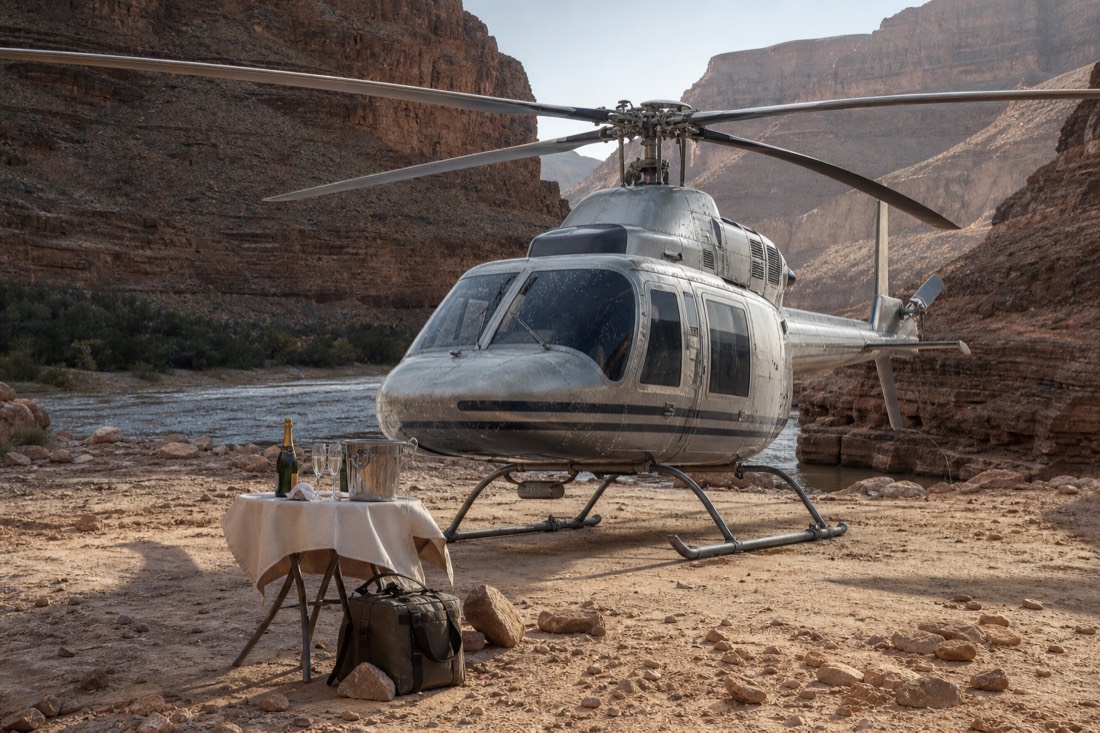
These flights work because of a legal quirk of geography. The West Rim sits on the Hualapai reservation, outside the national park, and tribal land is the only place aircraft may set down below the rim. That is why every "land in the Grand Canyon" tour flies from the Vegas side; the Grand Canyon West visitor FAQs cover the ground rules of the destination itself. The EcoStar tour is the classic version of the day, and you can browse the full helicopter lineup here or go straight to check live availability and prices on GetYourGuide.
| Vegas landing tour | Rating | Reviews | Duration | Notable |
|---|---|---|---|---|
| Papillon EcoStar landing + picnic | 4.8 | 1,666 | ~4.5 h with transfers | Champagne picnic below the rim |
| Maverick canyon-floor landing | 4.9 | 1,137 | ~4 h | Highest-rated flight on the site |
| Landing + Las Vegas Strip flyover | 4.8 | 400 | 3 to 4 h | 62 pickup points, Strip pass on return |
Live prices sit on the listings only; they move with season and fuel, so no number printed here would survive a month.
The shape of the day matters as much as the flight itself. On the EcoStar tour, "about 4.5 hours" includes the hotel transfer out of Las Vegas and back, so the actual commitment is a morning or an afternoon, not a full day. That leaves room for a show or a late dinner on the same date. The 62-pickup-point option earns its place for travelers staying off-Strip, where getting to a single departure terminal would otherwise eat an hour each way. Match the tour to your hotel logistics first, then to the extras.
What flies on the South Rim side?
From Tusayan, just outside the park gate, Papillon flies roughly 25-minute canyon flights with an optional 2-hour Hummer rim add-on, rated 4.7 across 2,884 reviews. Grand Canyon Airlines flies the 40-minute South Rim Discovery airplane tour, 4.8 across 1,554 reviews. Nothing lands inside the park; every flight overflies on regulated corridors.
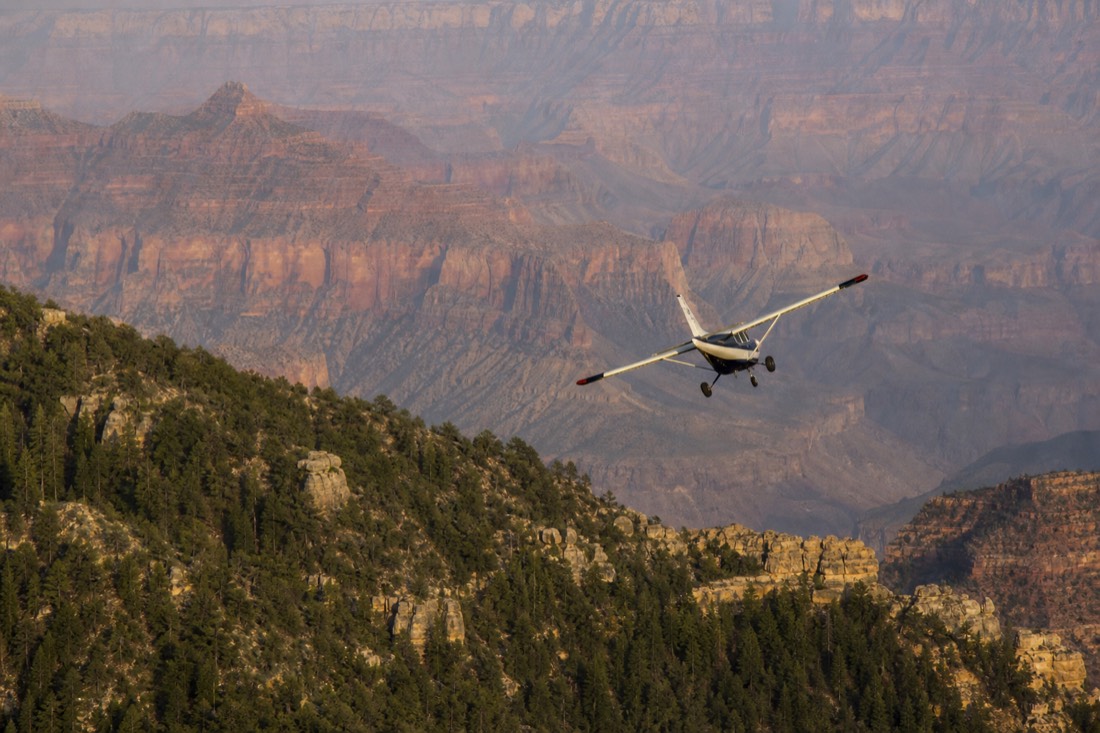
The South Rim side is where the airplane earns its place. National park airspace is tightly managed, landings below the rim are off the table, so the contest becomes pure sightseeing: 25 rotor minutes versus 40 fixed-wing minutes over the widest, deepest stretch of the canyon. The Hummer add-on turns the short helicopter flight into a half-day by pairing it with a guided rim drive, which suits people who want ground and air in one booking. If you are still choosing which rim to base at, the South Rim versus West Rim guide settles that first, and the South Rim tour page collects everything that departs from this side.
Is the airplane tour better value than a helicopter?
If your measure is canyon seen per dollar, usually yes. The airplane flies higher and steadier, holds more of the canyon in the window at once, and its 40 minutes aloft cost less per minute than a helicopter's 25. What it cannot give you is the low pass or a landing.
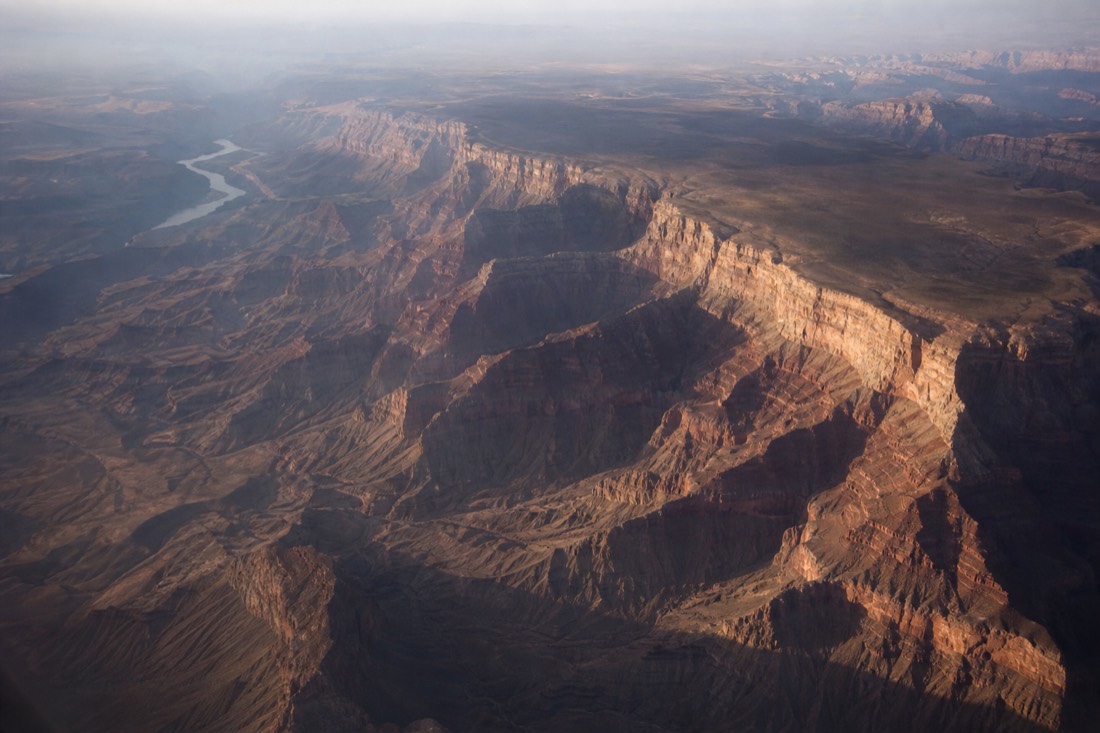
I think of the Discovery air tour as the geologist's flight. From airplane altitude the canyon reads as a system, side gorges feeding the main stem, the plateau cut open in cross-section. Forty minutes is long enough to stop photographing and just look. The helicopter, lower and more agile, gives you drama instead of scope. Passengers prone to motion sickness generally do better on the fixed wing too, since it flies a steadier line. Both aircraft types run on set routes with professional crews; for how the airspace is actually managed, and why the safety question has a calmer answer than the internet suggests, read how safe are Grand Canyon helicopter tours.
One more honest wrinkle: the two experiences photograph differently. Airplane windows frame sweeping context shots, the kind that finally explain the canyon to people back home. Helicopter footage carries motion and nearness, rock walls sliding past, the floor rising to meet you on a West Rim landing. If a camera is half the reason you are flying, decide which of those two films you actually want before price enters the conversation at all.
Which flight fits your trip?
Match the flight to three questions: where you start, whether a canyon-floor landing matters to you, and how many hours you can spare. Las Vegas plus a landing points to the EcoStar or Maverick tours. A South Rim base with limited time points to the airplane. The table below settles the rest.
| Your situation | Landing? | Time budget | Book this |
|---|---|---|---|
| Staying in Las Vegas, want the full canyon-floor moment | Yes | ~4.5 h | Papillon EcoStar landing tour with picnic |
| Staying in Las Vegas, want the tightest quality trip | Yes | ~4 h | Maverick landing tour |
| Vegas hotel pickup matters, want the Strip from the air too | Yes | 3 to 4 h | Landing + Strip flyover (62 pickup points) |
| Based at the South Rim, biggest view per dollar | No | Under 2 h | Grand Canyon Airlines 40-min Discovery |
| Based at the South Rim, want rotor time plus a ground tour | No | Half day | 25-min Papillon flight + 2-h Hummer add-on |
If Las Vegas is your base and you are still weighing flying against the highway at all, run through drive or tour from Las Vegas before you commit a day either way.
Why is the airspace over the canyon so tightly controlled?
Because of one afternoon in 1956. A TWA and a United airliner collided over the canyon, killing all 128 people aboard, and the shock of it pushed Congress into building the modern air-traffic-control system and creating the FAA in 1958. Today's tour corridors are a direct descendant of that day.
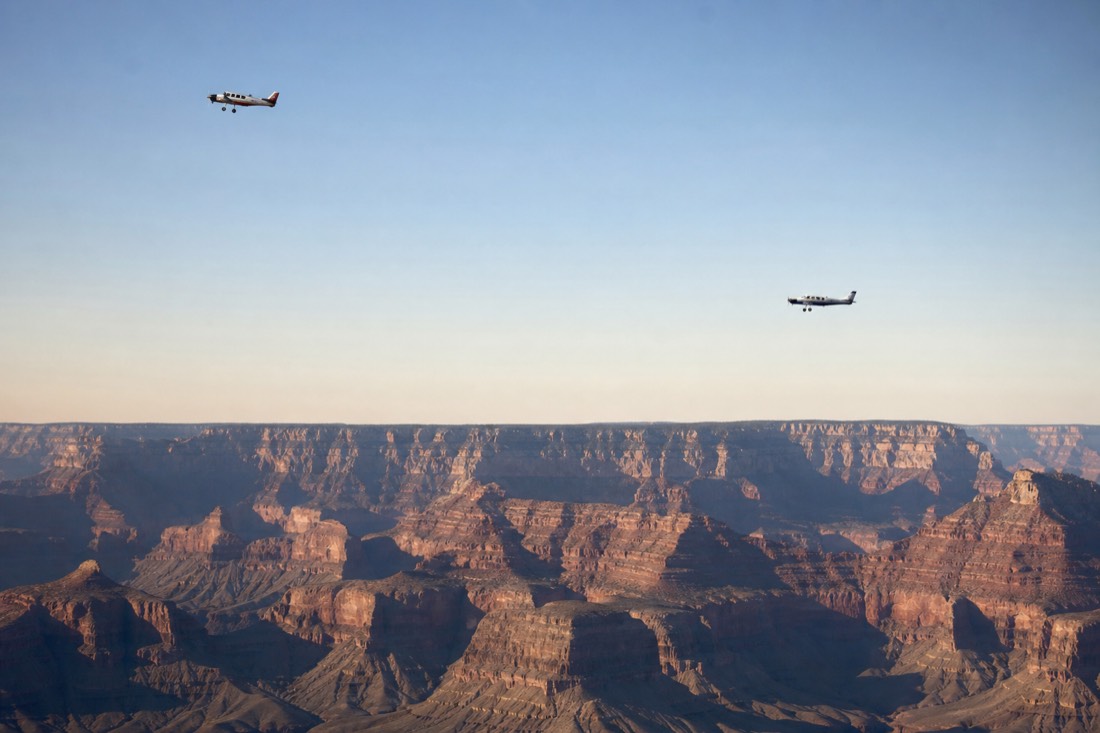
Most sightseeing airspace in America is loosely governed. The Grand Canyon is not, and the reason is historical rather than bureaucratic. Two airliners cruising in uncontrolled skies over the same landscape, on a clear day, found the same piece of air. Nobody was breaking a rule, because the rules did not exist yet. They exist now, and the canyon was the argument that made them.
What that means for a visitor booking a flight in 2026 is a system with a lot of structure built into it. Tour aircraft over the national park fly published routes, including the well-known Dragon Corridor over the widest section, at assigned altitudes, and they do not land below the rim under any circumstances. Landings on the canyon floor happen only at the West Rim, on Hualapai tribal land outside the park, which is the entire reason the Las Vegas flights and the South Rim flights are such different products.
It also explains why the flight you book is more standardised than a chartered scenic ride elsewhere. Route, altitude and separation are set. What varies between operators is the aircraft, the departure point, the length of the trip and what is bundled around it. The full story of the 1956 collision is worth twenty minutes before you fly, because it turns the view out of the window into something with a history.
What does the day around a Las Vegas flight actually look like?
Less of one than the duration line suggests. The EcoStar landing tour runs about 4.5 hours from hotel pickup to hotel drop, Maverick's version about 4 hours, and the landing-plus-Strip-flyover option 3 to 4 hours across 62 pickup points. Roughly half of every one of those is ground transfer.
The transfer time is the part people misjudge. A four-and-a-half-hour tour sounds like most of a day, so travellers block the whole day out and then find themselves back at the hotel by early afternoon with nothing planned. Read the duration as a commitment window rather than as flight time, and you can put a show, a dinner or a second attraction on the same date without stress.
Here is the shape of a Vegas landing day as a planning allowance. Actual pickup and return times come from the operator once you book, and they move with your hotel's position on the pickup route.
| Rough stage | What is happening | How long it tends to take |
|---|---|---|
| Hotel pickup | Shuttle collects you from your hotel or a nearby pickup point | The earliest part of the window, staggered by route |
| Transfer out | Road to the departure terminal, check-in, safety briefing, weigh-in | A solid chunk of the total |
| Flight out | Airborne over the desert and into the canyon | The part you booked for |
| On the canyon floor | Landing at the West Rim, champagne picnic on the EcoStar tour | A set period, not a hike |
| Flight back | Return leg, Strip flyover on the version that includes it | Shorter in feel than the outbound |
| Transfer home | Road back, drops in hotel order | Depends where you sit in the queue |
If your hotel is well off the Strip, the 62-pickup-point option stops being a footnote and becomes the reason to choose that listing. An hour each way getting to a single terminal ruins the arithmetic of a short tour. The whole helicopter lineup lists what each flight includes.
How do the two aircraft differ once you are inside them?
More than the outside suggests. The Vegas landing flights use modern EcoStar-family helicopters with big wraparound glass and a per-passenger weight policy. The 40-minute Grand Canyon Airlines airplane flies from Grand Canyon Airport at Tusayan with panoramic windows, multilingual headset narration and the pilot gratuity already included.
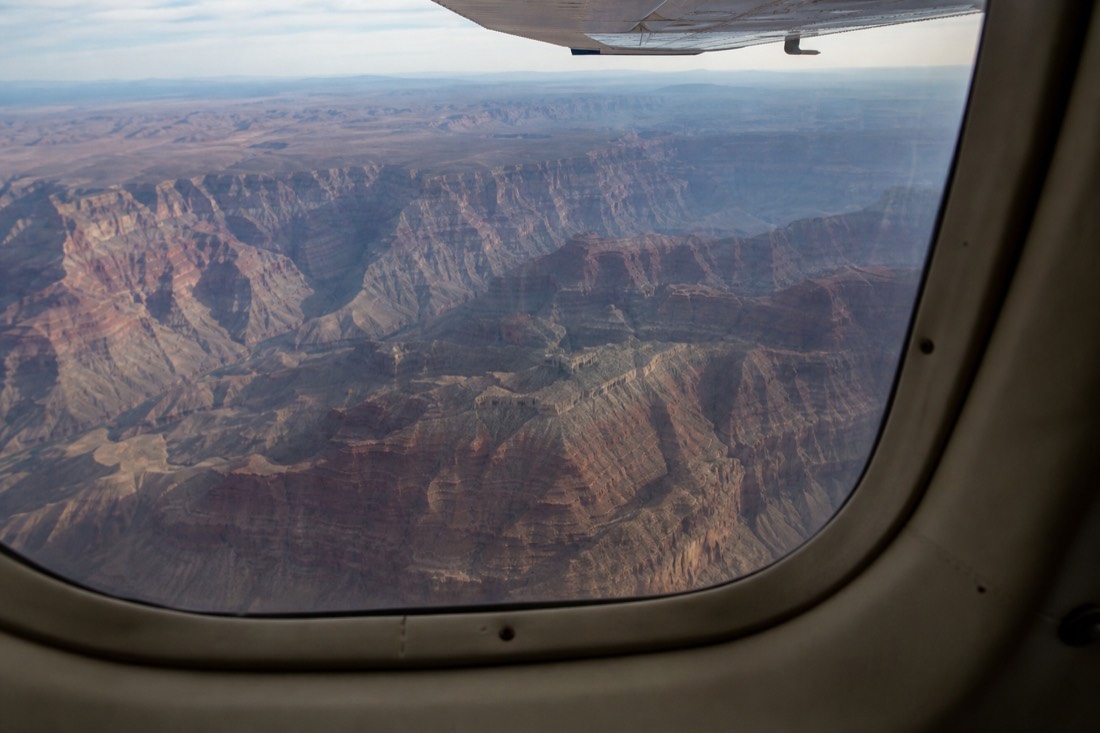
Cabin design is where the two experiences separate. A helicopter puts you close to glass on three sides with the terrain moving underneath, and every seat is a window seat because there are no rows to speak of. A fixed-wing cabin trades that intimacy for stability and a wider frame, and the headset narration does real work explaining what you are looking at, in your own language, rather than leaving you to guess which side canyon is which.
The practical detail that catches people out is weight. Papillon's EcoStar tours charge for an extra seat at 300 pounds and above, which is a balance requirement rather than a judgement, and it is far better discovered at booking than at check-in. Every flight weighs passengers before boarding, and seat assignment follows from that rather than from who queued first.
| EcoStar-family helicopter | Grand Canyon Airlines fixed-wing | |
|---|---|---|
| Flies from | Las Vegas area for landing tours, Tusayan for the 25-minute canyon flights | Grand Canyon Airport, Tusayan |
| Time aloft | About 25 minutes on the Tusayan flights | 40 minutes |
| Windows | Wraparound glass, close to the terrain | Panoramic, framed for wide shots |
| Narration | Onboard headsets | Multilingual headset narration |
| Weight policy | Papillon charges for an extra seat at 300 lbs and above | Standard seating |
| Gratuity | Per the listing | Pilot gratuity included |
| Park fee | Not needed for the West Rim landing tours, tribal land | Not needed for the air-only flight |
| Lands below the rim | Only at the West Rim, on Hualapai land | Never |
One combination worth knowing about: the Tusayan canyon flight with the optional 2-hour Hummer add-on, 4.7 across 2,884 reviews, is aerial only in its base form, and the Hummer version includes park entrance. That makes it the tidiest way to see the canyon from both the air and the ground on one booking. The South Rim departures page collects everything flying from that side.
Who gets motion sick, and how loud is it up there?
Sensitive flyers do better on the airplane, which holds a steadier line at higher altitude. Helicopters bank with the terrain and sit lower in the bumpier air. Both aircraft issue headsets, so the noise question is less about volume than about the fact that you hear the narration and not much else.
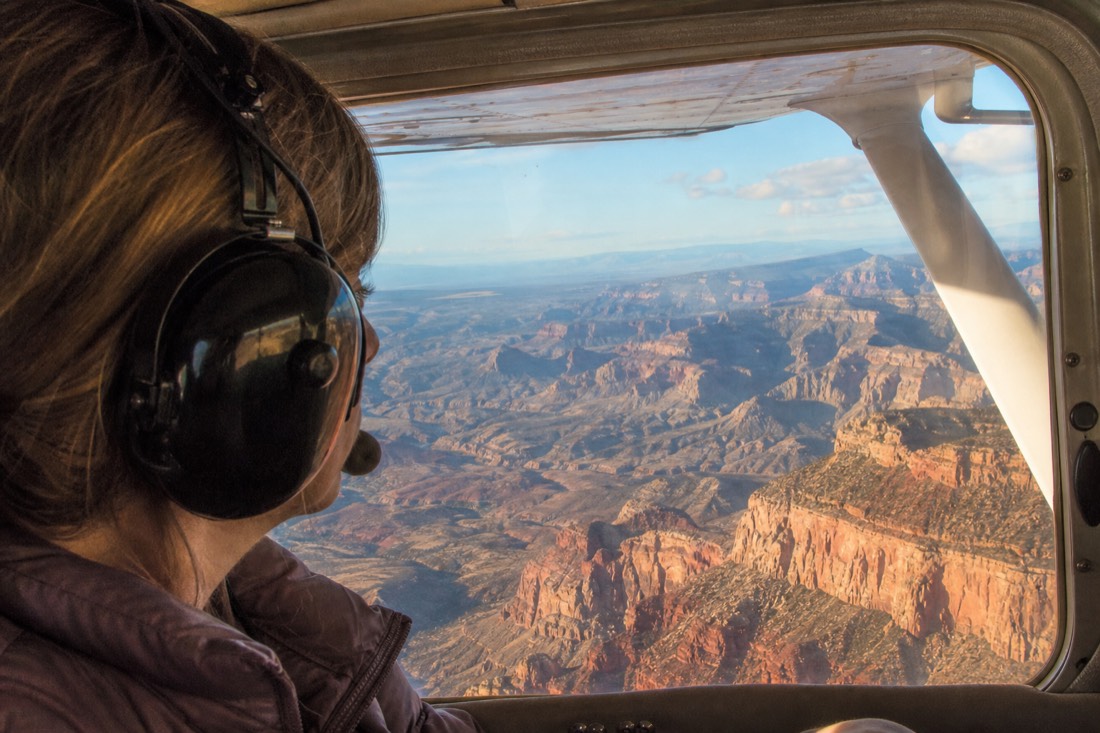
Air over a desert canyon warms unevenly through the day, which is why a morning departure is nearly always the smoother one, and why afternoon flights in monsoon season get moved. If you know you are prone to motion sickness, the fix is mostly scheduling: fly early, eat something light rather than nothing, and take whatever remedy you normally use well before boarding instead of at the helipad.
Noise deserves an honest note rather than a scare. Rotorcraft are loud machines from the outside, and the walk to and from the aircraft is the loudest part of the day. Inside, with the headset on, the narration and the pilot's voice come through clearly, which is also why aviation headsets are handed out rather than sold as an upgrade. Small children and anyone noise-sensitive should expect the boarding walk to be the moment they flinch, not the flight.
| What you are worried about | On the helicopter | On the airplane |
|---|---|---|
| Ride quality | Moves with the terrain, banks into views | Steadier, holds a line |
| Best time to fly | Morning, before the air heats up | Morning, same reason |
| Monsoon afternoons | Departures get reshuffled July into September | Also affected, plan mornings |
| Noise | Loudest on the walk to the aircraft; headsets inside | Quieter approach, headsets for narration |
| If you are camera-focused | Motion and nearness, harder to frame | Wide context shots, easier to hold steady |
| If a child is flying | Check the listing's seating and weight rules first | Check the listing's rules the same way |
Who should skip the flight and do something else instead?
Anyone whose main worry is the flight itself. If motion, noise or heights would spend the whole trip's nerve budget, a ground day at the rim delivers the canyon without any of it, and the railway from Williams or a Skywalk visit at the West Rim will not leave you counting minutes.
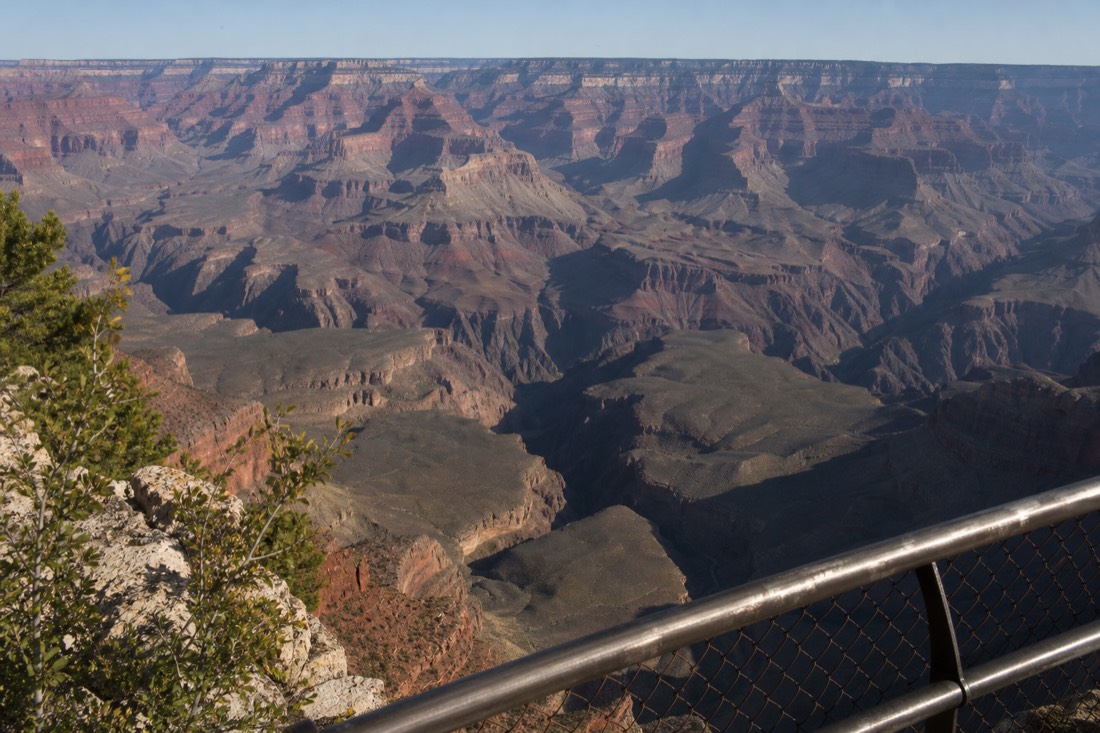
There is a quiet assumption in canyon marketing that flying is the upgrade and the ground is the compromise. It is not true for everyone. The rim gives you the canyon at a scale your eyes can hold for hours, for the price of a park entrance, and no flight replaces the moment the light changes across the whole thing while you stand still.
Skip the flight if any of the following describes you honestly. You dislike small aircraft enough that anticipation would ruin the preceding day. Your budget is tight and the same money buys two nights closer to the rim, which is worth more than 25 minutes aloft. You are travelling with someone whose mobility makes the boarding and the weigh-in more stress than the view is worth. Or your visit falls in a monsoon afternoon window with no flexible day to move to.
The good alternatives are genuinely good. The Grand Canyon Railway makes the journey itself the attraction and folds park entrance into the ticket. The Skywalk at Grand Canyon West gives the vertigo without the aircraft, and phones are now allowed on the glass at your own risk. And a slow drive along the South Rim viewpoints with the free park shuttle costs nothing beyond the gate fee. Nobody has ever come back from the canyon disappointed because they stayed on the ground.
How does the season change what you get from the air?
Morning air is calmer in every month, and that matters more than the month itself. Monsoon storms build from July into September and can reshuffle afternoon flights. Spring and fall are the reliable shoulder windows. Winter is quiet and cheapest outside the holidays, with snow reaching the rim.
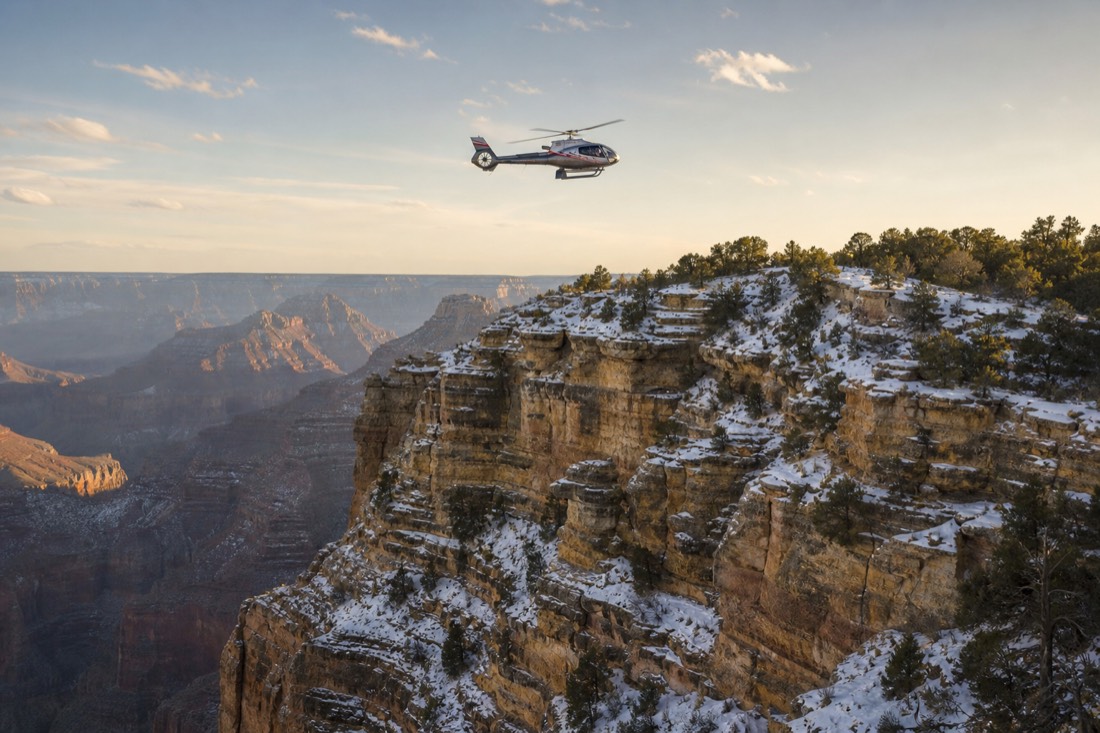
Flights are the part of a canyon trip most exposed to weather, because an operator will move a departure rather than fly through a build-up. That is a feature, not an inconvenience, but it means the traveller who books an afternoon flight on the last day of the trip has left themselves nowhere to go. Book the morning, and book it early in your stay.
Winter has a case that rarely gets made. Snow on the rim throws the layers into relief in a way summer light flattens, the desert air is often exceptionally clear, and it is the quietest and cheapest stretch of the year outside the holiday weeks. Rim roads and trails can be icy on the ground, which affects the drive to Tusayan more than the flight. Select North Rim areas reopened on May 15, 2026. There is no in-park overnight lodging; the North Kaibab Trail is closed following August flooding. Check current NPS access before travel.
| Season | What flying is like | The booking move |
|---|---|---|
| March to May | Settled mornings, growing demand | Book early slots, dates fill in spring break weeks |
| June to early July | Hot, bright, long days | Fly first thing, before the air stacks up |
| July to September | Monsoon build-ups most afternoons | Morning only, and keep a spare day |
| October to November | Calm, clear, thinner crowds | The most forgiving window of the year |
| December to February | Snow on the rim, quiet, cheapest outside holidays | Watch the road conditions, not the flight |
Do any helicopters land at the South Rim or inside the national park?
No. Landings below the rim are allowed only on Hualapai tribal land at the West Rim. Flights over the national park itself stay above the rim on regulated corridors, whatever the aircraft.
Which ride is smoother if I get motion sick?
The airplane. It flies higher and holds a steadier line, while helicopters sit lower and move with the terrain. Sensitive flyers usually prefer the 40-minute fixed-wing tour.
Where do I find current prices?
On the live listings only. Flight pricing shifts with season, fuel and demand, so every tour here links straight to its official page rather than quoting a number that will age badly.
Make the day fit your trip
Check your date before arranging the rest
Initial editorial suggestion. Use the optional choices to narrow this article’s shortlist; confirm individual eligibility with the operator.
South Rim airplane flight
A 40-minute sightseeing flight over the canyon, with an optional Hummer tour sold separately.
Own arrival at Tusayan airport; allow check-in time beyond the flight. English audio available. At 300 lb or more, an extra seat is required. Under-twos may ride on a lap with proof of age; confirm boarding needs directly.
Compare options and tailor this choice
Why choose an alternative?
South Rim airplane flight · Tusayan · 2 hours to allow
A 40-minute sightseeing flight over the canyon, with an optional Hummer tour sold separately. Own arrival at Tusayan airport; allow check-in time beyond the flight. English audio available. At 300 lb or more, an extra seat is required. Under-twos may ride on a lap with proof of age; confirm boarding needs directly.
West Rim helicopter landing · Las Vegas / Boulder City · 4.5 hours to allow
A helicopter flight into the West Rim with a canyon-floor landing and champagne toast. Allow about 4.5 hours with transfers; select the correct Boulder City or Strip option. Reconfirm pickup 72 hours ahead. Adult ID and passenger weights required; 300 lb or more requires an extra seat. This does not land in the national park.
Grand Canyon Railway round trip · Williams · 8 hours to allow
Historic rail travel from Williams to Grand Canyon Village with a same-day return. About eight hours overall; own arrival at Williams Depot. Choose coach or first class. Meals and hotel pickup excluded. Under-twos ride on a lap. Arrange any boarding assistance in advance; confirm current park charges.
Compare your own quotes
Enter totals for the same party and inclusions, in one currency. Include transport, entry, meals and extras in both quotes.
Viator scheduled departures
Select a date to see the published schedule. Seats, final price and booking are confirmed on Viator.
Affiliate booking link: we may earn a commission at no extra cost to you.