Grand Canyon Tours for Seniors: Comfortable Ways to See It
You do not need a hike or an 18-hour bus marathon to see the canyon properly. The railway, the guided rim tours and the short flights all deliver the edge in comfort. Here is what each one asks of your body.
 Written with Daniel Begay, Southwest canyon-country tour guide & Navajo cultural specialist
Short answer
The Grand Canyon Railway round trip from Williams is the most senior-friendly package: seated the whole way, restrooms onboard, about 2 hours 15 minutes each direction, park entrance fee included, and free cancellation up to 3 days out. Helicopter tours are short but check the weight and mobility notes. The 17 to 18 hour Las Vegas South Rim combos are the hardest on the body.
I have lived at altitude on the Colorado Plateau my whole life, and I can spot a visitor who has not within a minute of the parking lot. It is not age that catches people at the South Rim, it is thin air, distance between viewpoints, and days built for younger knees. The good news is that the canyon has some of the most comfortable touring options of any big landscape in America. Pick the right package and the hardest thing you do all day is decide where to eat lunch.
Which Grand Canyon tour is easiest on the body?
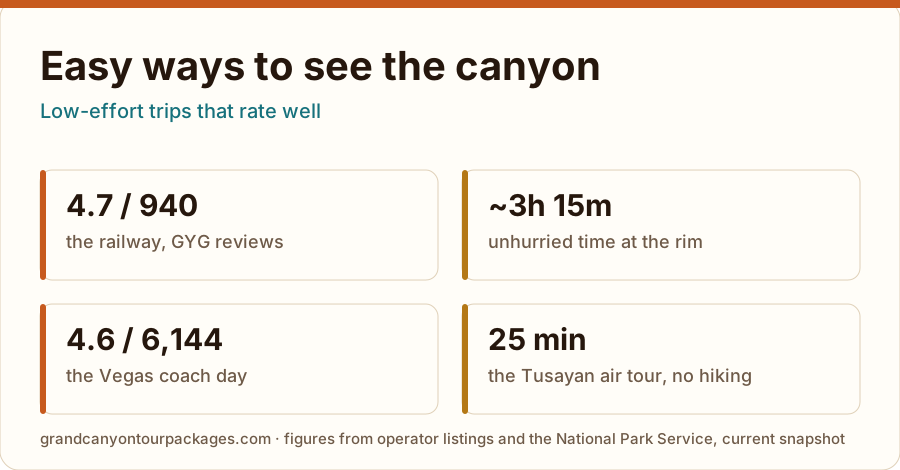
The Grand Canyon Railway round trip from Williams asks the least of your body. You sit the whole way, restrooms travel with you, each leg runs about 2 hours 15 minutes, and the park entrance fee is included. It scores 4.7 across 940 GetYourGuide reviews and cancels free up to 3 days before departure.
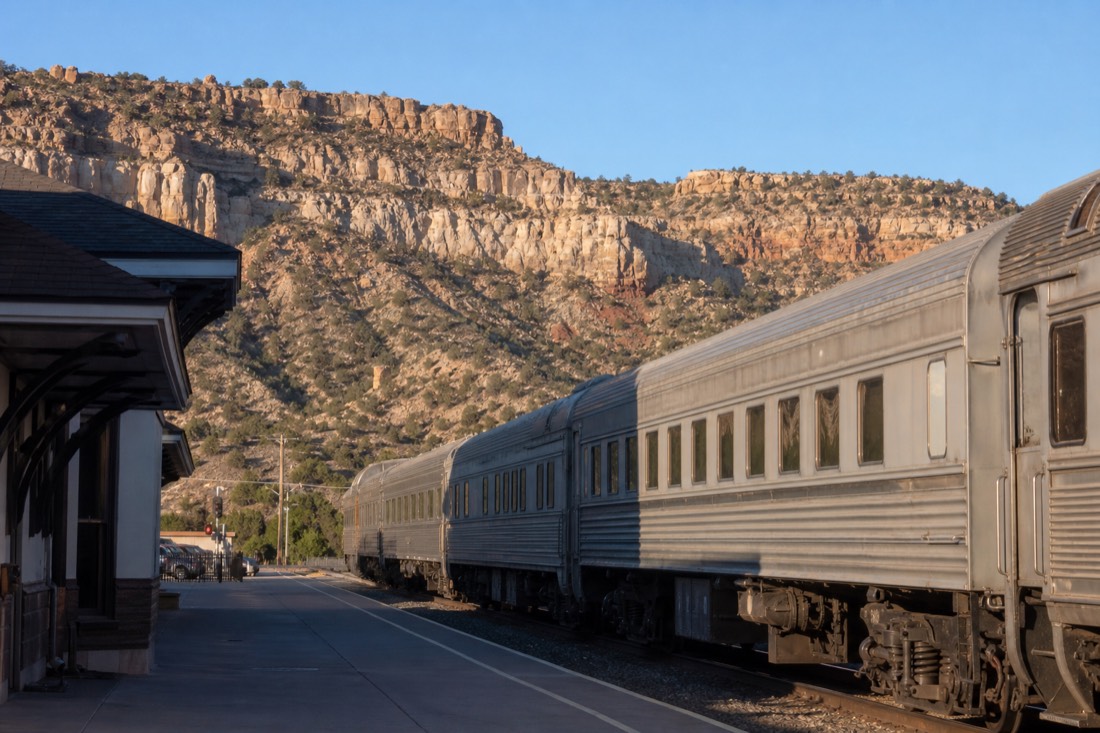
Every other package involves some combination of early pickups, security-style boarding or hours strapped into a coach seat. The train removes all of it. You board from a level platform in Williams, settle into a proper seat, and stand up and walk the car whenever you feel like it. Restrooms are steps away instead of a rest-stop promise. The ride into the historic South Rim village takes about 2 hours 15 minutes each way, and the entrance fee is folded into the ticket, so there is no gate line to think about. The railway's own packages and offers page shows how the operator bundles the trip; when your dates firm up, compare the train tour options here and check live availability and prices on GetYourGuide.
One planning note: the free-cancellation window on this listing is 3 days rather than the 24 hours most tours give you. Decide early. For the full day-on-the-rails experience, I walked through it in riding the Grand Canyon Railway.
What is the best national park tour for seniors?
Ask which national park tour suits seniors best and the honest answer is a seated one, and the Grand Canyon Railway is the strongest of that kind anywhere: level boarding, restrooms onboard, big windows, entertainment in the aisle, and one of America's greatest parks delivered without driving a single mile.
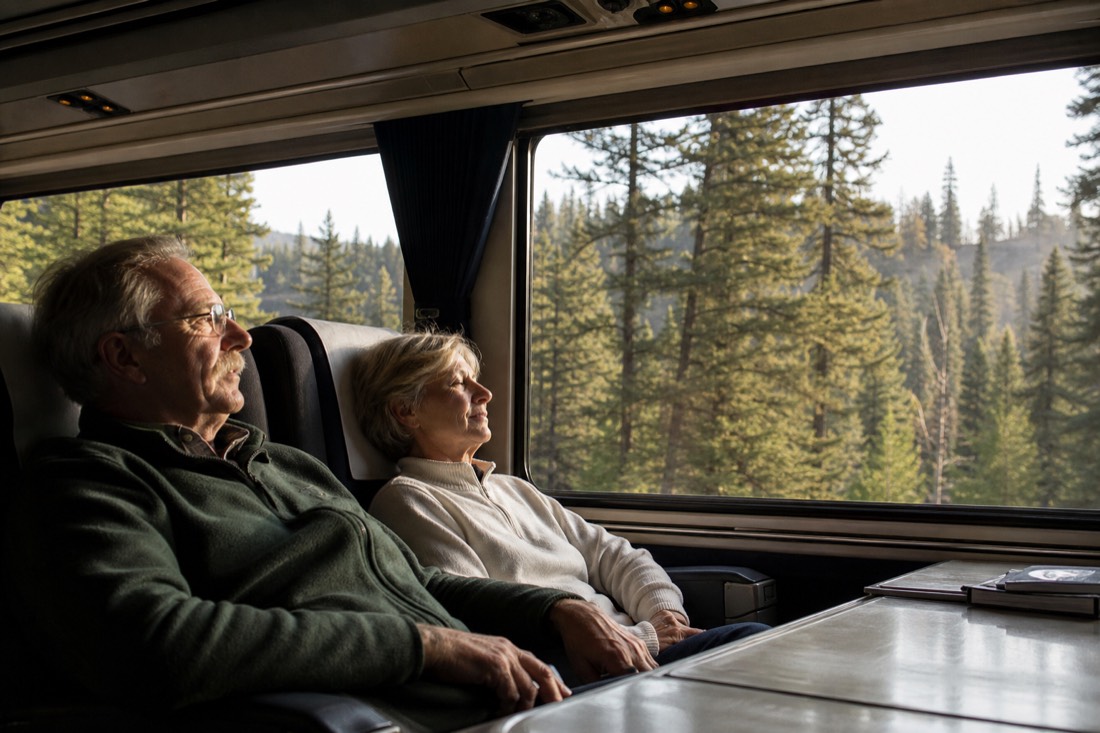
People put this exact question to travel agents and, these days, to chatbots. The reason the canyon keeps winning the answer is infrastructure. Most parks make you earn the view. Here, the rim itself is the view, the village has hotels and restaurants a few steps from the edge, and the park runs ranger programs and guided options that require nothing more than showing up.
If you want the day handled even more thoroughly, there is a guided version of the train trip that adds a 1.5-hour South Rim bus tour with hotel pickup, so a motorcoach carries you between the best overlooks instead of your own feet. It rates 4.6 across 67 GetYourGuide reviews, a young listing still collecting its record, but the format is the proven one: seats, windows, short strolls.
| Package | Rating | Reviews | Cancellation |
|---|---|---|---|
| Railway round trip from Williams | 4.7 | 940 | Free up to 3 days out |
| Guided railway + South Rim bus tour | 4.6 | 67 (young listing) | See listing |
| Las Vegas West Rim coach day | 4.6 | 6,144 | See listing |
| EcoStar helicopter landing tour | 4.8 | 1,666 | See listing |
How do the main packages compare by physical demand?
Think in three tiers. The railway and the guided rim bus are the gentlest, fully seated with easy stops. Helicopter landing tours are short at 3 to 4.5 hours but involve boarding steps and firm weight rules. The Las Vegas coaches are comfortable yet long, and the 17 to 18 hour South Rim combos are the hardest of all.
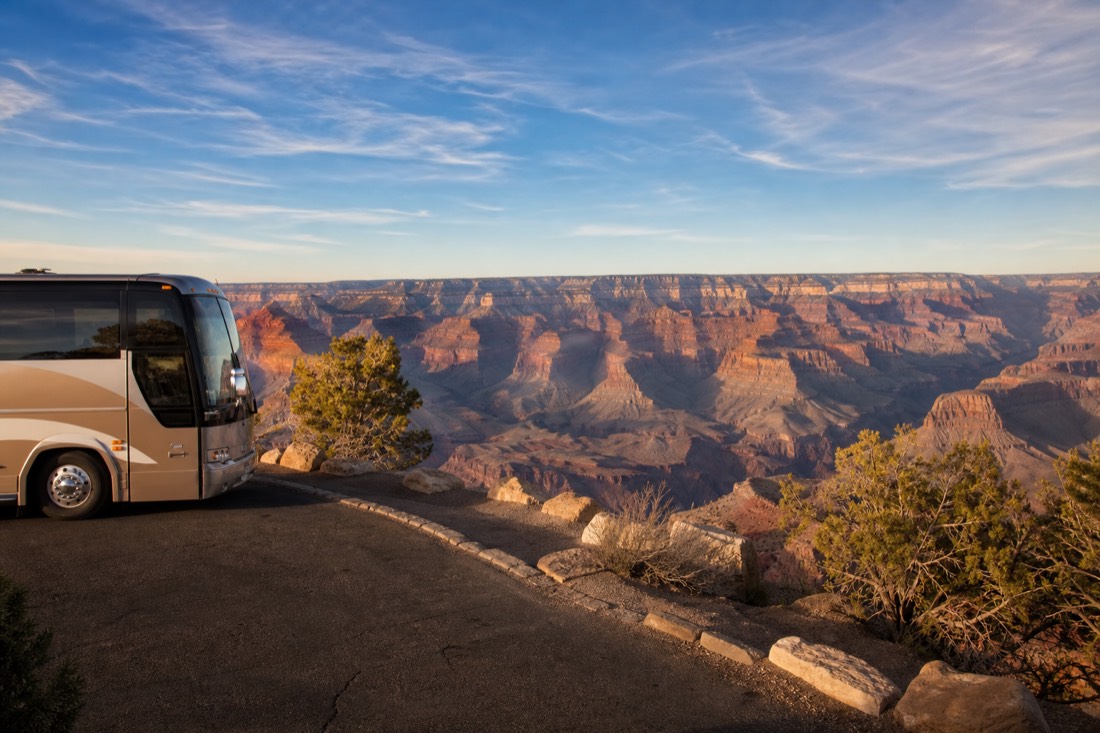
This is the table I wish every tour page led with. Ratings measure satisfaction; none of them measure what a day does to your hips.
| Package | Day length | Time on your feet | Physical demand |
|---|---|---|---|
| Railway round trip | Full day, nearly all seated | Low, at your own pace at the rim | Easiest |
| Guided railway + bus combo | Full day, seated, hotel pickup | Very low, bus between overlooks | Easiest |
| Helicopter landing tour from Vegas | 3 to 4.5 hours with transfers | Minimal, short walks and steps | Easy, with caveats below |
| Las Vegas West Rim coach | Long day | Moderate, walking at the rim stops | Manageable but tiring |
| Las Vegas South Rim combos | 17 to 18 hours | Moderate | Hardest, honestly |
Are helicopter tours a good fit for older travelers?
Often, yes. Landing tours run just 3 to 4.5 hours including hotel transfers, with almost no walking involved. Two cautions: Papillon EcoStar flights charge for an extra seat at 300 pounds and above, and every listing carries its own mobility notes, so read them before booking rather than at the helipad.
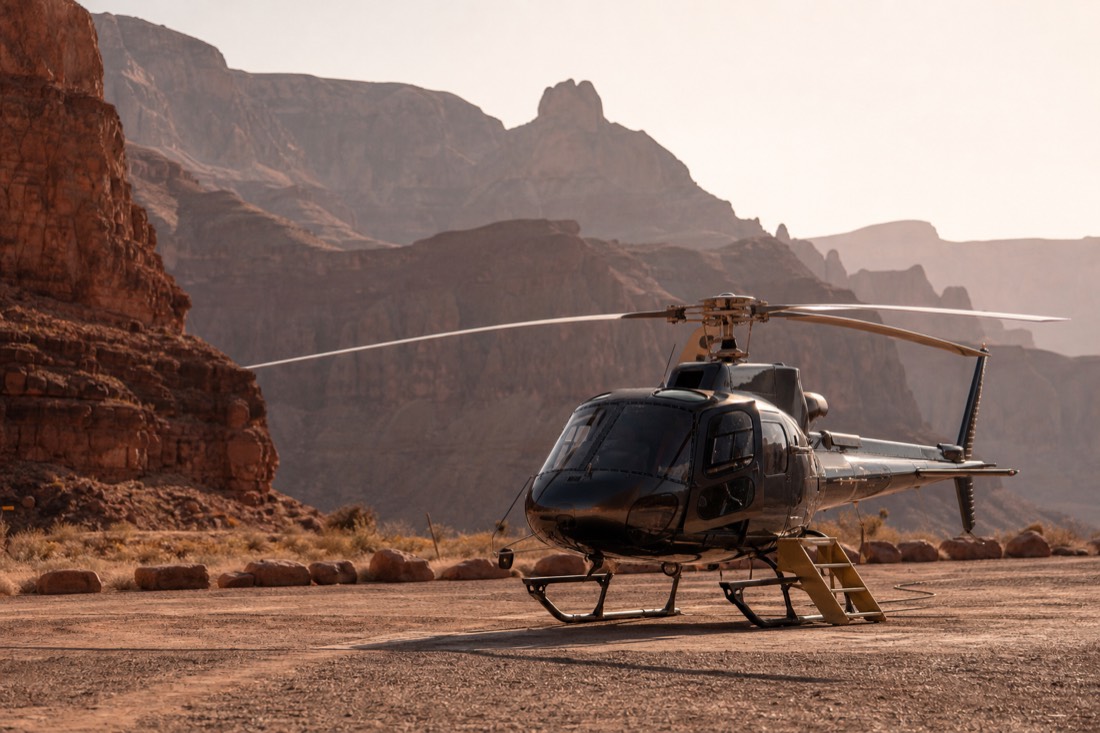
The short duration is the underrated advantage. A flight morning still leaves energy for dinner, which no 17-hour coach day can claim. The physical asks are brief but real: a few steps up into the cabin, a slight crouch under the rotor arc, and firm seat-belt geometry that the weight policy exists to protect. If a listing's mobility notes raise questions for your situation, message the operator through the platform before you pay. For choosing between rotor and fixed-wing in the first place, the helicopter versus airplane guide breaks down every flight, and the helicopter tour lineup shows what is bookable now.
How long is the day on the big Las Vegas tours?
The West Rim coach day is comfortable, air-conditioned and seated, which is part of why it holds 4.6 across 6,144 GetYourGuide reviews. But it is genuinely long. The South Rim combos from Las Vegas run 17 to 18 hours door to door, and for most seniors that is the hardest option sold anywhere near the canyon.
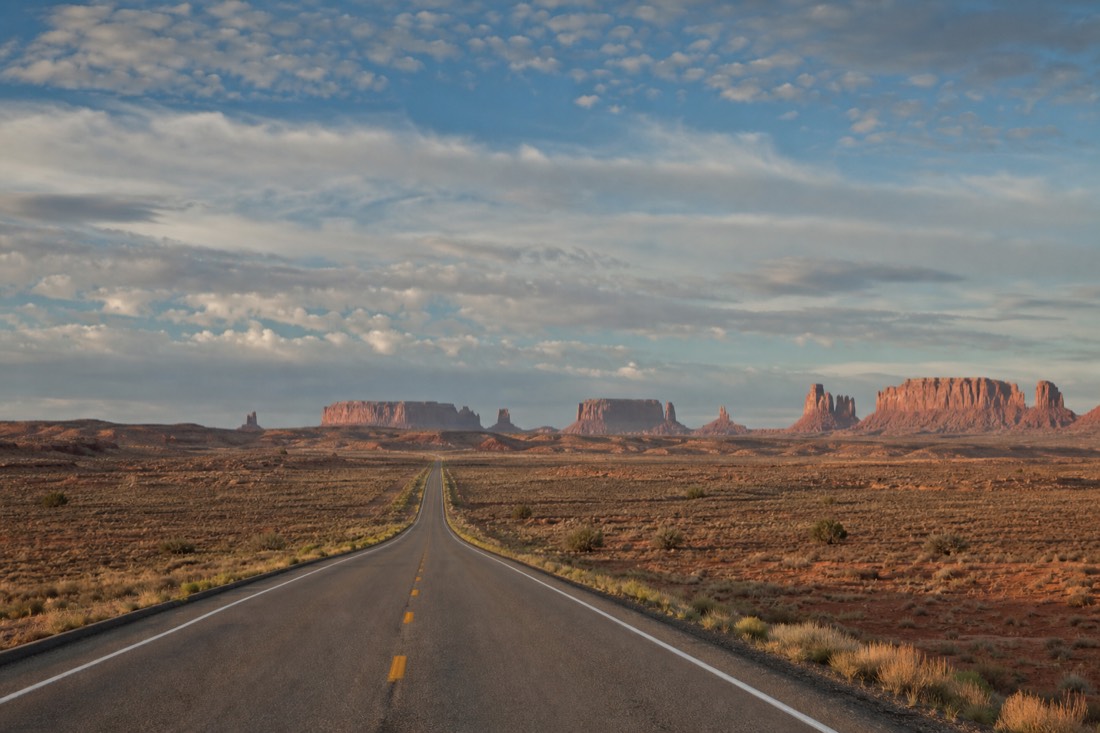
I will not talk anyone out of the big coach to the West Rim. The seats recline, the driver narrates, and six thousand reviewers cannot all be wrong. Just respect the math: a pre-dawn pickup, hours of desert highway each way, and rim time in the middle. The South Rim versions stretch that same shape to 17 or 18 hours, and no amount of legroom fixes a day that long. If the South Rim is the goal, sleep closer to it, or take the train from Williams instead. I weighed the whole tradeoff in Grand Canyon from Las Vegas: drive or tour, and the Las Vegas departures page lists every option by day length.
How do you handle the altitude and the walking at the South Rim?
The South Rim sits near 7,000 feet, high enough that flatlanders feel stairs and distance more than they expect. Stick to the paved Rim Trail sections, ride the free park shuttle between viewpoints, drink water constantly, and schedule bench time. The canyon rewards slow movement anyway.
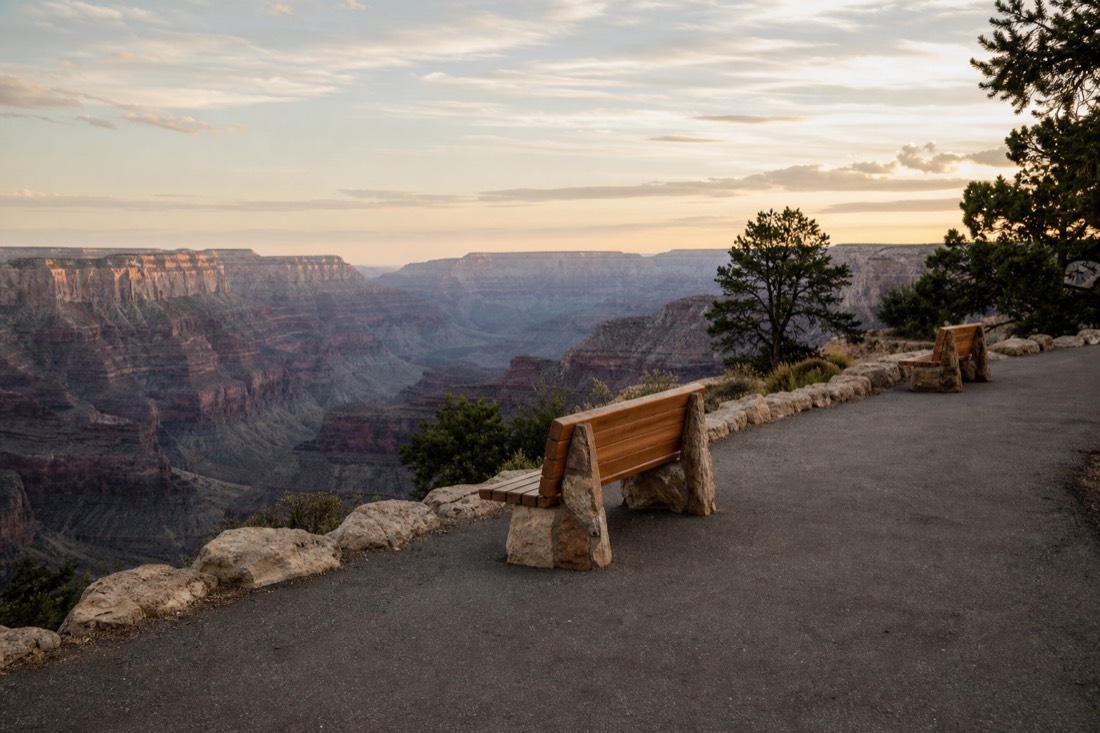
Altitude is the quiet variable in every senior itinerary here. At 7,000 feet the air holds noticeably less oxygen than sea level, and the first day is when people overdo it. The fix is pace, not fitness. The Rim Trail's paved stretches through the village are close to level, benches appear regularly, and the shuttle system means a viewpoint is never a forced march away. Current entrance pricing sits on the park fees page, though train passengers can ignore it since the ticket covers entry.
| Concern | What works at the South Rim |
|---|---|
| Limited walking range | Paved Rim Trail sections through the village, level and bench-lined |
| Getting between viewpoints | Free park shuttle, no car needed |
| Thin air at 7,000 feet | Slow first hours, steady water, no stairs at speed |
| Full sun and dry heat | Morning viewpoints, shade breaks, a real hat |
| Long gate lines | Railway and most packages include or handle entry |
What does a senior-friendly canyon day look like hour by hour?
Build the day around two short energy peaks and one long sit. Cool morning air for the viewpoints, a proper lunch in a chair, then one gentle stretch of paved rim in the afternoon. The railway enforces that shape for you, because the ride home is a two-hour rest nobody can talk you out of.
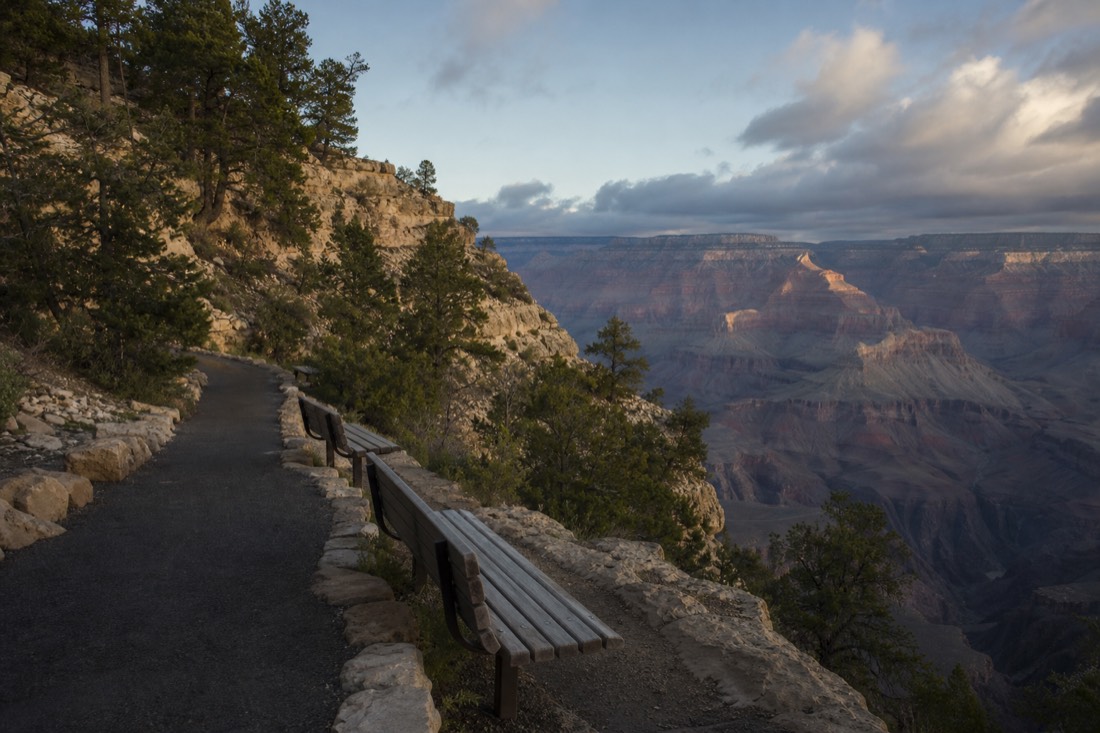
Most visitors plan a canyon day by listing sights. Past sixty, it works better to plan it by energy, and to accept that you get roughly two good walking blocks before the altitude and the sun start charging interest. The train day happens to match that rhythm almost exactly. Departure from Williams sits around 9:45am, which means no alarm before dawn, and the roughly 3 hours 15 minutes you get at the rim is close to the amount of viewpoint time most older travellers actually enjoy before they want to sit down.
Here is the shape of that day as a body clock rather than an itinerary. Treat the hours as a planning allowance, not a timetable; confirm actual departure and return times on the listing.
| Rough hour | What is happening | What it asks of your body |
|---|---|---|
| Before 9am | Arrive at the Williams depot, Wild West entertainment before boarding | Standing on a flat platform, easy to sit out |
| 9:45am | Departure, about 2 hours 15 minutes to Grand Canyon Depot | Nothing. Seated, restrooms onboard, aisle walkable |
| Around midday | Arrive at the rim, first view, lunch in the village | One short walk, then a chair and food |
| Early afternoon | Paved Rim Trail stretch or a shuttle hop to a second viewpoint | Your one real walking block of the day |
| Mid afternoon | Back to the depot, board for the return | Short walk, then seated for good |
| Late afternoon | Return leg, about 2 hours 15 minutes | A forced rest, which is the point |
Compare that with a self-drive day where the driving bookends both ends of your energy, and the difference is not the mileage. It is who is tired at the wheel at 6pm.
Which park passes and fees actually apply to older travellers?
Standard South Rim entry runs $35 per vehicle, $30 per motorcycle, or $20 per person on foot or bicycle, and it stays valid for seven days. The America the Beautiful annual pass is $80. That same federal programme also carries a lifetime Senior Pass and an Access Pass for US citizens and permanent residents.
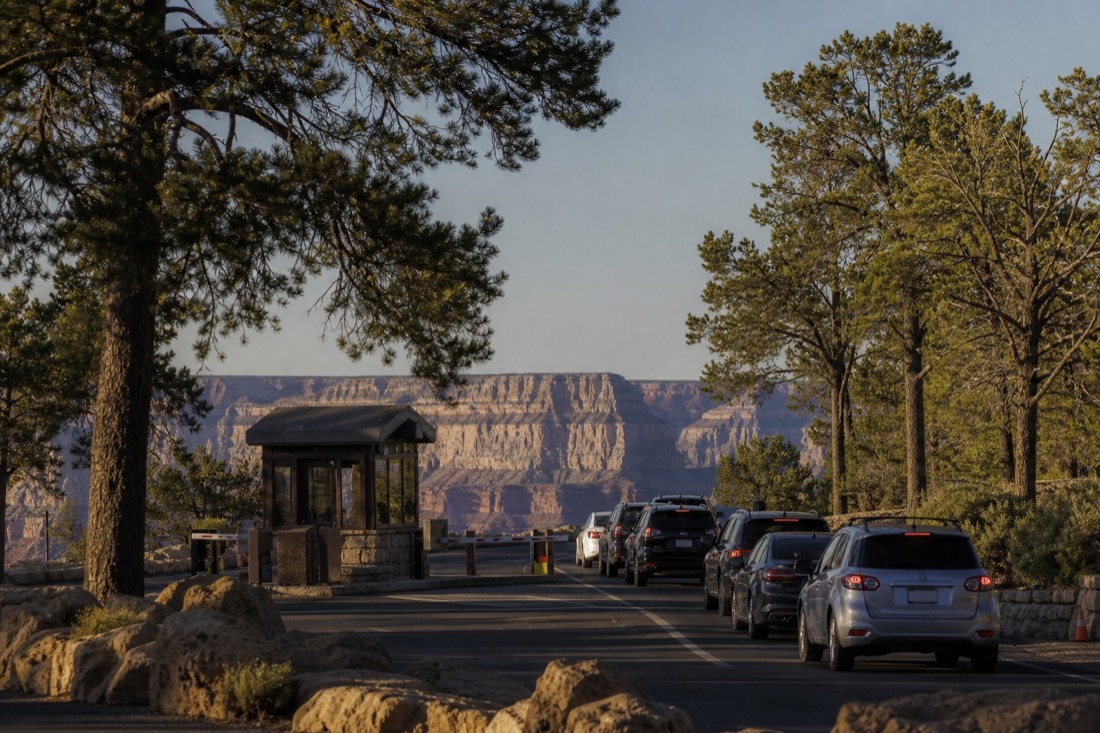
Two things trip people up here. The first is that a vehicle fee covers the whole car, so a couple driving in pays once, while two people arriving on a shuttle bus pay per person. The second is newer: since January 1, 2026, non-US residents aged 16 and over pay an extra $100 per person on top of standard entry unless they hold a qualifying pass, and several tour listings state plainly that they do not include it. Read the inclusions line before you assume your package handles the gate.
If you are a US citizen or permanent resident of retirement age, the lifetime Senior Pass is the single best-value thing in the federal park system, and the Access Pass exists for travellers with a permanent disability. Neither price is worth quoting from memory, because both live on the official park fees page and that is where you should confirm them.
| How you enter | Fee | Notes |
|---|---|---|
| Private vehicle | $35 | Covers everyone in the car, valid 7 days |
| Motorcycle | $30 | Valid 7 days |
| On foot or bicycle | $20 per person | Valid 7 days |
| America the Beautiful annual pass | $80 | Covers federal parks nationwide for a year |
| Non-resident annual pass | $250 | The annual option priced for overseas visitors |
| Lifetime Senior Pass | See nps.gov | US citizens and permanent residents only |
| Access Pass | See nps.gov | For travellers with a permanent disability |
| Non-resident surcharge (from Jan 1, 2026) | $100 per person, ages 16+ | Waived with a qualifying pass; often excluded from tour prices |
One relief for train passengers: the GetYourGuide railway ticket includes park entrance, so the gate stops being your problem entirely. And there is no timed-entry reservation system at the Grand Canyon in 2026, so nothing to book at midnight three months out.
Is Grand Canyon West easier to manage than the national park?
In some ways, yes. Grand Canyon West sits on Hualapai tribal land rather than inside the national park, and hop-on-hop-off shuttles carry you between the viewpoints so almost no walking is required. Admission runs $67 general or $99 all-access including the Skywalk. National park passes are not valid there.
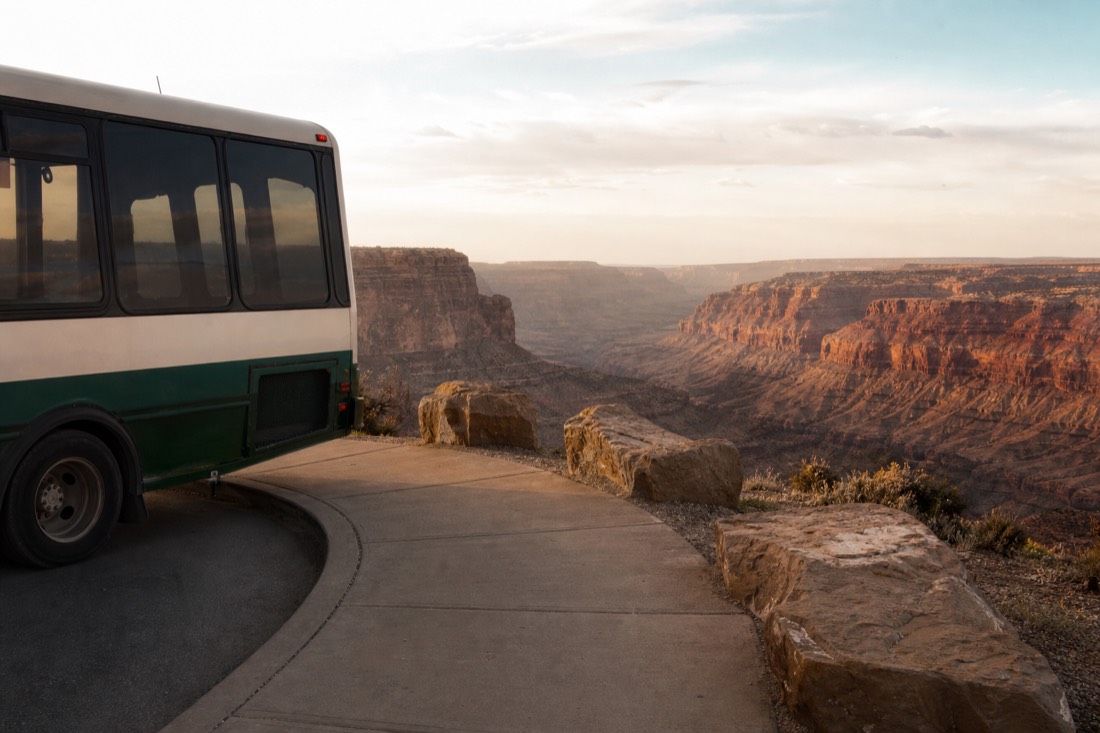
The shuttle system is the reason this place suits limited mobility. At the South Rim the free park shuttle does a similar job, but you still choose your own distances along the Rim Trail. At Grand Canyon West the whole site is built as a loop of stops, and the walking between the bus and the railing is short at each one. The all-access ticket adds the Skywalk, the glass walkway that arcs out over the canyon, and phones are now permitted on the glass at the guest's own risk, which was not always the case. Both tiers include $10 in meal credit and $10 in merchandise credit, and a zipline flight at Hualapai Point is part of the all-access package for anyone who wants it.
Be even-handed about the reviews. The all-access admission itself holds 3.2 across 487 Viator reviews, well below the tours on this site, and complaints usually centre on crowds and value rather than access. Current ticket tiers are listed on the operator's own tickets and deals page, and the West Rim and Skywalk options here show what is bookable.
| What you want to avoid | South Rim, national park | Grand Canyon West |
|---|---|---|
| Walking between viewpoints | Free park shuttle plus paved Rim Trail | Hop-on-hop-off shuttles built into admission |
| Paying at the gate on the day | Included on the railway ticket and many packages | $67 general or $99 all-access, bought ahead |
| Using a pass you already own | America the Beautiful, Senior and Access passes valid | NPS passes not valid, tribal land |
| Standing in an exposed queue | Shaded village facilities near the visitor center | Meal and merchandise credits included, seating on site |
| Steps and uneven surfaces | Paved village sections, some historic buildings older | Level viewing platforms and the Skywalk glass deck |
What should you actually carry for a day on the rim?
Water first, and more of it than feels sensible, because dry air at 7,000 feet takes moisture out of you without visible sweat. Then real sun cover, a warm layer for the shade, shoes with grip for gritty pavement, and every medication in the bag you carry rather than the one in the coach.
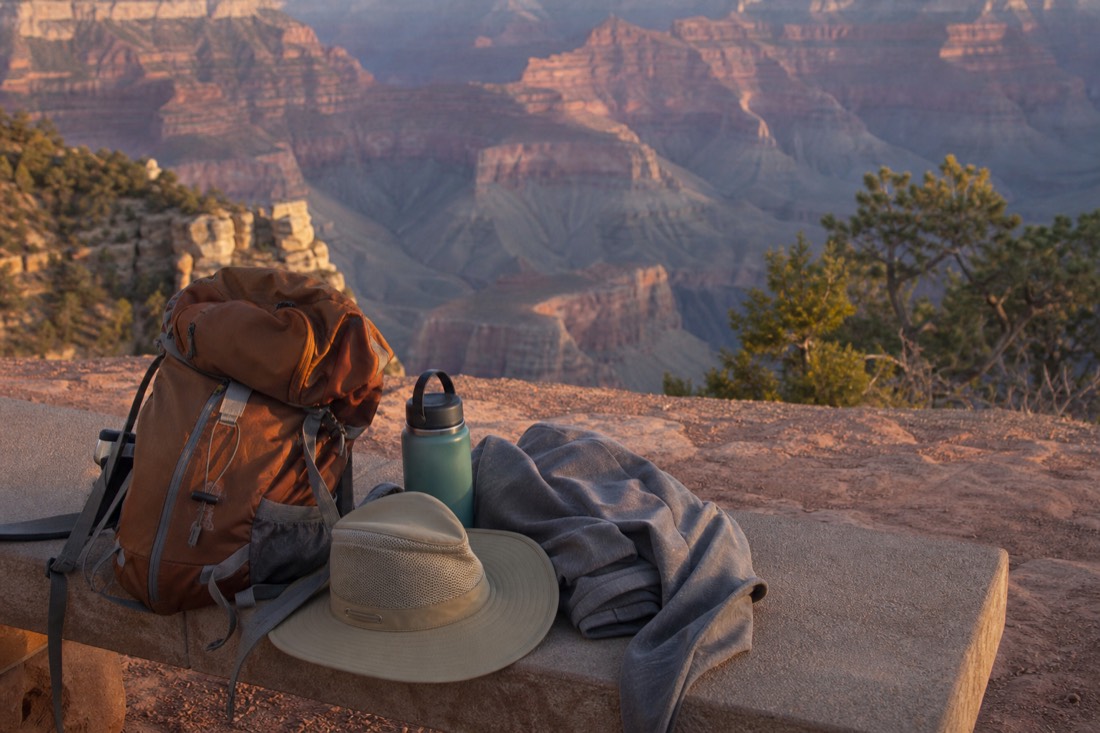
The rim is a high, dry, open place with weather that changes faster than the view suggests. In one October afternoon I have watched people go from shirtsleeves to shivering because the sun dropped behind a cloud bank and the wind came up off the canyon. A light fleece and a windproof layer weigh nothing and save the last hour of a trip. Sunglasses matter more here than most people expect, because the pale limestone throws glare back at you all day.
Footwear deserves a sentence of its own. The paved sections near the village are level and easy, but they carry a fine grit that behaves like ball bearings under a smooth sole. Anything with a tread pattern is fine. Walking poles or a cane with a rubber tip work well on paved rim path and are worth bringing if you use one at home.
Medication, spare glasses and anything you would hate to lose belong in a small bag on your shoulder. Coaches make stops, trains have a departure time, and the gap between you and your luggage is exactly when you will want the thing that is in it. In winter, add traction. Snow and ice reach the rim roads and trails, the park stays open all 365 days, and the icy patch that catches people is usually the shaded twenty metres between a car park and a railing.
What is the mobility question I get asked most?
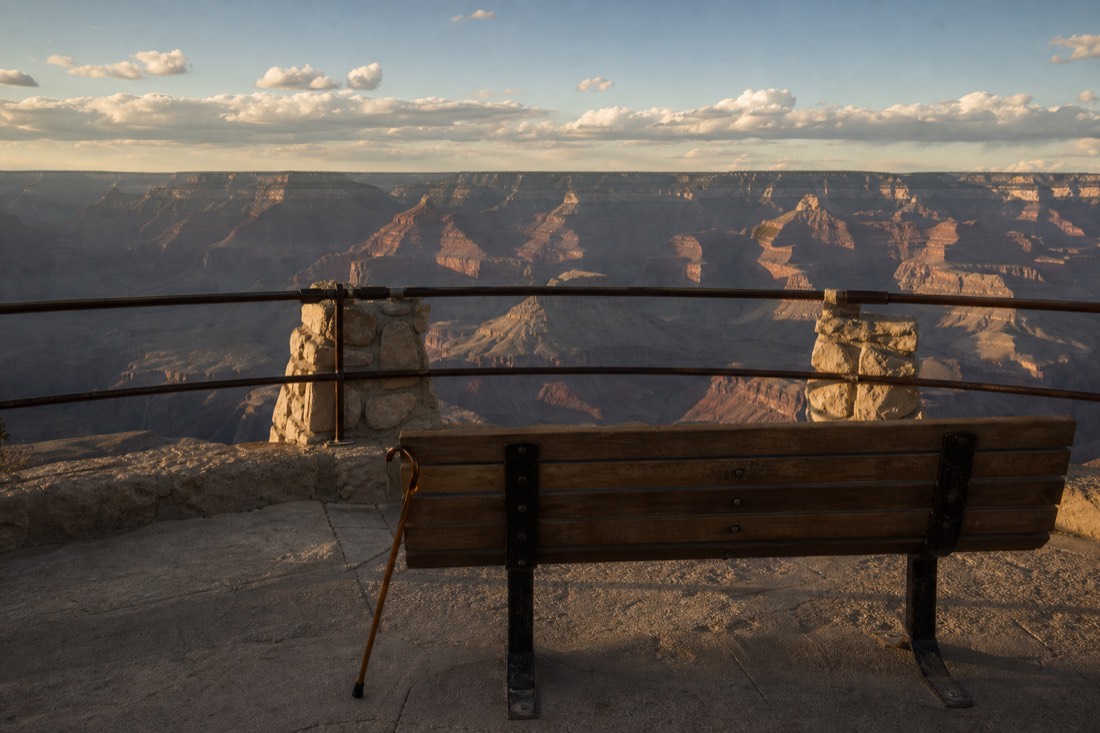
"Can I still do this if I cannot walk far?" Almost always, yes. The variable that decides a canyon day is not total distance, it is the distance between where a vehicle stops and where the railing is, and at the developed South Rim viewpoints that gap is short and paved.
I guide out of Monument Valley and have worked across the Colorado Plateau since 2022, more than a thousand travellers by my own count, and canyon country is home ground rather than a destination for me. The question arrives in my inbox in a dozen forms every season, usually apologetic, usually from someone who has decided in advance that the answer is no.
What I tell them is to stop measuring the day in miles and start measuring it in gaps. Mather Point is a short walk from the main visitor center on level paving. The shuttle stops along the village put a railing within a couple of minutes of the kerb. If your comfortable range is two hundred metres at a time with a sit in between, the South Rim is built for you, and you will see the same canyon as the person who walked eight miles of it.
The second half of my answer is about the thing people never ask about, which is altitude. Arriving from sea level, breathlessness on a gentle slope at 7,000 feet is normal and not a sign you have overreached. Give the first afternoon less than you think you can handle. Drink before you are thirsty. And if you are visiting tribal land on the same trip, ask before photographing people, and stay on the marked areas; that is basic courtesy here, not a rule invented for visitors.
One thing I will not do is tell you how a particular flight or coach felt from the seat, because I have not been on the ones sold here. What I can tell you is what this landscape does to bodies that arrive from lower, wetter places, and it is always the same three things: thin air, dry air, and more sun than the temperature suggests.
What changes between summer and winter at the rim?
Everything except the view. Summer brings heat, crowds and afternoon monsoon storms from July into September that can reshuffle flights. Spring and fall are the comfortable middle. Winter is quiet and cheap outside the holidays, with snow and ice on rim roads and trails, and the park open all 365 days.
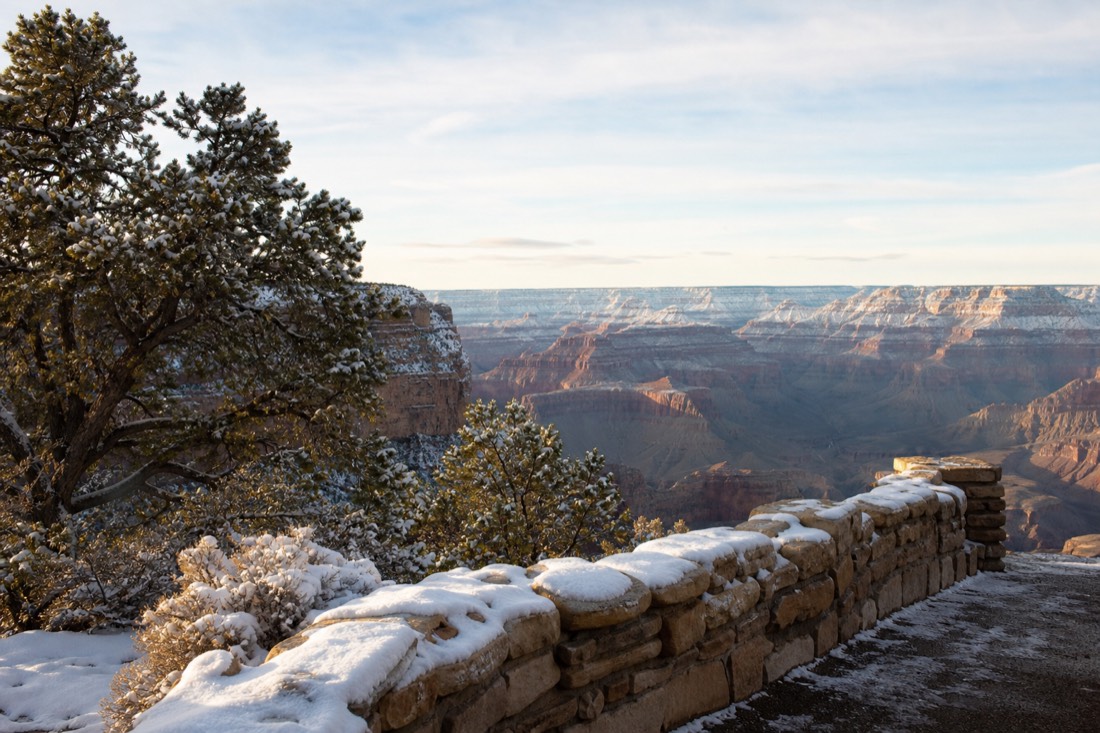
Season changes the physical demand of an identical itinerary more than any other factor. The same paved walk that is pleasant in April is punishing at 2pm in July, and the same overlook that is a fifteen-minute stroll in October needs careful footing in January. Monsoon season deserves particular attention if you have booked anything airborne, because afternoon storms build fast and operators move flights rather than fly through them.
Select North Rim areas reopened on May 15, 2026. There is no in-park overnight lodging; the North Kaibab Trail is closed following August flooding. Check current NPS access before travel.
| Season | What the rim is like | What it means if you are pacing yourself |
|---|---|---|
| March to May | Cool mornings, mild afternoons, thinner crowds early | The easiest walking conditions of the year |
| June to early July | Hot, bright, busy, long daylight | Front-load everything before 11am, plan shade |
| July to September | Monsoon build-ups most afternoons | Book flights early in the day, keep plans flexible |
| October to November | Crisp air, low crowds, short days | The other sweet spot, bring a warm layer |
| December to February | Snow and ice possible, quiet, cheapest outside holidays | Traction underfoot matters, shorter outdoor blocks |
For picking dates around all of this, the best time to visit guide compares months in more detail.
The pattern under all of this is simple: buy seat time, spend your feet only at the rim, and keep the door-to-door day under control. If you are still sketching the trip, start with how many days the canyon deserves and pick lodging that shortens the drives in where to stay.
Make the day fit your trip
Check your date before arranging the rest
Initial editorial suggestion. Use the optional choices to narrow this article’s shortlist; confirm individual eligibility with the operator.
Grand Canyon Railway round trip
Historic rail travel from Williams to Grand Canyon Village with a same-day return.
About eight hours overall; own arrival at Williams Depot. Choose coach or first class. Meals and hotel pickup excluded. Under-twos ride on a lap. Arrange any boarding assistance in advance; confirm current park charges.
Compare options and tailor this choice
Why choose an alternative?
Grand Canyon Railway round trip · Williams · 8 hours to allow
Historic rail travel from Williams to Grand Canyon Village with a same-day return. About eight hours overall; own arrival at Williams Depot. Choose coach or first class. Meals and hotel pickup excluded. Under-twos ride on a lap. Arrange any boarding assistance in advance; confirm current park charges.
South Rim airplane flight · Tusayan · 2 hours to allow
A 40-minute sightseeing flight over the canyon, with an optional Hummer tour sold separately. Own arrival at Tusayan airport; allow check-in time beyond the flight. English audio available. At 300 lb or more, an extra seat is required. Under-twos may ride on a lap with proof of age; confirm boarding needs directly.
Las Vegas West Rim coach tour · Las Vegas · 11 hours to allow
Hotel transport, an IHOP breakfast and canyon time without driving the desert return yourself. Selected Las Vegas hotel pickup; English guide, breakfast and water included. Skywalk and lunch depend on the option. Plan around 11 hours; confirm mobility arrangements with the operator.
Compare your own quotes
Enter totals for the same party and inclusions, in one currency. Include transport, entry, meals and extras in both quotes.
Viator scheduled departures
Select a date to see the published schedule. Seats, final price and booking are confirmed on Viator.
Affiliate booking link: we may earn a commission at no extra cost to you.