Grand Canyon from Flagstaff: The Closest Big Base
No gateway town gives you more for a canyon trip than Flagstaff, a real city 1.5 hours from the South Rim with Route 66 running through the middle of it. Here is how to use it, when the train from Williams beats driving, and what winter does to the roads.
 Written with Daniel Begay, Southwest canyon-country tour guide & Navajo cultural specialist
Short answer
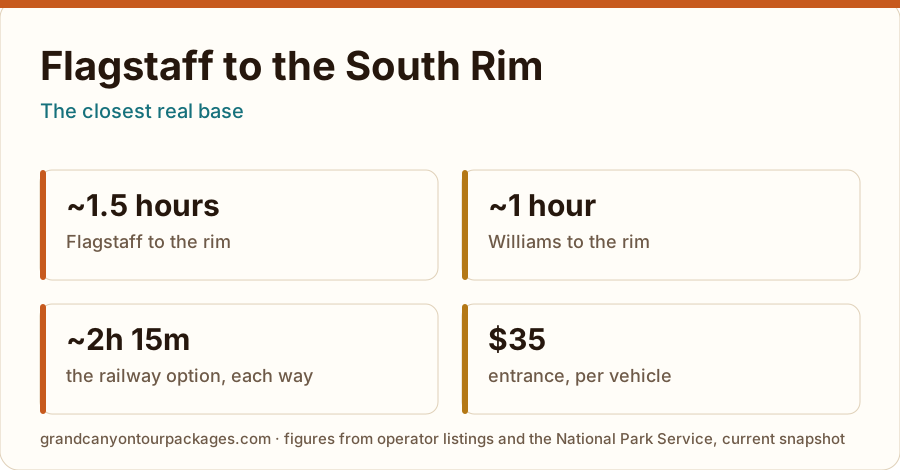
Flagstaff is about 1.5 hours from the South Rim and is the biggest, best-equipped base for a canyon trip, with far more hotels and restaurants than Williams or Tusayan. The trade is distance; Tusayan sleeps you at the gate. In winter, remember Flagstaff sits at 7,000 feet and gets serious snow.
Flagstaff surprises people who expect a dusty desert stop. It is a mountain town, pines to the horizon, snow on the San Francisco Peaks half the year, freight trains rolling through downtown at all hours. I stop there for supplies and green chile more often than anywhere else off the Nation, and I have watched a lot of canyon-bound travelers figure out, usually at dinner on Route 66, that they accidentally picked the best base in northern Arizona.
How far is the Grand Canyon from Flagstaff?
About 1.5 hours of easy highway driving to the South Rim, the shortest run of any full-service town. That distance is what makes Flagstaff work: close enough for sunrise starts and sunset returns, big enough that you eat well and sleep cheap while doing it.
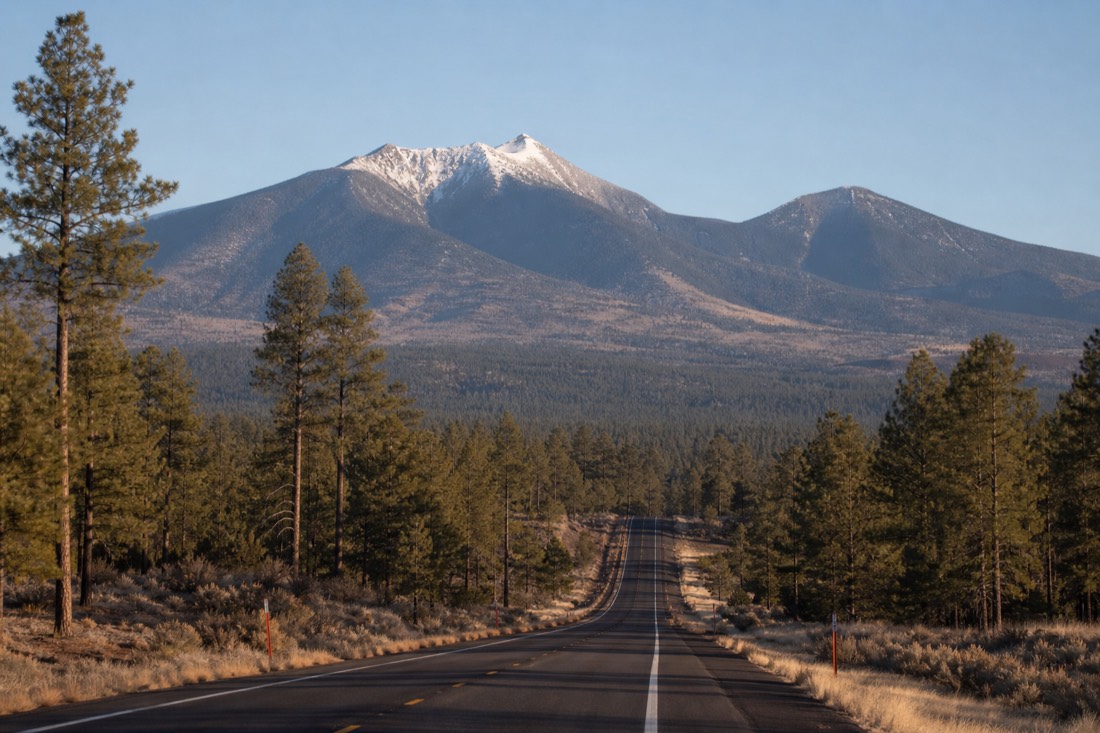
An hour and a half is the sweet spot for a canyon commute. It is short enough to do twice in a day without resentment, and short enough that a 5am alarm still gets you to the rim for first light. The road north runs through pine forest and open grassland where elk graze at dawn, and there is no city traffic on any of it once you clear town.
The park takes no reservations for entry, so the only timing that matters is your own. Pay at the gate, or check current entrance pricing on the NPS fee page before you go.
| From Flagstaff | Time | Note |
|---|---|---|
| South Rim (main gate) | ~1.5 h | The standard run, sunrise-friendly |
| Williams | ~30 min west | Railway departures, Route 66 town |
| Sedona (via Oak Creek Canyon) | Under an hour south | Worth a half day on its own |
Is Flagstaff a good place to stay when visiting the Grand Canyon?
Yes, for most trips it is the best base there is. You get the region's biggest choice of hotels, real restaurants, groceries, gas, and a downtown worth an evening. The honest trade-off is that Tusayan puts you minutes from the gate, so hardcore sunrise chasers may prefer to sleep closer.
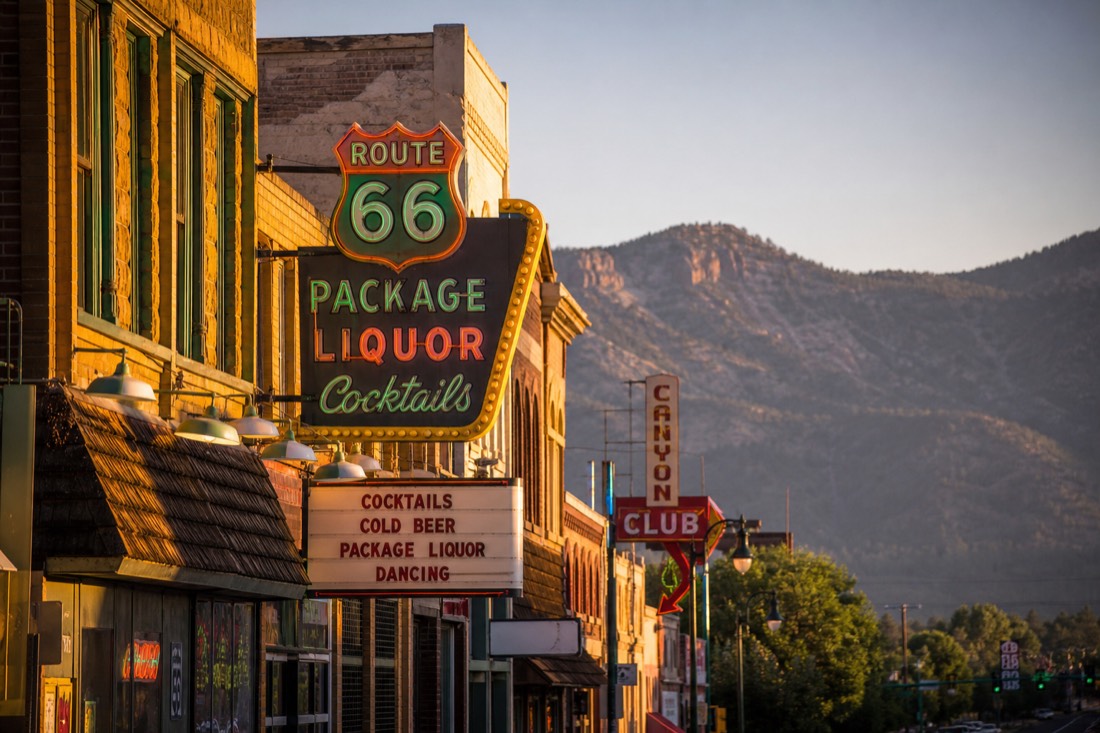
Here is how I frame it for people. If your trip is one canyon day inside a bigger Arizona loop, Flagstaff wins, because everything else you need lives there too. If your trip is two or three rim days with dawn photography every morning, the 1.5-hour repeat commute starts to bite, and Tusayan's plain but gate-adjacent hotels earn their premium. Williams splits the difference with charm and the train.
| Base | To the rim | Strengths | Weakness |
|---|---|---|---|
| Flagstaff | ~1.5 h | Most hotels, best food, Route 66, supplies | Longest of the three commutes |
| Williams | ~30 min west of Flagstaff | Railway departures, small-town character | Fewer beds, quieter evenings |
| Tusayan | Minutes | Closest to the gate, sunset without a long drive back | Small, limited dining, pricier per night |
The full hotel-by-hotel breakdown, including in-park lodging, is in the where to stay guide. And if you are still choosing a launch city, the Phoenix guide shows how Flagstaff fits an overnight from the valley.
How does the railway from Williams fit a Flagstaff plan?
Perfectly. Williams sits about 30 minutes west of Flagstaff, and the Grand Canyon Railway departs around 9:45am for a ride of roughly 2 hours 15 minutes each way to the rim, rated 4.7 across 940 GetYourGuide reviews. Sleep in either town, board the train, and skip parking entirely.
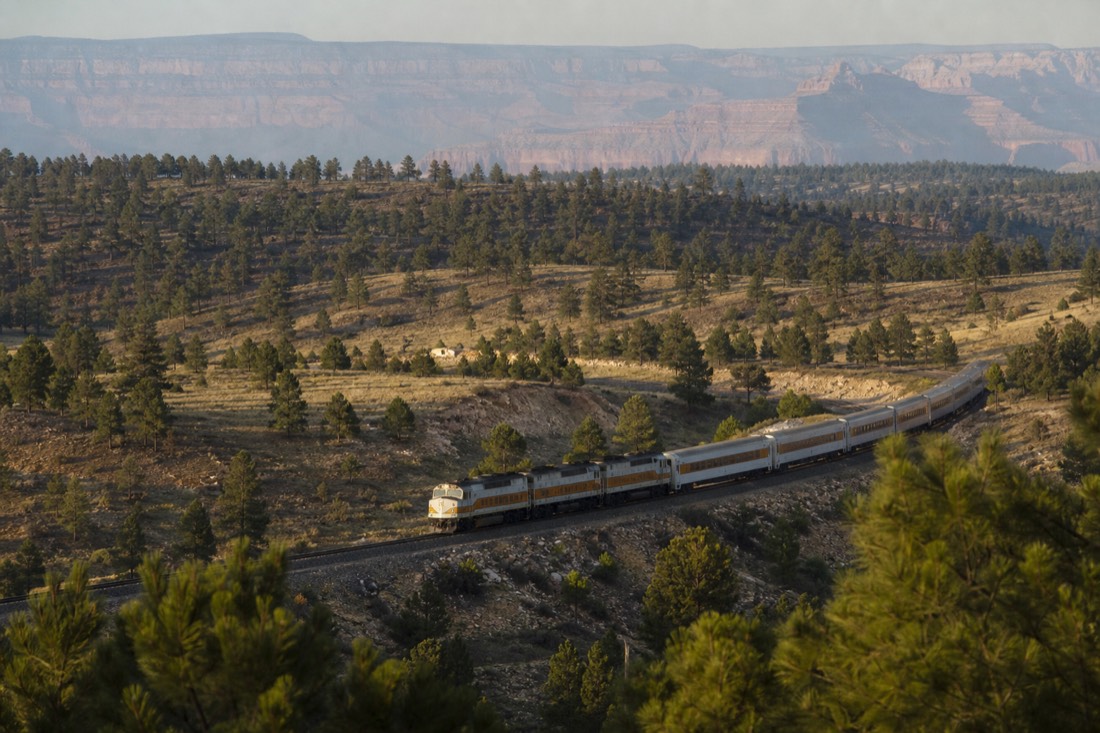
The train is the one canyon approach that needs zero driving skill, zero parking luck, and zero attention to the road. It rolls out of the 1908-era Williams depot in the morning, puts you at the rim for the middle of the day, and brings you back with musicians and staged Old West nonsense that children take very seriously. The details worth planning around, verified against the operator's listing: the roughly 9:45am departure means staying in Williams or Flagstaff the night before, and cancellation closes 3 days out, tighter than typical day tours.
| Railway fact | Detail |
|---|---|
| Departure | ~9:45am from Williams |
| Ride time | ~2 h 15 min each way |
| Rating | 4.7 across 940 GYG reviews |
| Cancellation | Free up to 3 days before |
The operator also sells its own lodging and rail packages if you want the hotel bundled. Every bookable rail option we track lives on the train packages page, or you can go straight to the round trip and check live availability and prices on GetYourGuide. For the feel of the ride itself, a full account is in riding the Grand Canyon Railway.
What is winter driving like at 7,000 feet?
Real. Flagstaff sits at 7,000 feet and takes heavy snow most winters, and the road to the rim stays at elevation the whole way. The highways are plowed and the canyon under snow is unforgettable, but you need to drive to conditions, carry layers, and keep the schedule flexible.
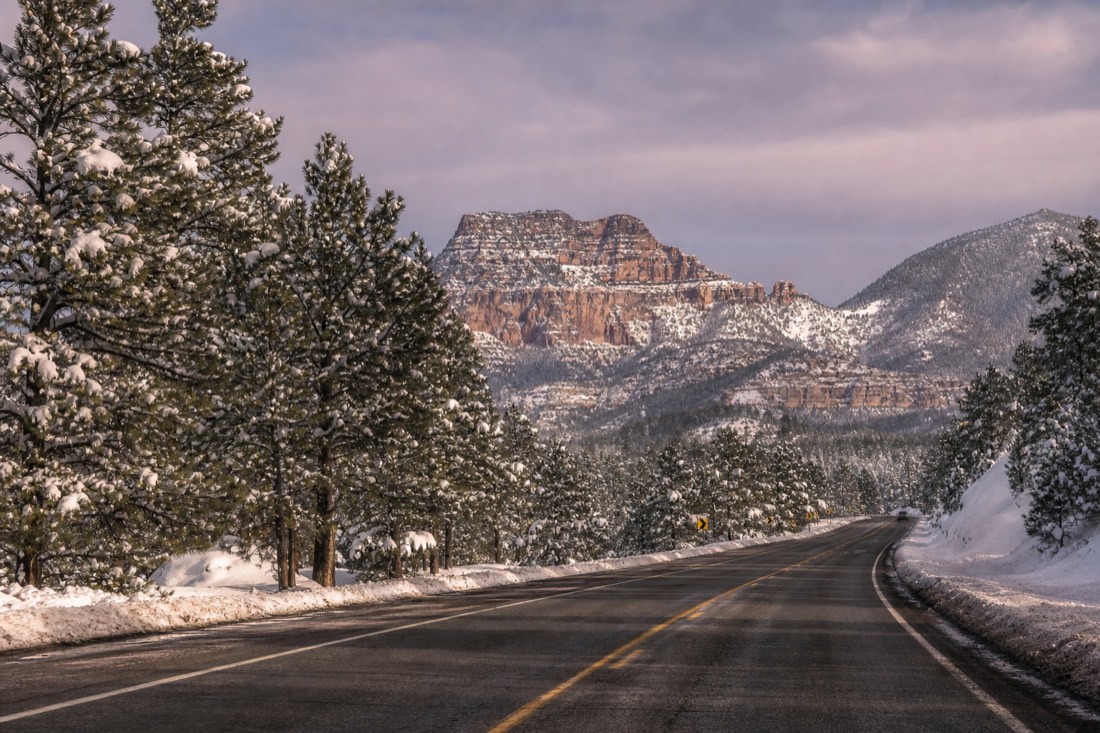
People book Arizona expecting saguaros and get a ski town. I have crossed this plateau in whiteouts and in blazing January sun, sometimes in the same afternoon. The pattern is storms that hit hard, then clear fast; plows work the main roads quickly, and a day after a storm the driving is usually fine while the rim wears the best snow photos you will ever take.
Practical winter rules from a local: check the forecast the night before, not the week before. Fill the tank in Flagstaff. Keep blankets and water in the car. Give elk and ice the same respect. And if the storm is live, the train from Williams quietly becomes the smartest route to the rim, since someone else is doing the driving.
| Season from Flagstaff | Road reality | Payoff |
|---|---|---|
| Winter (Dec-Mar) | Snow and ice possible, plowed quickly | Snow on the rim, thin crowds |
| Spring (Apr-May) | Clear, windy | Mild days, good light |
| Summer (Jun-Aug) | Clear, afternoon monsoon storms | Long days, busiest gates |
| Fall (Sep-Nov) | Clear and crisp | Best all-round conditions |
What does a good Flagstaff-based canyon day look like?
Leave by 6am for sunrise or by 8am for a relaxed day, spend the core hours on the viewpoints and rim trail, then either stay for sunset or head back for dinner on Route 66. The 1.5-hour hop each way leaves more rim time than any other real town can offer.
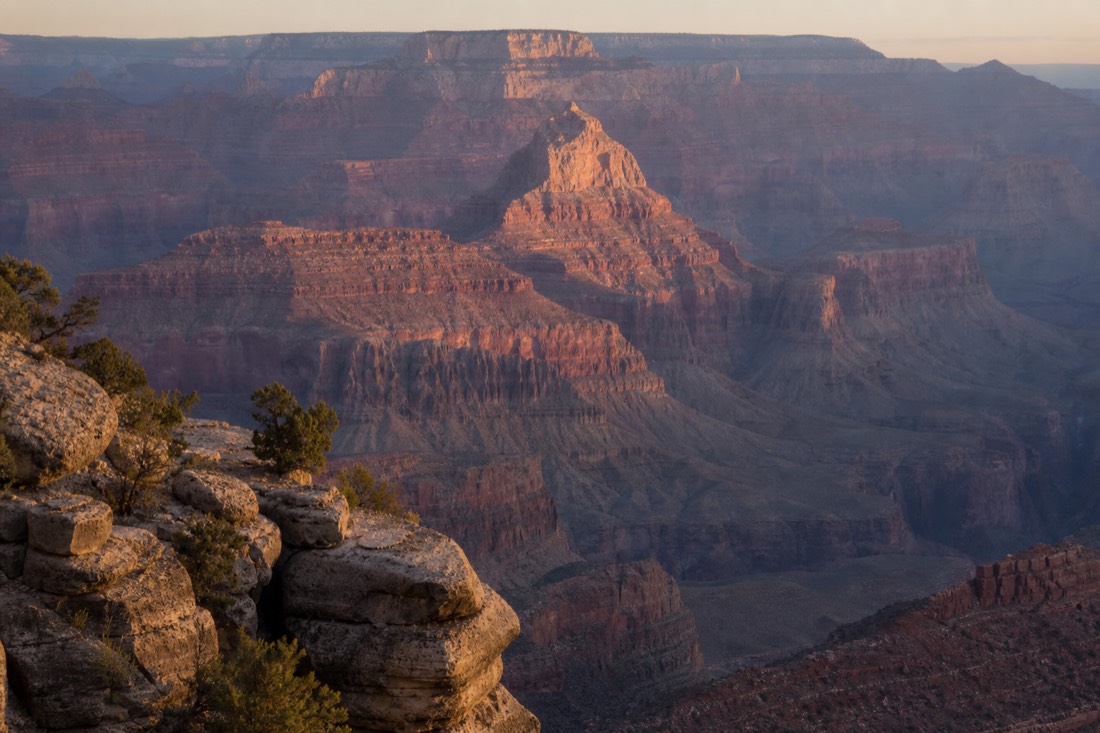
The shape of the day is simple: drive early, walk the rim while the light is low, take the shuttle or the best viewpoints in the afternoon, and decide at 4pm whether sunset is happening. If it is, dinner in Tusayan bridges the gap and you drive home in the dark on easy roads. If you want a bigger add-on, the airplane tour out of Tusayan and the guided sunset trips on the South Rim page both slot into this schedule without strain.
Give it two days if you can. Sunrise and sunset are different canyons, and Flagstaff makes doing both cheap and easy, which is the whole argument in how many days at the Grand Canyon.
And do not sleep on Flagstaff itself in the evenings. The old downtown blocks along the tracks hold breweries, bookstores, and diners that have fed Route 66 travelers for generations, and after a windburned day on the rim, a slow dinner there beats anything the gateway strip can offer. It is the rare canyon base where the town is part of the trip.
Which of the two roads from Flagstaff should you take?
There are two. Route 180 runs northwest through the forest straight to the park's south entrance, the shorter and prettier line. The other goes west on the interstate to Williams and turns north on 64, which is longer in miles but faster in bad weather and gives you a town at the halfway mark. Most days, take 180.
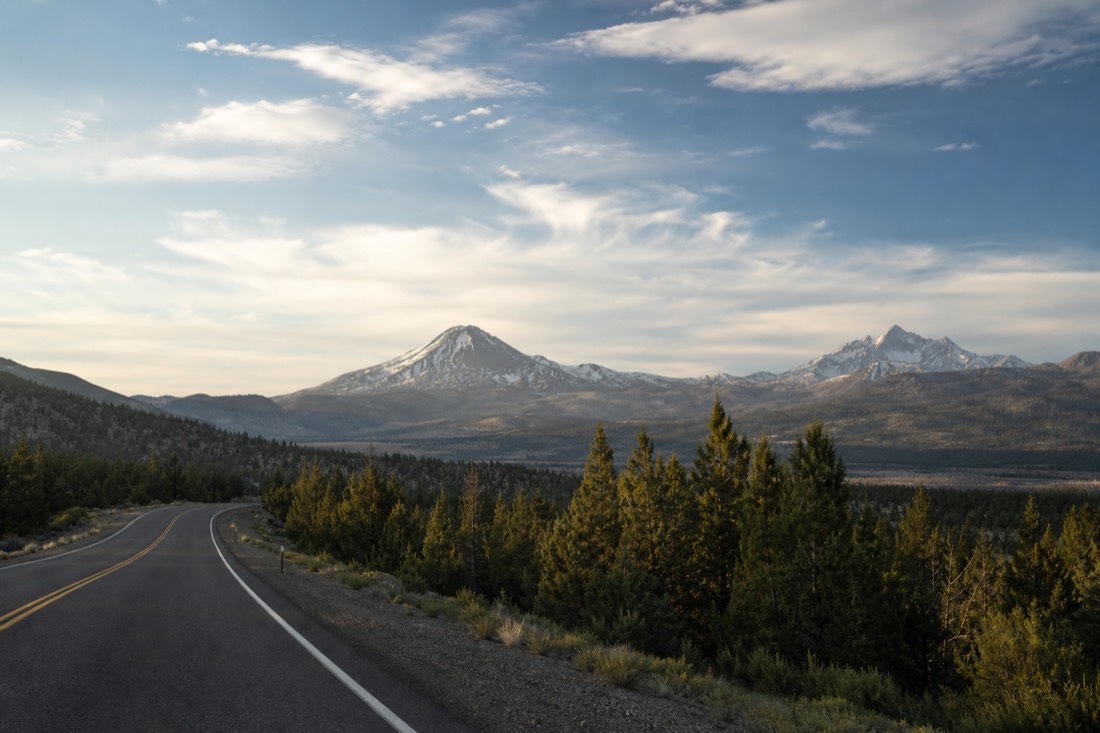
The 180 route is the local default and it is a genuinely lovely drive, climbing past the peaks and out through aspen and pine before the forest opens into grassland. It is also the road that closes first when a storm comes through, and it is the one with the fewest places to stop if something goes wrong.
The Williams routing is the insurance policy. Interstate for the first half means plows get to it first and traffic keeps it clear, and Williams itself gives you fuel, food and a rail depot at the point where a bad forecast might make you change plans. In summer the difference between the two is a handful of minutes. In February it can be the difference between going and not going.
| Route from Flagstaff | Character | Allow | Take it when |
|---|---|---|---|
| Route 180 northwest to the south entrance | Forest, peaks, aspen, grassland, few services | ~1 h 30 min | Clear weather, daylight, you want the scenery |
| West to Williams, then Route 64 north | Interstate then open plateau highway, a town at the midpoint | ~1 h 30 min plus a stop | Snow or ice, an early start, you want a fuel and coffee break |
| Either road, plus the Desert View loop out | Longer, exits the park east toward Cameron | Adds a couple of hours | You want a different drive home |
Park entry has no timed-entry reservation attached, so neither routing needs booking ahead, just the fee at the gate.
What time do you need to leave Flagstaff for sunrise or sunset?
Ninety minutes of driving makes both realistic in one day, which no other full-service town can claim. Leave two hours before sunrise to be standing at an overlook in the blue light, or by mid-afternoon for a relaxed sunset. Either way, budget twenty minutes for the gate and the walk.
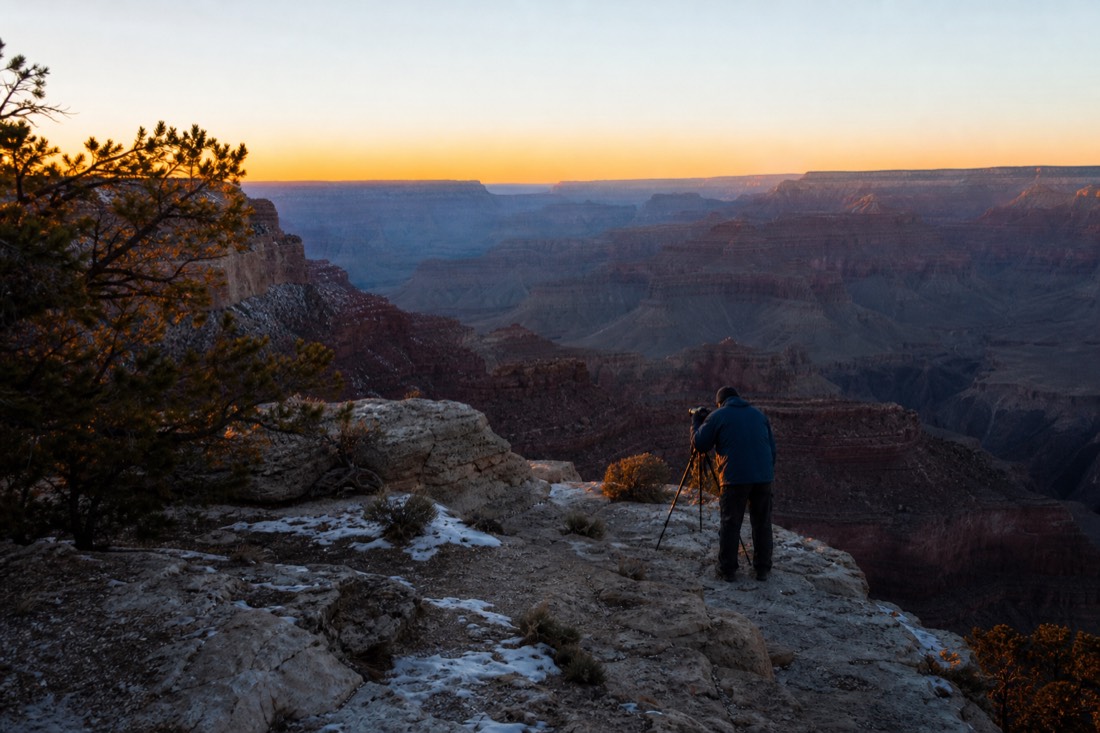
Sunrise from a Flagstaff base is the argument for staying there. Two hours before first light is an unpleasant alarm, but the gate is empty, the road is yours, and the popular overlooks hold a fraction of the people they will an hour later. It is the closest the South Rim gets to feeling quiet in high season.
Sunset is the easier sell, and the trap is the return. Leaving the rim at last light puts you on 180 in full dark with elk moving, so if the day has been long, the Williams routing home is the softer option. Doing both ends in a single day is possible from Flagstaff and exhausting, which is the argument for two nights rather than one.
| What you want | Be through the gate by | Leave Flagstaff by |
|---|---|---|
| Sunrise on the rim | 30 min before sunrise | 2 h before sunrise |
| A full day with the crowds still at breakfast | 8:00am | 6:15am |
| Afternoon plus sunset | 2:00pm | 12:15pm |
| Sunset only | 90 min before sunset | 3 h before sunset |
Those are allowances, not schedules. A summer gate queue or a herd on the road will bend any of them.
Where do you stop for fuel, food and supplies?
Buy everything in Flagstaff. It has the cheapest fuel, the widest grocery choice and the only real restaurant scene on the route, and everything north of it is smaller and pricier. Williams covers a mid-drive break on the interstate routing, and Tusayan is your last stop before the gate.
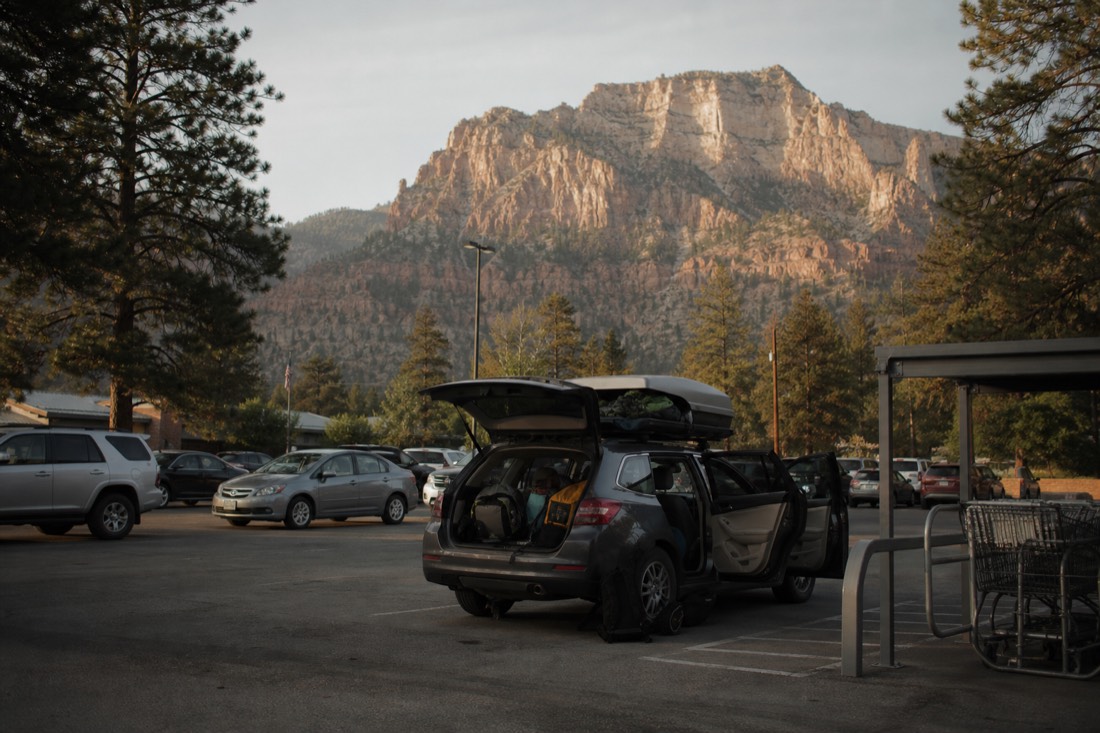
The 180 route is the one that catches people out, because there is very little on it. That is part of its charm and all of its risk. Leave town with a full tank, water for everyone in the car, and something to eat that does not depend on finding a kitchen open at the right moment.
Signal is the other supply worth thinking about. Coverage on the plateau is patchy and it disappears entirely in places inside the park, so download your maps before you leave. What you actually get at the rim, food and connectivity both, is covered in the cell service and food guide.
| Stop | Good for | Watch out |
|---|---|---|
| Flagstaff | Fuel, groceries, restaurants, gear, pharmacy | Cheapest of anywhere on this trip, stock up properly |
| Route 180 corridor | Scenery, forest pull-offs | Almost no services, no reliable signal |
| Williams | Fuel, Route 66 diners, railway depot | Kitchens close early in the off season |
| Tusayan | Last fuel and food before the gate, Grand Canyon Airport | Queues at peak hours, limited menus |
| Inside the park | Water filling stations, village dining, shuttle stops | Parking, not food, is the constraint |
What I tell people about the last twenty miles
Slow down where the forest opens. That final stretch into the park is straight, empty and tempting, and it is also prime elk country at dawn and dusk. Add the altitude, the low sun angle on a winter afternoon, and the fact that everyone in the car is looking at the trees, and it is the part of the drive that deserves the most attention.
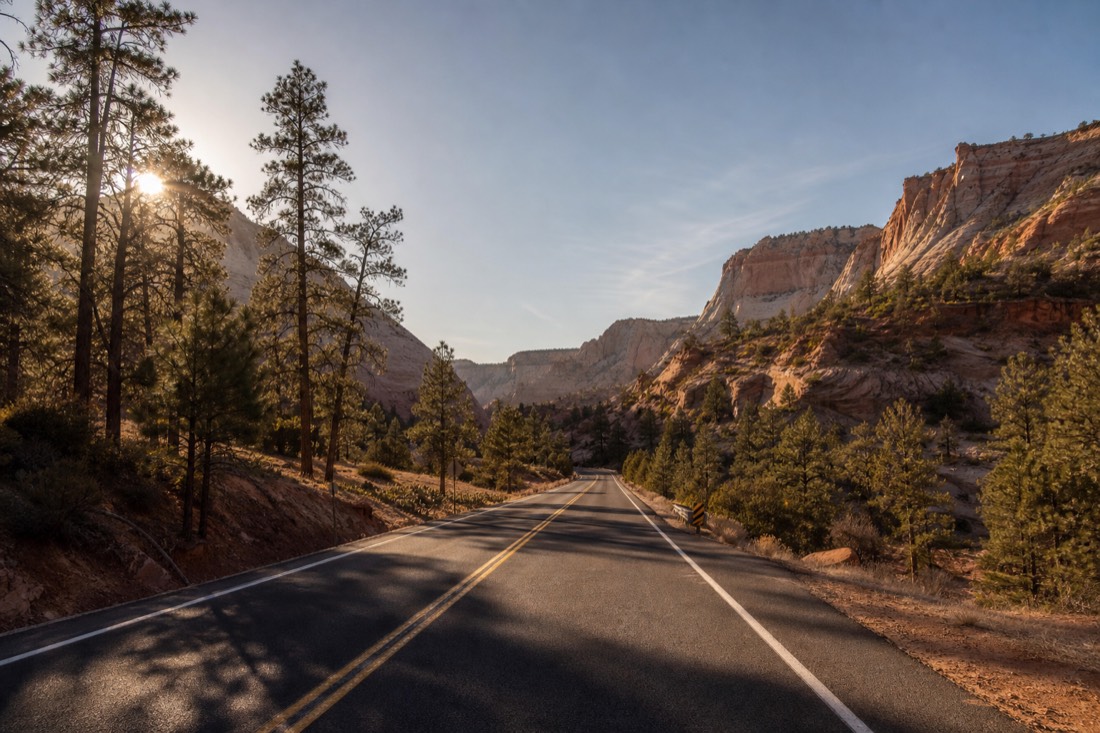
I cross this plateau often enough that the road feels like a hallway, and that familiarity is exactly the thing I have to argue with. Elk here do not run from headlights. They stand, they cross in groups, and on a two-lane road at speed there is no good outcome. My rule after dark is well under the limit, high beams up where nothing is coming, eyes on the shoulders rather than the centre line.
Winter light is the second hazard nobody lists. Late in the afternoon the sun sits directly down the westbound lanes, and a dirty windscreen turns that into a wall of glare. Clean the glass before you leave, keep the washer bottle full, and if you are heading home into it, take the interstate leg instead.
The altitude is the quiet one. Flagstaff already sits at 7,000 feet, so you are acclimatised in a way visitors flying into Phoenix are not, but the dryness still works on you all day. Water in the car, more than you think, every season including January.
What do you do with a second day based in Flagstaff?
Use it on the two things one canyon day cannot hold: the other end of the light, and the rest of the region. A second day buys sunrise or sunset properly, or it buys Sedona and Oak Creek Canyon, forty-five minutes south, which is a completely different landscape from the same bed.
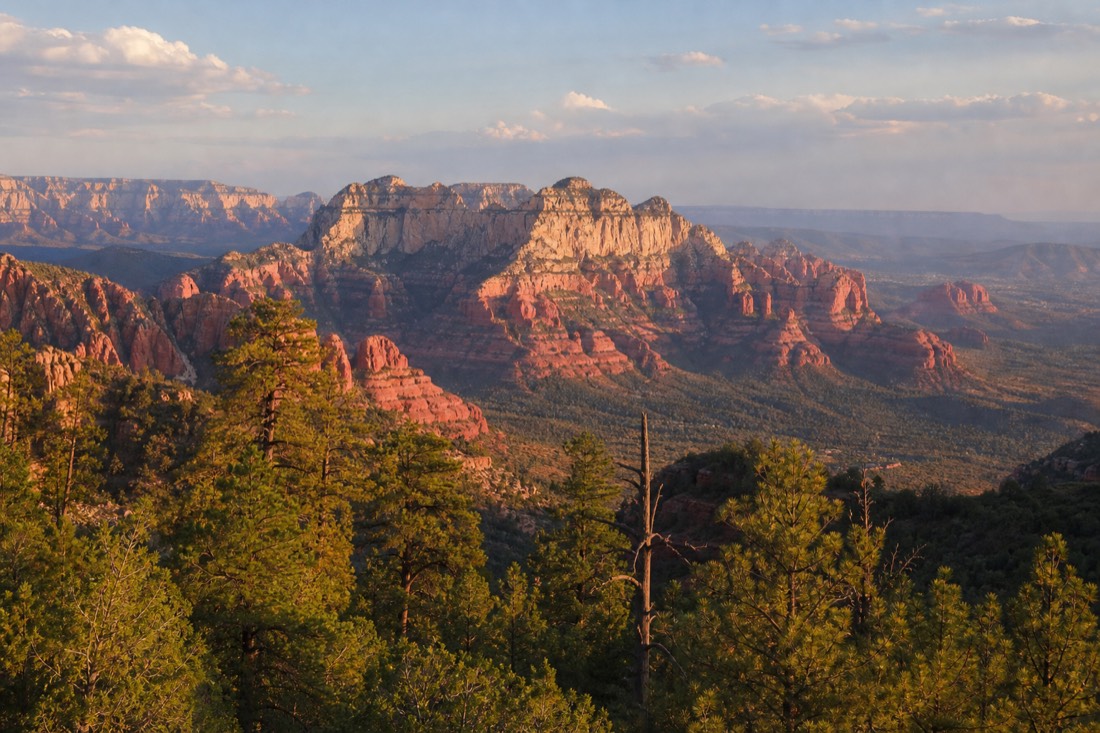
The strongest two-day shape is simple. Day one is the canyon, arriving early and staying through the afternoon. Day two is either a return for the hour you missed, or a run south into red rock country, which the Sedona guide treats as a base in its own right.
A second day also makes the add-ons affordable in time. An air tour out of Tusayan takes under an hour in the air and slots into a morning without touching the rest of your plan. The railway from Williams eats a full day but removes all the driving from it. Both are easier decisions when they are not competing with your only canyon day.
If you would rather someone else structure the time, the Park Service keeps a current list of what operates inside the park on its guided tours page, and the flights and rim tours we track sit on the South Rim tour page.
Who should base somewhere other than Flagstaff?
Photographers doing dawn every morning, families who hate early starts, and anyone visiting in a storm week. Tusayan removes the commute entirely, Williams puts you next to the train, and both cost you the restaurants and the choice that make Flagstaff comfortable the rest of the time.
Three consecutive dawn starts from Flagstaff is where the maths stops working. Ninety minutes each way, three times over, is nine hours in the car for three sunrises. Tusayan turns that into minutes and lets you go back to bed afterwards, which is not a small thing at five in the morning in February.
Storm weeks argue for Williams. If the forecast is genuinely bad, being in the town the train leaves from means the day survives whatever the roads do. That is a narrow case, but it is the one where the railway stops being a novelty and becomes the practical choice.
For everyone else the trade still lands in Flagstaff's favour, and it is not close. A real town with real food at the end of a windburned rim day is worth ninety minutes of easy highway.
Does Flagstaff have an airport?
It has a small regional one, but most visitors fly into Phoenix or Las Vegas and drive. From Phoenix, Flagstaff is the natural overnight on the way north.
Is the drive from Flagstaff boring?
No, but it is subtle: pine forest opening into high grassland, with elk and pronghorn if your eyes are working. The drama waits until you are standing on the rim.
Can I day-trip the canyon from Flagstaff in winter?
Usually yes. Roads are plowed fast and clear days between storms are common. Check the morning forecast, leave later so ice has burned off, and swap to the train from Williams if a storm is moving through.
Flagstaff solves the where; the remaining question is when. The seasons change this trip more than the base town does, and the best time to visit guide walks the year month by month.
Make the day fit your trip
Check your date before arranging the rest
Initial editorial suggestion. Use the optional choices to narrow this article’s shortlist; confirm individual eligibility with the operator.
Sedona or Flagstaff South Rim day trip
A small-group day linking volcanic country, Cameron Trading Post and East and South Rim viewpoints.
English guide and hotel return: about 11 hours from Sedona or 9 from Flagstaff. Hotel details required 72 hours ahead. Bring your own car/booster seat for children eight and under. Meals, tips and nonresident fees extra; moderate fitness required.
Compare options and tailor this choice
Why choose an alternative?
Sedona or Flagstaff South Rim day trip · Sedona / Flagstaff · 11 hours to allow
A small-group day linking volcanic country, Cameron Trading Post and East and South Rim viewpoints. English guide and hotel return: about 11 hours from Sedona or 9 from Flagstaff. Hotel details required 72 hours ahead. Bring your own car/booster seat for children eight and under. Meals, tips and nonresident fees extra; moderate fitness required.
Grand Canyon Railway round trip · Williams · 8 hours to allow
Historic rail travel from Williams to Grand Canyon Village with a same-day return. About eight hours overall; own arrival at Williams Depot. Choose coach or first class. Meals and hotel pickup excluded. Under-twos ride on a lap. Arrange any boarding assistance in advance; confirm current park charges.
South Rim sunset safari · Tusayan · 3 hours to allow
An off-road forest approach and South Rim viewpoints, finishing at Grandview Point at sunset. Meet at 408 AZ-64 in Tusayan; English guide and water included. No hotel pickup. Nonresident park charges and tips extra. Bumpy vehicle; not recommended during pregnancy or for spinal or cardiovascular conditions. Minimum booking: two guests.
Compare your own quotes
Enter totals for the same party and inclusions, in one currency. Include transport, entry, meals and extras in both quotes.
Viator scheduled departures
Select a date to see the published schedule. Seats, final price and booking are confirmed on Viator.
Affiliate booking link: we may earn a commission at no extra cost to you.