One Day at the Grand Canyon: An Itinerary That Actually Works
Sunrise at Mather Point, a morning on the Rim Trail, a 40-minute flight over the whole thing at midday, and Desert View for the afternoon. One day, spent standing at the canyon instead of driving past it.
 Written with Daniel Begay, Southwest canyon-country tour guide & Navajo cultural specialist
Short answer
Start before dawn at Mather Point, walk the Rim Trail to the Yavapai Geology Museum, fly the 40-minute airplane tour from Tusayan at midday, then drive Desert View Drive and finish with sunset back near the village. Do not attempt to hike to the river and back; the park warns against it.
Dawn at the South Rim starts as a gray line, then the canyon fills with color from the top down, layer by layer, like something being poured. I have watched that happen from a lot of rimrock in my life and it has never once gotten old. A single day here is plenty if you spend it right, and spending it right mostly means being early, walking more than driving, and refusing the one hike that ruins one-day trips.
Can you really see the Grand Canyon in one day?
Yes, one rim in one day works, and the South Rim rewards it most. The plan: sunrise at Mather Point, morning on the Rim Trail, a midday airplane flight or museum stop when the light goes flat, Desert View Drive in the afternoon, sunset near the village. The only thing off the table is the river.
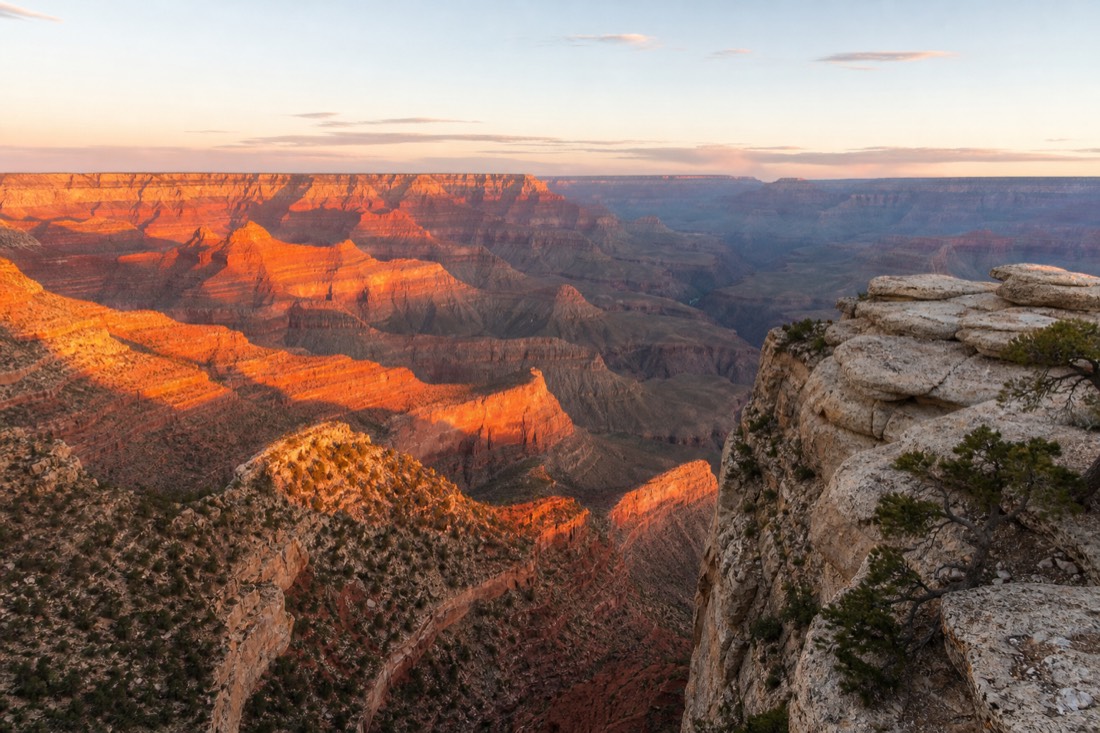
The trap in a one-day visit is treating the canyon like a checklist of pull-offs. Viewed through a windshield, the overlooks start to blur together. Viewed on foot, with the light changing while you walk, the canyon keeps rearranging itself. So this itinerary is built around two anchors, sunrise and sunset, with the flat midday light handed off to the one activity that does not depend on it: flying. If you are still deciding whether one day is enough at all, the trip-length question gets its own honest answer.
One logistical gift makes all of this easier: the park has no timed-entry system. Arrive at 5am and the gate is open.
Where should the day start?
Start at Mather Point, in the dark, about thirty minutes before sunrise. It is a short walk from the visitor center parking and walkable from Grand Canyon Village, faces the right direction for first light, and gives you the canyon's opening act before the day-trip crowds arrive.
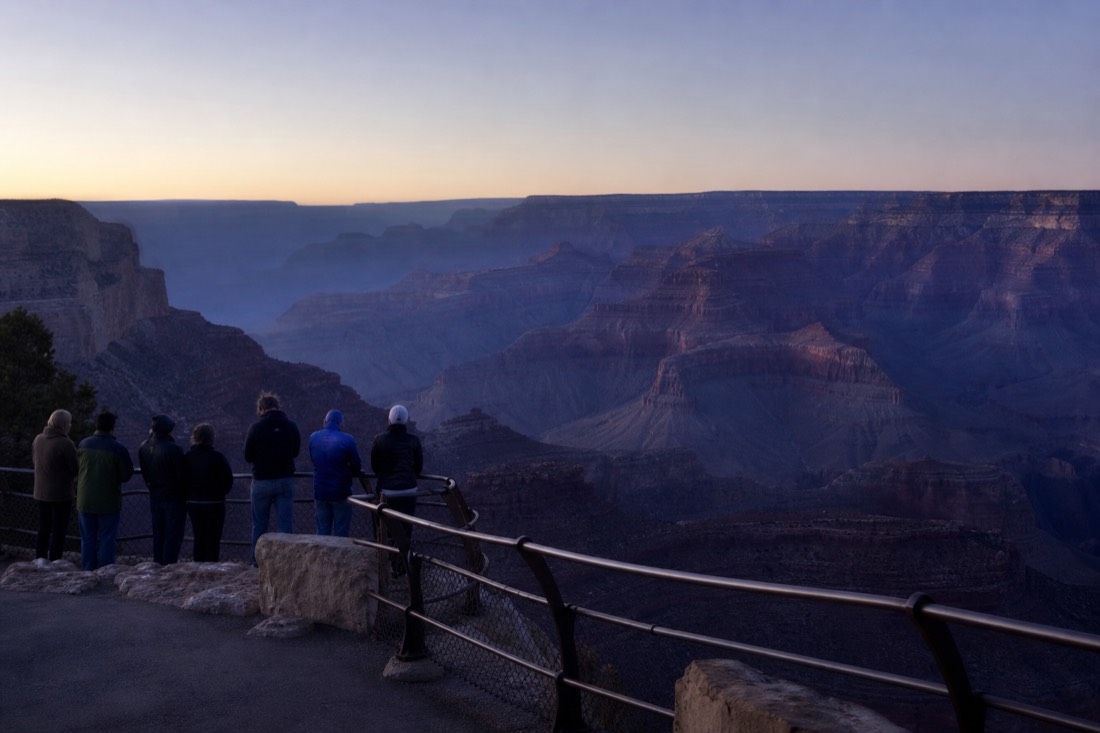
Mather Point gets dismissed as the crowded one, and by 10am that is fair. At 5:30am it belongs to a dozen quiet people and the wind. Park at the visitor center lots, walk the few minutes to the railing, and bring a warmer layer than seems reasonable; the rim sits at 7,000 feet and lets go of its heat overnight, even in July.
From the railing, first light lands on the North Rim wall and works its way down through nearly two billion years of exposed rock. Give it a full hour. The show keeps improving after the sun itself clears the horizon, which is exactly when most people leave. Whether Mather is better at dawn or dusk is its own argument, and I have made the case for both elsewhere.
What does the hour-by-hour plan look like?
Sunrise at Mather Point, Rim Trail west to the Yavapai Geology Museum by mid-morning, village and an early lunch, the 40-minute Tusayan airplane tour in the flat midday light, Desert View Drive through the afternoon, and back for golden hour. Every piece is walkable, shuttled, or a short drive.
| Time | Where | What |
|---|---|---|
| 30 min before sunrise | Mather Point | First light, coffee in a thermos |
| Early morning | Rim Trail west | Walk to Yavapai Point and the Geology Museum |
| Mid-morning | Grand Canyon Village | Historic buildings, Bright Angel trailhead look |
| Late morning | Village | Early lunch before the midday rush |
| Midday | Tusayan airfield | 40-minute airplane tour over the canyon |
| Afternoon | Desert View Drive | Grandview, Moran, Lipan, the Watchtower |
| Golden hour | Hopi Point or Yavapai | Sunset, then dinner |
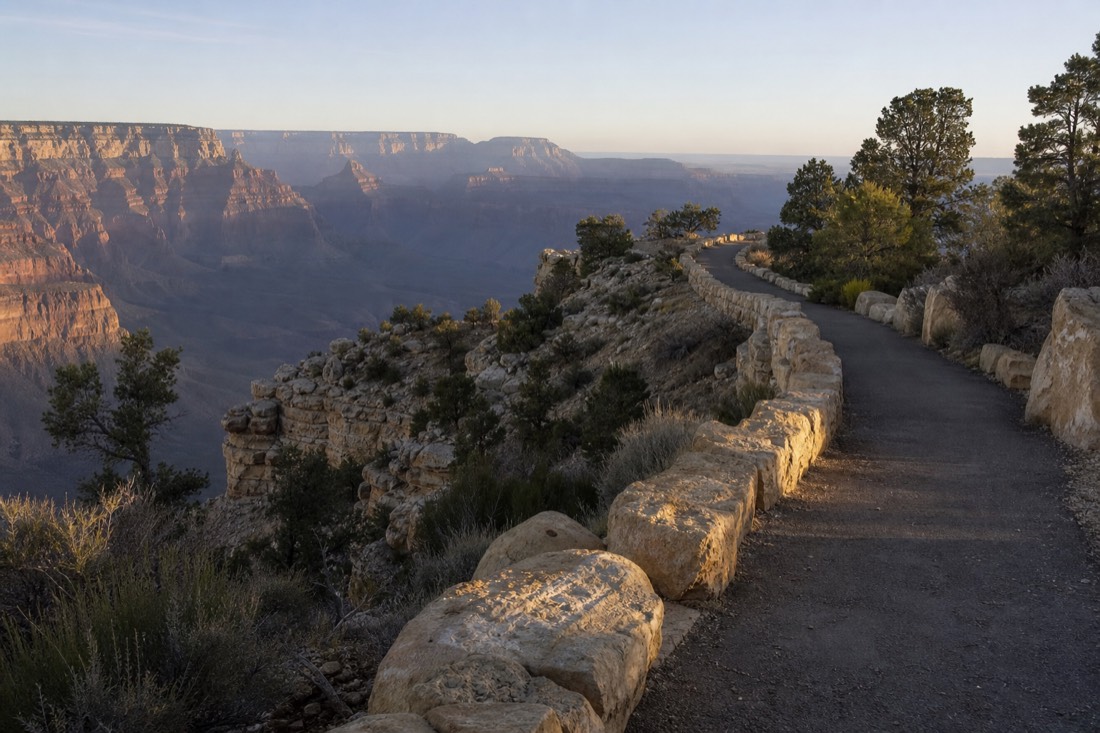
The Rim Trail is the connective tissue here, and you can take exactly as much of it as your morning allows.
| Rim Trail stretch | Effort | Why walk it |
|---|---|---|
| Mather Point to Yavapai Point | Easy, paved | Geology Museum, huge open views |
| Yavapai to Grand Canyon Village | Easy | Quieter stretch, historic district payoff |
| Village toward Hermit Road | Easy to moderate | Overlooks thin out, crowds vanish |
Free ranger programs run through the day if you would rather trade a segment of walking for a geologist's half hour. Nothing needs booking except the flight.
Is the midday airplane tour worth the slot?
Yes, and midday is precisely when it earns its place. Rim light goes flat from late morning, but from the air the canyon reads as shape rather than shadow. The 40-minute Grand Canyon Airlines flight leaves from Tusayan, minutes from the gate, and rates 4.8 across 1,554 GetYourGuide reviews.
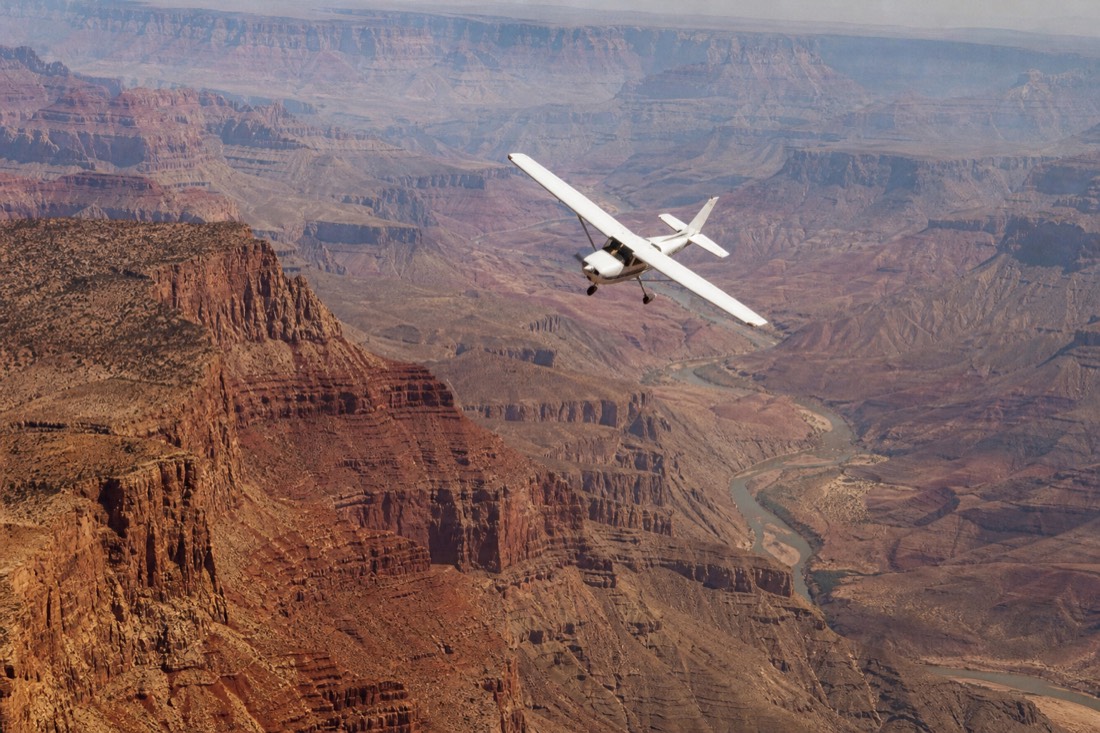
No ground viewpoint shows you the canyon's scale. You see a section, magnificent but cropped. From a fixed-wing loop the whole system opens up: the river doing the work, the side canyons feeding it, the sheer improbable width of the thing. I verified the details against the operator's listing: 40 minutes airborne, departures from Tusayan just outside the park's south entrance, which means the round trip fits inside the itinerary's midday window with time for lunch on either side.
Airplane versus helicopter is a fair question with a real answer, and the comparison covers cost, routes, and motion sickness honestly. For a one-day South Rim plan the airplane wins on timing alone. Browse the other South Rim tours if you would rather stay on the ground, or check live availability and prices on GetYourGuide for the Tusayan flight; midday slots are the ones that fit this plan.
What about Desert View Drive in the afternoon?
Desert View Drive runs 25 miles east from the village along the rim, hitting Grandview Point, Moran Point, Lipan Point, and the Desert View Watchtower. The afternoon suits it: the crowds thin as you go east, and the light starts leaning long by the time you turn around.
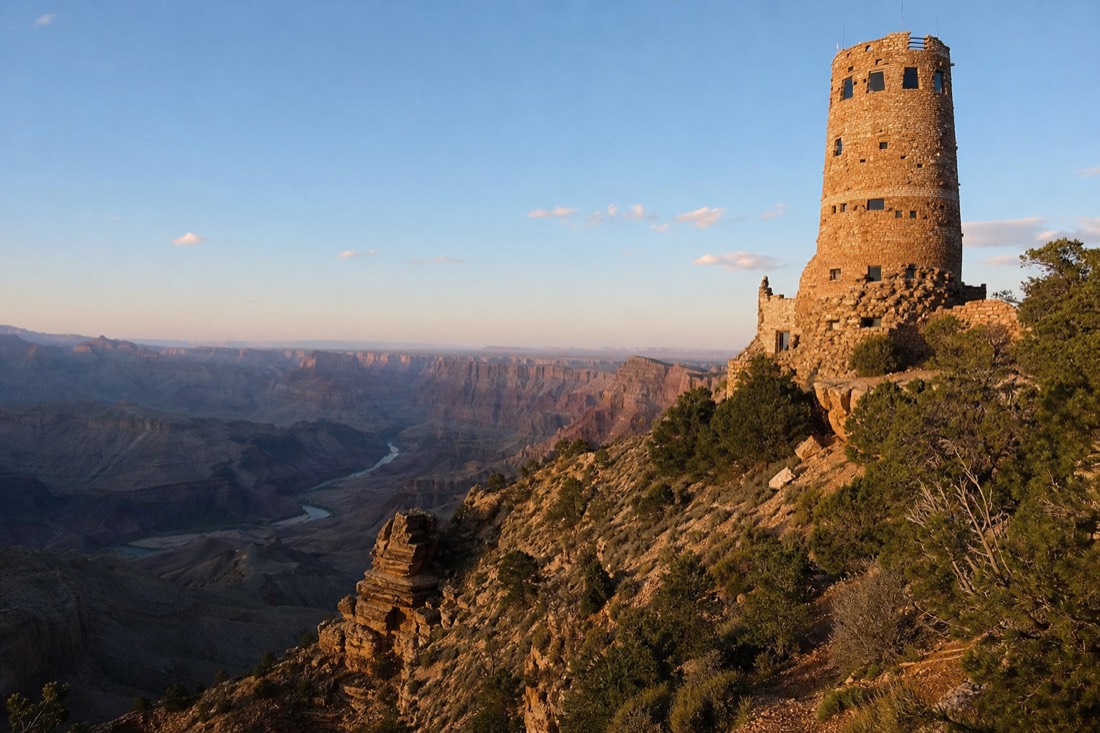
This is the half of the South Rim most one-day visitors skip, and it is the half where the canyon changes character. Out east the gorge opens, the river shows itself, and the land beyond the far rim is Navajo country, the landscape I grew up reading.
| Stop | The draw |
|---|---|
| Grandview Point | One of the highest overlooks on the drive |
| Moran Point | Painters' light, banded rock at its clearest |
| Lipan Point | Broad river views, the canyon at its widest mood |
| Desert View Watchtower | Mary Colter's stone tower, river bend below |
Pick three stops rather than all of them; twenty minutes standing still at Lipan beats five minutes at every pull-off. Then head back west for golden hour. Which overlook deserves your sunset is a matter of taste, and the full viewpoint rundown ranks them for exactly this decision.
Can you hike down to the river and back in one day?
No. The National Park Service's standing safety rule is blunt: do not attempt to hike from the rim to the river and back in one day. People die trying. The canyon is a vertical mile deep, effortless going down and brutal coming up, with inner-canyon heat far beyond the rim's.
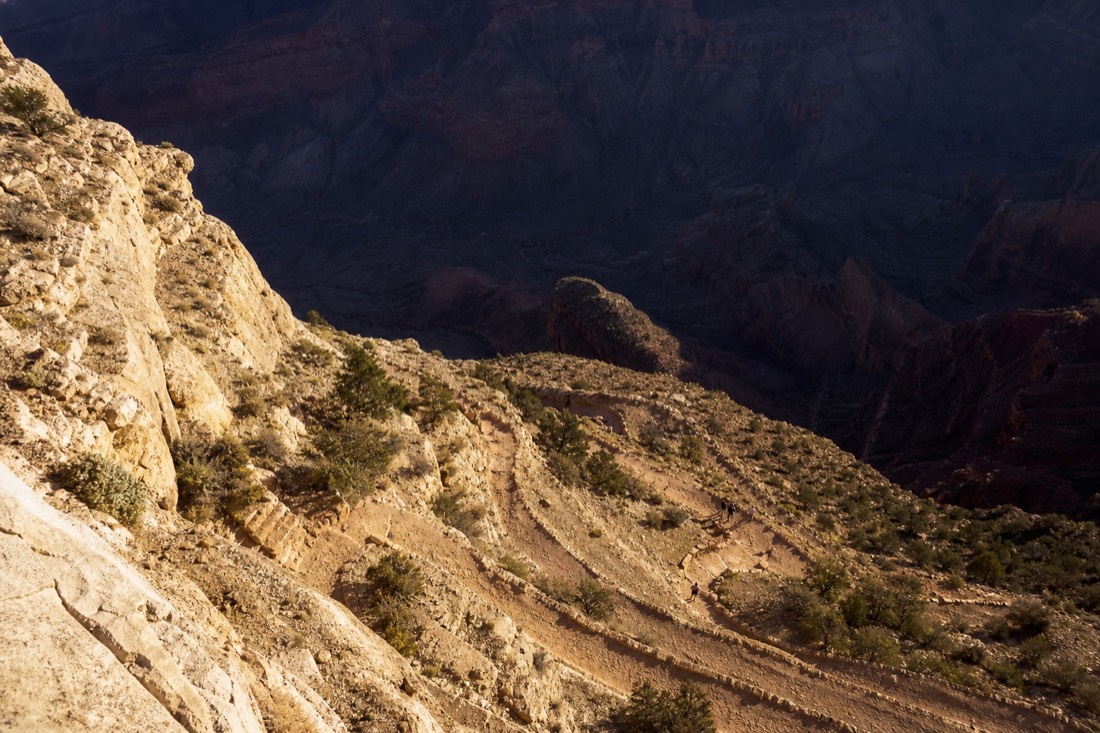
Every year the trailheads collect confident people at 8am who become rescue statistics by 4pm. The physics do not care about fitness: the easy half comes first, the temperature climbs as you descend, and the return is all uphill in the hottest hours. On a one-day visit, the honest version of going below the rim is a short taste, twenty or thirty minutes down Bright Angel and back before the heat builds, enough to feel the walls rise around you.
If the river matters to you, give it its own trip with a night at the bottom or book a rafting departure. The canyon has been carving for millions of years. It will hold your spot.
How do parking and the shuttles shape the morning?
Parking is the bottleneck that dents most one-day plans. The visitor center lots fill through the morning in peak months, and the park's free shuttle system exists so you can leave the car once and stop hunting spaces. A pre-dawn arrival removes the problem completely, which is another reason sunrise anchors this day.
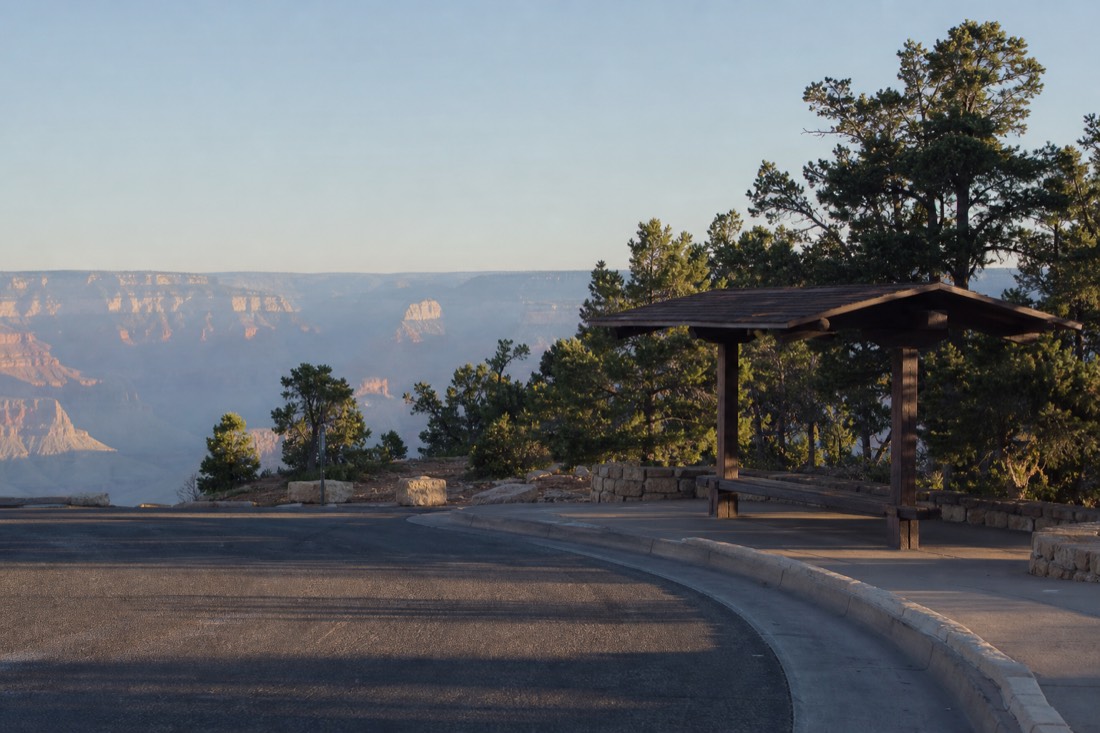
The mistake is to treat driving between overlooks as the efficient option. It is the slow option. Every pull-off means a fresh space hunt, and the western overlooks are shuttle-served precisely because the road cannot absorb the cars. Park once at the visitor center, then move on foot and by shuttle for the whole first half of the day.
These are the allowances I would build into a one-day schedule rather than assuming everything happens instantly.
| Task | Allowance to build in | Why |
|---|---|---|
| Reaching the gate from Tusayan | Short drive, longer queue in peak months | The gate is minutes away; the line in front of it is not |
| Parking at the visitor center | Effortless before dawn, slow from mid-morning | Lots fill from the inside out through summer |
| Waiting for and riding a shuttle | Count each hop as a piece of the hour, not a minute | Free and frequent, but never instant |
| Walking a Rim Trail segment | Longer than the distance suggests | You will stop constantly, and you should |
| Returning to the car for Desert View | One deliberate transition, not a scramble | Desert View Drive needs the vehicle |
| Finding a sunset spot | Arrive at least 45 minutes early | The good railings fill before the light does |
The other reason to walk one way and ride back is that it turns the Rim Trail from a there-and-back into a one-way stroll, which roughly doubles how much new rim you see in the same morning.
What gets cut first when the day runs short?
Cut in this order: the historic village walk, then the museums, then the far end of Desert View Drive, then the flight. Protect sunrise, one Rim Trail segment and one long stop at a single quiet viewpoint. One-day visits fail by being spread thin, not by missing any particular overlook.
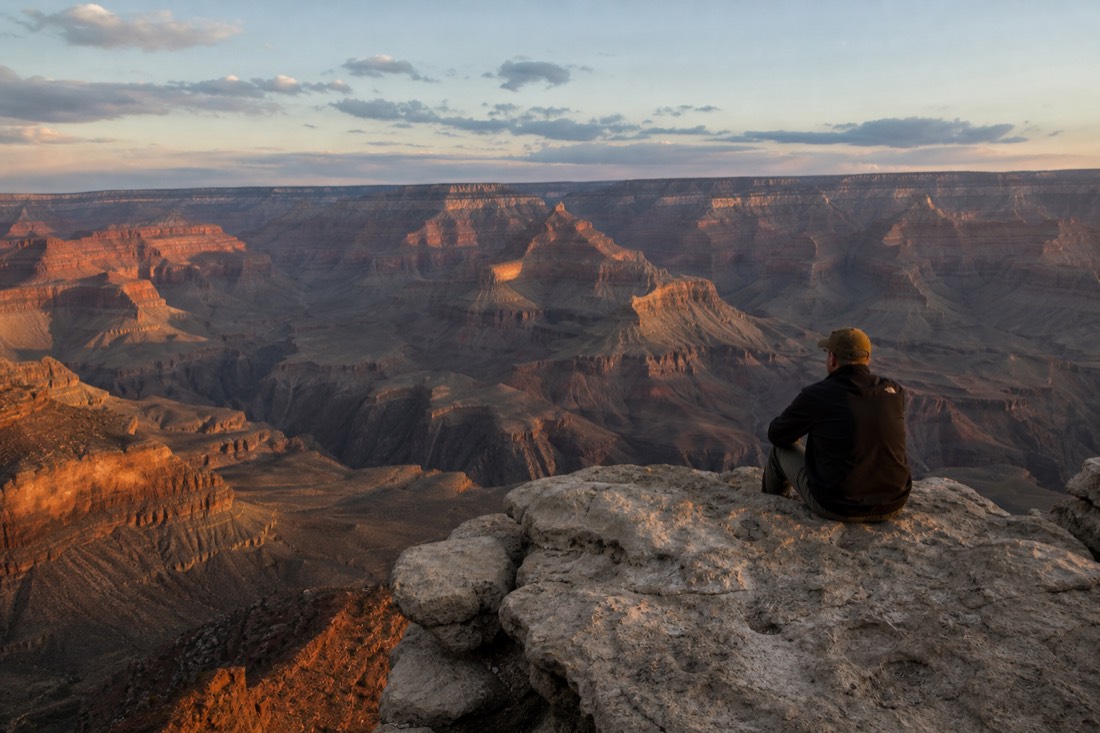
Plans meet reality around eleven in the morning. A flat tire, a late start, a queue at the gate, a child who needs an hour, and suddenly the schedule has an hour less in it than it did. Knowing the cut order in advance means you make that decision calmly instead of driving faster.
| Cut order | What you give up | What it buys back |
|---|---|---|
| First | The historic village walk | An unhurried hour on the Rim Trail |
| Second | The Yavapai Geology Museum | Time at the railing rather than behind glass |
| Third | The far end of Desert View Drive | The westbound drive back in good light |
| Fourth | The midday flight | Two or three extra hours on the rim |
| Never | Sunrise, and one long stop somewhere quiet | The reason you came in the first place |
Notice what sits at the bottom. If the day collapses to four hours, the version worth having is dawn at a railing and a slow walk, not five overlooks photographed from a car window.
What belongs in the daypack for a rim day?
A warm layer in every month, a light for the pre-dawn walk, more water than feels reasonable, and food bought before you reach the village. The rim sits at 7,000 feet with no shade at the overlooks, so cold mornings, dry air and hard sun all arrive on the same day.
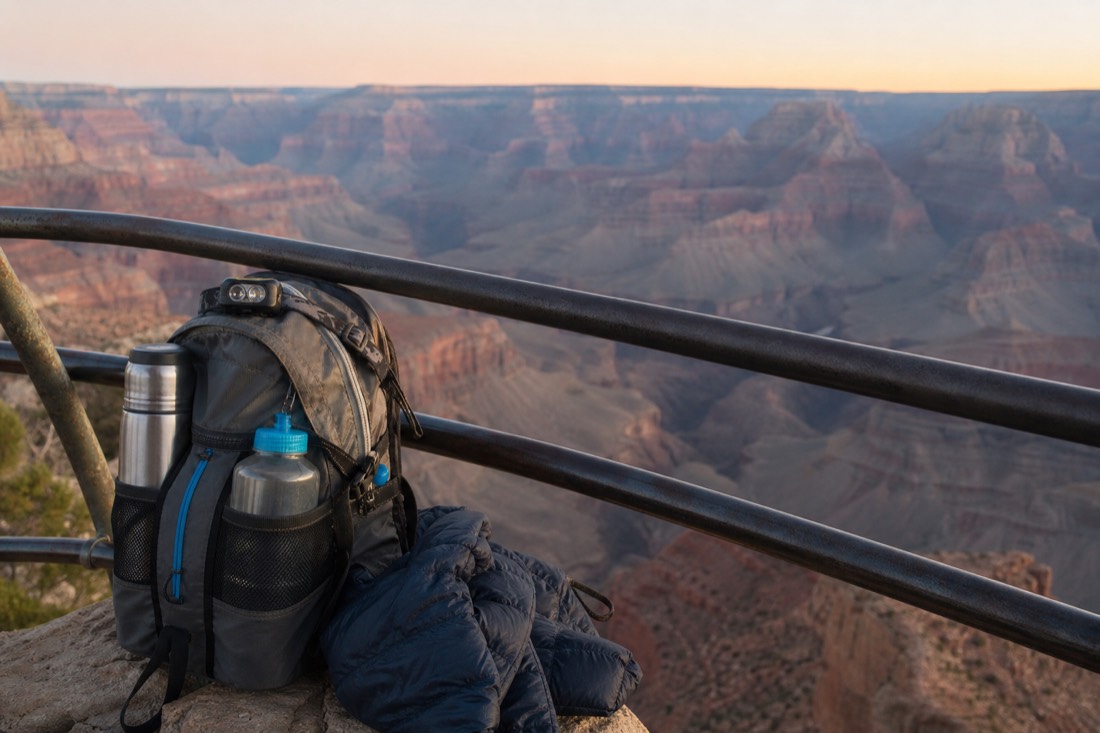
A one-day visit has no room for a return trip to the car, so what you carry at 5am is what you have at 5pm. This is the list that actually gets used.
| Item | Why it matters on a one-day plan | When it is non-negotiable |
|---|---|---|
| Headlamp or phone light | You are walking to the railing before first light | Any pre-dawn start |
| Warm layer over your day clothes | The rim gives up its heat overnight at 7,000 feet | Every month, July included |
| Thermos of something hot | The first hour is the coldest and the best | October to April |
| Two litres of water per person | Dry air at altitude, and few refill points east of the village | Year-round, more in summer |
| Food bought off the rim | Village queues eat the midday hour you cannot spare | Peak months |
| Rain shell | Monsoon cells build fast from July into September | Summer afternoons |
| Sunglasses, hat, high-SPF cover | Thin air and no shade at the overlooks | May to September |
Leave the drone at home. They are prohibited in the park, and on the tribal land east and west of it as well.
What do I see people get wrong in their first hour at the rim?
They photograph the first railing they reach and start driving to the next one. They underdress for 7,000 feet. They step over the railing for a better angle. And a few of them start down Bright Angel at nine in the morning meaning to go "just a little way".
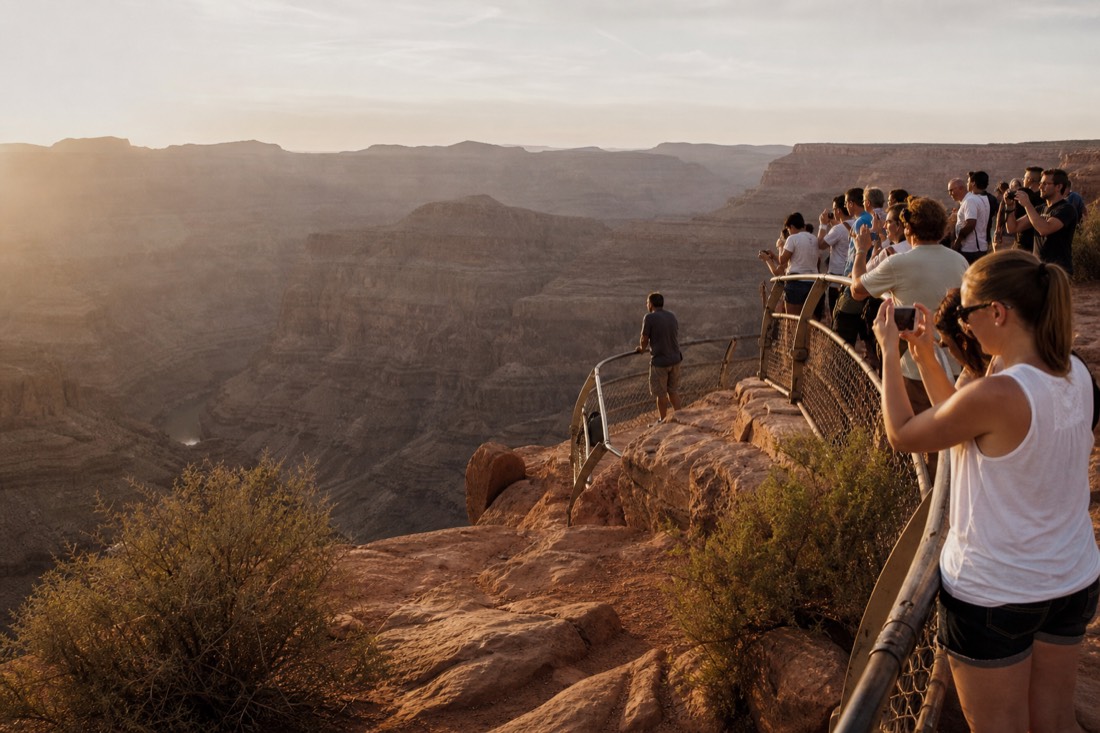
I have guided across this plateau since 2022 and I grew up on its eastern side, so the first hour is the part I watch most closely. It sets the tone for everything after it.
The commonest error is motion. People arrive keyed up from the drive, take the photograph, decide they have "done" that viewpoint and move on. The canyon does not work that way. It is too big to read at a glance, and it only starts to make sense once you have stood in one place long enough for the light to shift and your eye to find the river. Ten still minutes beat four overlooks.
The second is clothing, and I have written about it enough elsewhere. The third is the railing, and it is the one that matters. Falls from the rim and from trails are the leading cause of visitor deaths at the Grand Canyon. The rock at the edge is loose in places, the drop is a vertical mile, and no photograph is worth the arithmetic. Stay behind the barrier and keep hold of children the whole time.
Last, the trail. Bright Angel looks friendly from the top and the first switchbacks are genuinely easy, which is exactly the problem. Everything you descend you climb back in hotter air, later in the day, with less water than you planned. Twenty or thirty minutes down and back is a real experience and a safe one. Going further on a day when you also have a drive home is how people end up as a rescue statistic.
Can you run the same day from Las Vegas, Williams or Flagstaff?
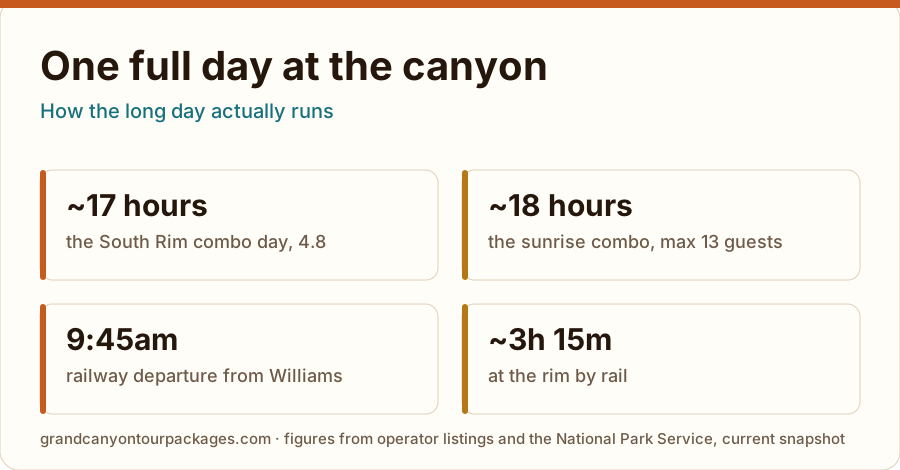
Yes, with the day reshaped by the drive. Tusayan or in-park means sunrise is easy. Williams is about an hour each way by car, or about 2 h 15 by railway on the train's own schedule. Flagstaff runs about ninety minutes. Las Vegas turns it into a 14 to 18 hour guided day.
The itinerary above assumes you wake up close to the gate. Most visitors do not, so here is what each base does to it.
| Base | How the day changes | Time cost each way |
|---|---|---|
| Tusayan or in-park | Sunrise is easy and the full plan fits | Minutes to the gate |
| Williams by car | Sunrise means leaving in the dark, but it works | About 1 h |
| Williams by railway | No driving at all, though the train sets the clock: out around 9:45am, about 3 h 15 at the rim | About 2 h 15 |
| Flagstaff | Sunrise is doable with an early alarm | About 1.5 h |
| Sedona | Realistically a mid-morning arrival | About 2 h |
| Las Vegas by guided tour | The classic canyon, 14 to 18 hours door to door | About 4 to 4.5 h |
| Las Vegas to Grand Canyon West | A different canyon and a shorter day, with its own admission | About 2 h |
The railway version is the one that surprises people. You lose sunrise and Desert View Drive, and you gain a day where nobody is tired from driving. Its ticket includes the park entrance fee and the cancellation window runs three days rather than 24 hours, so decide a little earlier than you would for a coach seat.
What does a one-day plan look like at the West Rim instead?
Completely different, and much shorter on the road from Las Vegas. Grand Canyon West is Hualapai tribal land, not the national park, so passes are not valid and admission runs $67 general or $99 all-access with the Skywalk. About two hours each way, no sunrise pilgrimage, a bridge over the edge.
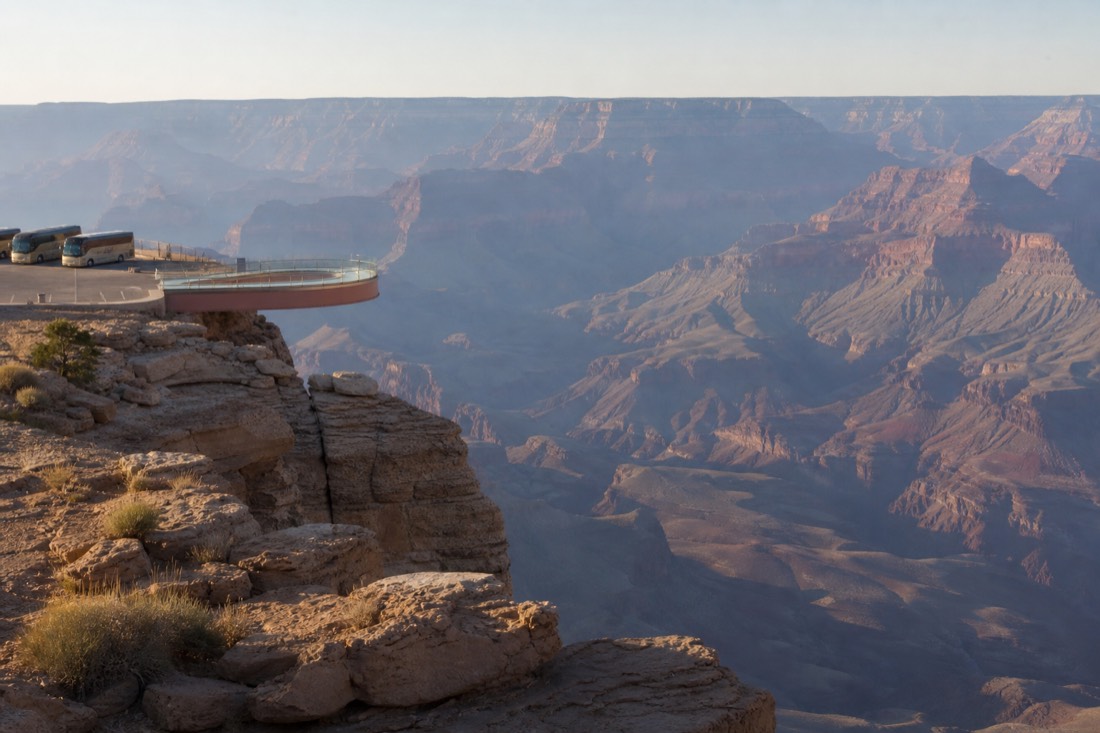
If your one day starts on the Strip, the West Rim is the humane version of this plan. Two hours out instead of four and a half, viewpoints linked by the site's own shuttles, and you are back for dinner rather than arriving home near midnight.
What you are buying is different too. General admission at $67 covers the viewpoints and the shuttles. The $99 all-access ticket adds the Skywalk, a zipline flight at Hualapai Point, a $10 meal credit and a $10 merchandise credit, which is why the gap between the two is narrower in practice than it looks. Personal phones are now permitted on the Skywalk at your own risk, and professional photographs are still sold on site. This is also the only place in the canyon where a helicopter may land below the rim, because the landing sites are on tribal land rather than inside the park.
A few manners come with the ground. Drones are prohibited and alcohol is restricted on tribal land, and you ask before photographing anybody who lives and works there. It is a small thing that visitors get wrong constantly, and getting it right changes how the day feels.
One honest caveat: the tribe's own direct-entry admission ticket carries a 3.2 rating across 487 Viator reviews, which reflects queueing and logistics rather than the views. Booking a Vegas departure that bundles the admission tends to smooth that out. The West Rim and Skywalk options sit side by side if you want to compare.
What time should I arrive for sunrise at Mather Point?
About thirty minutes before the posted sunrise time, which shifts through the year. The pre-dawn color often beats the sunrise itself, parking is easy at that hour, and the rim's 7,000-foot chill means you will want a warm layer even in summer.
Do I need a car for this itinerary?
Inside the village, no; the free shuttles and the Rim Trail cover everything west of the visitor center. You will want a car (or a tour seat) for Desert View Drive and for reaching Tusayan for the midday flight.
Can I swap the airplane for a helicopter?
You can; helicopters also fly the South Rim from Tusayan. The airplane covers more canyon per minute and tends to cost less, while helicopters fly lower and slower. The comparison guide on this site weighs both for a one-day schedule.
Make the day fit your trip
Check your date before arranging the rest
Initial editorial suggestion. Use the optional choices to narrow this article’s shortlist; confirm individual eligibility with the operator.
South Rim airplane flight
A 40-minute sightseeing flight over the canyon, with an optional Hummer tour sold separately.
Own arrival at Tusayan airport; allow check-in time beyond the flight. English audio available. At 300 lb or more, an extra seat is required. Under-twos may ride on a lap with proof of age; confirm boarding needs directly.
Compare options and tailor this choice
Why choose an alternative?
South Rim airplane flight · Tusayan · 2 hours to allow
A 40-minute sightseeing flight over the canyon, with an optional Hummer tour sold separately. Own arrival at Tusayan airport; allow check-in time beyond the flight. English audio available. At 300 lb or more, an extra seat is required. Under-twos may ride on a lap with proof of age; confirm boarding needs directly.
South Rim sunset safari · Tusayan · 3 hours to allow
An off-road forest approach and South Rim viewpoints, finishing at Grandview Point at sunset. Meet at 408 AZ-64 in Tusayan; English guide and water included. No hotel pickup. Nonresident park charges and tips extra. Bumpy vehicle; not recommended during pregnancy or for spinal or cardiovascular conditions. Minimum booking: two guests.
Sedona or Flagstaff South Rim day trip · Sedona / Flagstaff · 11 hours to allow
A small-group day linking volcanic country, Cameron Trading Post and East and South Rim viewpoints. English guide and hotel return: about 11 hours from Sedona or 9 from Flagstaff. Hotel details required 72 hours ahead. Bring your own car/booster seat for children eight and under. Meals, tips and nonresident fees extra; moderate fitness required.
Grand Canyon West All Access · Grand Canyon West · 7 hours to allow
Skywalk entry and the shuttle between Eagle Point and Guano Point in one self-arrival ticket. Drive yourself to Grand Canyon West. Includes zipline subject to weather and size restrictions; no Las Vegas transfer. Meal credit is $10 on a purchase of $20 or more. National park passes do not cover this ticket. This bookable listing starts at age three; confirm arrangements for younger children directly.
Compare your own quotes
Enter totals for the same party and inclusions, in one currency. Include transport, entry, meals and extras in both quotes.
Viator scheduled departures
Select a date to see the published schedule. Seats, final price and booking are confirmed on Viator.
Affiliate booking link: we may earn a commission at no extra cost to you.