Mather Point: Sunrise or Sunset? An Honest Answer
Mather Point is the first overlook most visitors reach, and the sunrise-or-sunset question decides the whole shape of your day. Here is the honest answer, with the viewpoints and shuttle logistics that go with it.
 By Daniel Begay, Southwest canyon-country tour guide & Navajo cultural specialist
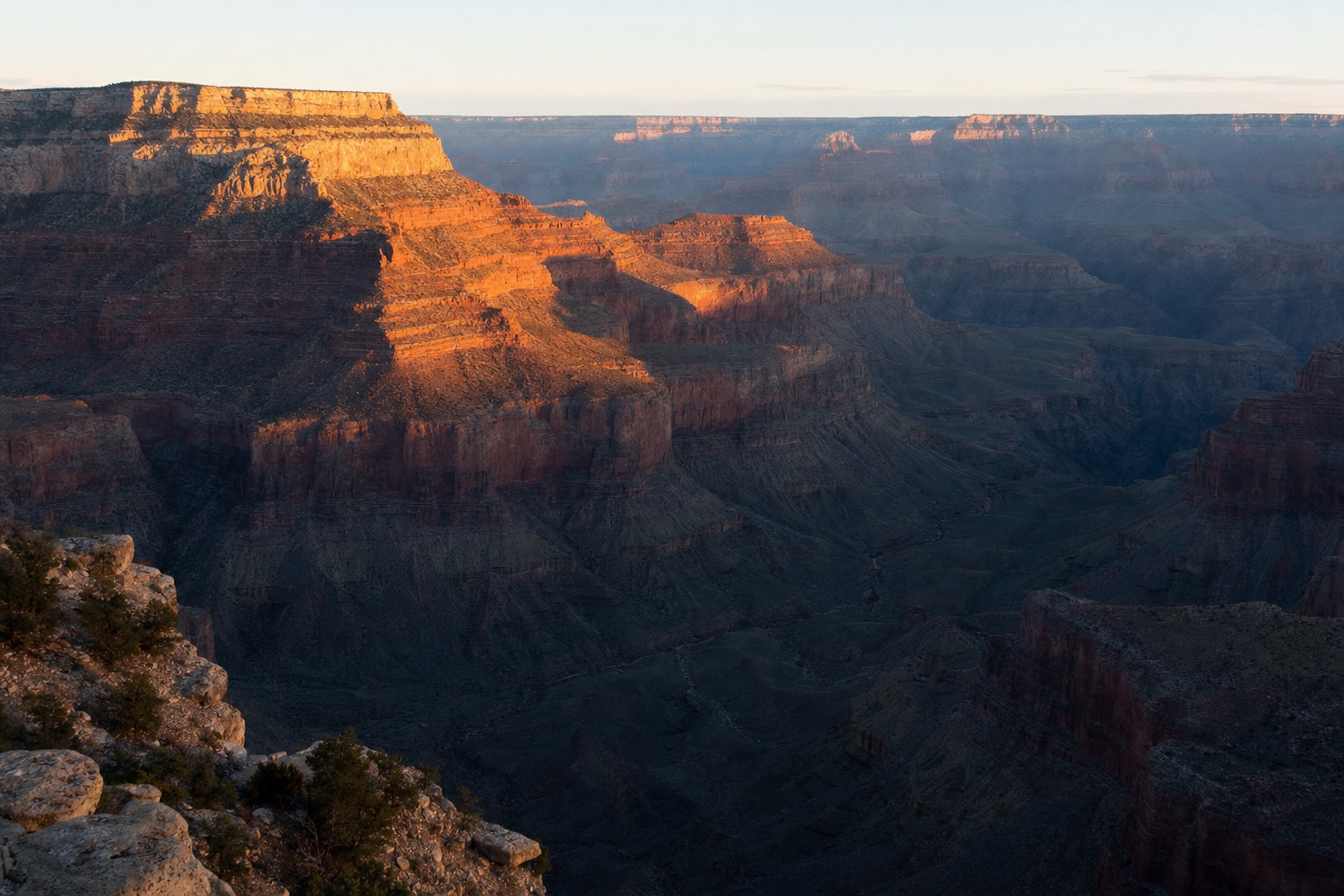
Canyon light is the thing I have organized my working life around. I guide in Monument Valley, a couple of hours east of the South Rim, and out here the first and last hour of sun do things to red rock that midday never will. So when people ask me whether Mather Point is a sunrise spot or a sunset spot, I take the question seriously. It decides when you set your alarm, where you park, and whether your one canyon evening gets spent at the right railing.
Is Mather Point better at sunrise or sunset?
Sunrise. Mather Point sits beside the main visitor center and faces broadly east-northeast into the canyon, so dawn light works in its favor and it has become the classic first-light spot on the South Rim. At sunset, the better show is a few stops west along Hermit Road, where Hopi Point is the long-standing favorite.
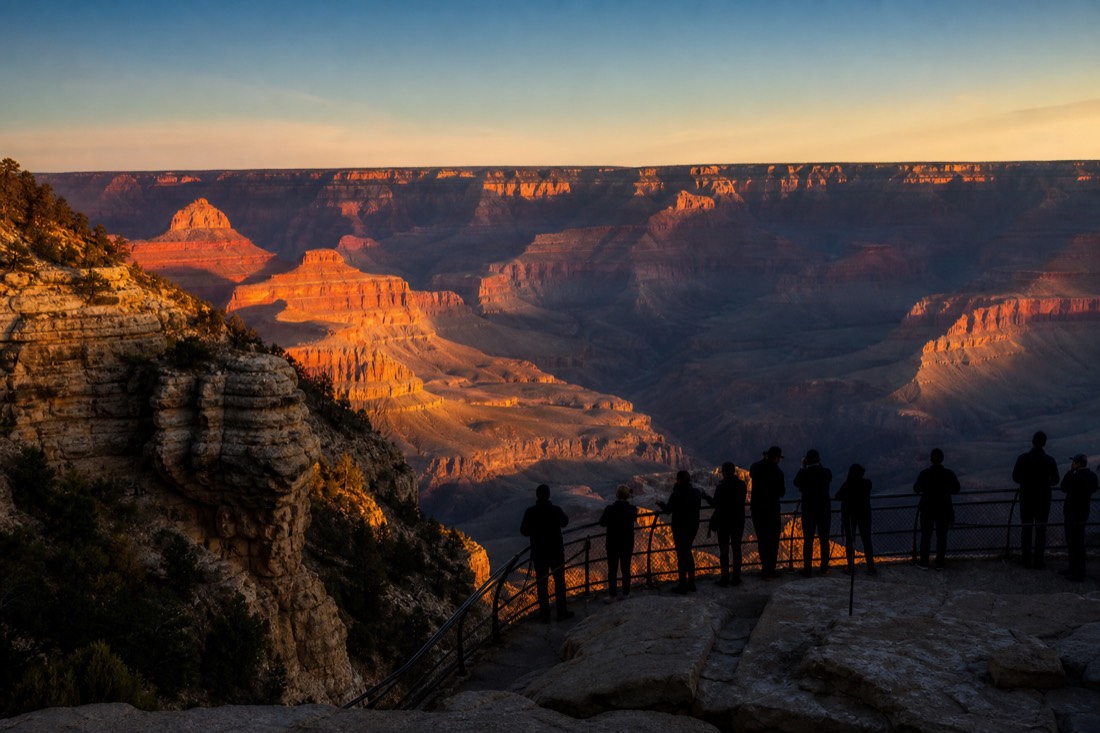
That is the short version, and it holds for most trips. The longer version is about trade-offs, because sunrise at Mather Point asks something of you: a dark walk from the parking lots, a cold railing in most seasons, and company. This overlook draws a crowd even at dawn in summer. What you get back is the canyon filling with light in front of you rather than behind you, and the rest of your day still ahead.
| Sunrise at Mather Point | Sunset at Mather Point | |
|---|---|---|
| Light direction | Dawn light works with its east-northeast aspect | The best color happens west of here |
| Crowds | Busy even at dawn in summer, thinner in winter | Heavy, plus everyone leaving at once after |
| Effort | Early alarm, dark walk from the lot | Easy timing, no alarm required |
| Verdict | The classic move | Fine, but Hopi Point does it better |
Why does sunrise work so well at Mather Point?
Three reasons stack up: it is the first overlook by the main visitor center, so it is the easiest railing to find in the dark; its east-northeast aspect means dawn light falls into the canyon in front of you; and the South Rim is open 24 hours, so nothing stops you being there before first light.
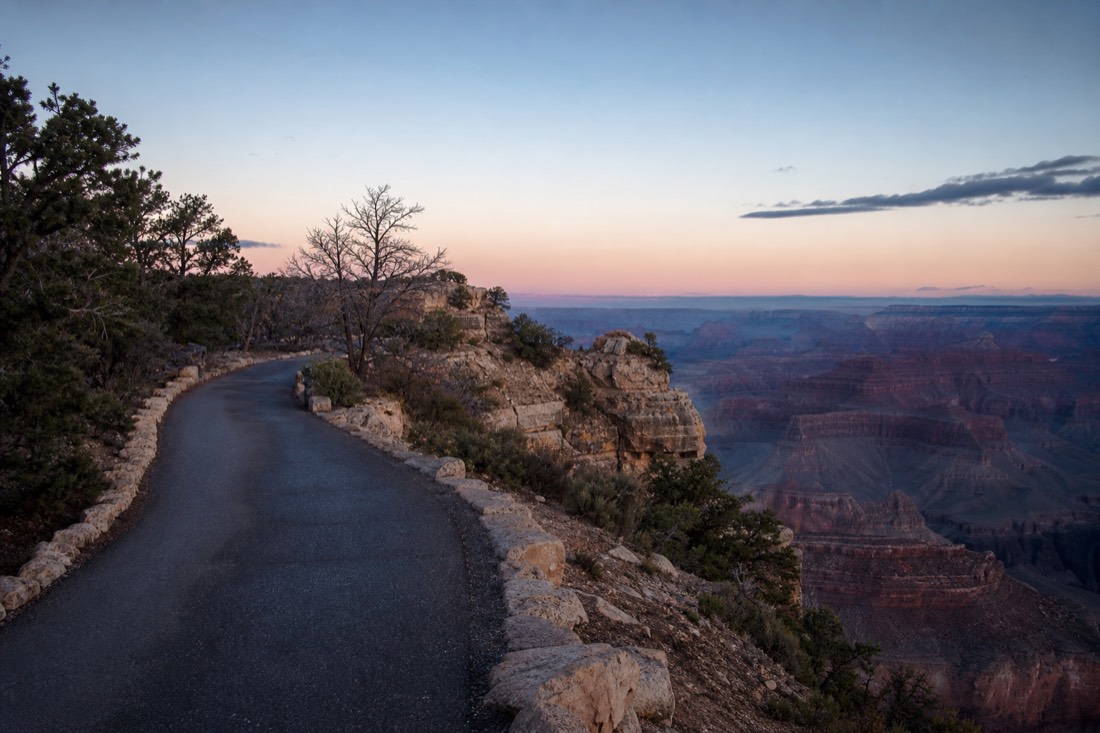
Convenience matters more at 5 a.m. than at any other hour. From the visitor center parking, Mather Point is a short flat walk, which is why it collects the dawn crowd instead of some remoter railing. The canyon itself does the rest. As the sun clears the horizon, light drops onto the buttes and temples below the rim in stages, and the scale of the thing, a gorge 277 miles long and over a mile deep by the standard reckoning, reveals itself layer by layer.
One honest note on timing: sunrise and sunset shift a lot through the year here, so check the local times for your actual dates rather than trusting a blog's remembered figure. Build in twenty minutes of standing-around time before the listed sunrise. The pre-light color is often the best part.
Where should you watch sunset on the South Rim instead?
Head west along Hermit Road. Hopi Point is the long-standing sunset favorite because it juts far enough into the canyon to open up wide views toward the west, right where the evening light happens. Hermit Road is served by the park shuttle for most of the year, so getting there is a bus ride, not a hike.
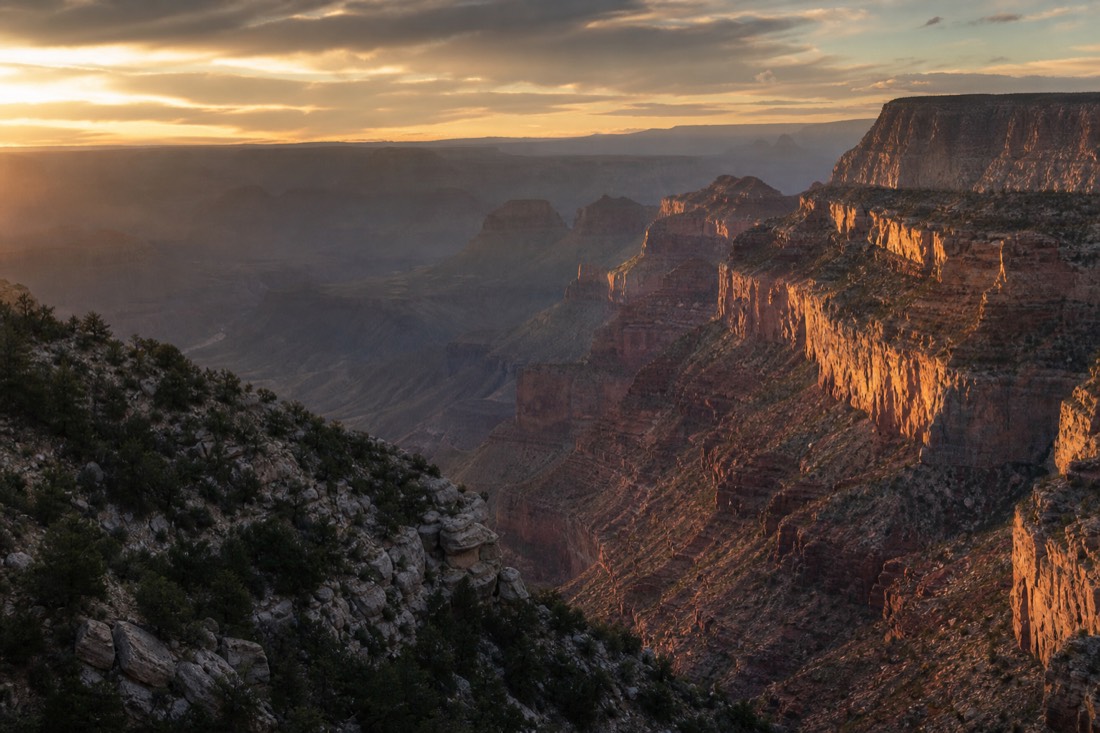
The pattern to remember: dawn favors the overlooks near the village, evening favors the promontories that stick out westward. Here is how I would assign the light.
| Viewpoint | Best light | How you get there |
|---|---|---|
| Mather Point | Sunrise | Short walk from the main visitor center |
| Hopi Point | Sunset, the classic pick | Hermit Road shuttle, most of the year |
| Other Hermit Road stops | Late afternoon into evening | Same shuttle line, hop off where it looks good |
| Desert View Watchtower | A drive-out viewpoint at the east end | Your own car along Desert View Drive |
A guided evening safari provides transport on its own route, finishing at Grandview Point rather than Hopi Point; the South Rim tours page carries the two sunset departures, and you can check live availability and prices on Viator for the sunset safari. For the full railing-by-railing tour of the rim, start with the South Rim viewpoints guide.
How do the shuttle and entry logistics actually work?
The South Rim is open 24 hours, so you can be on the rim before dawn and stay past dark. Entry is $35 per vehicle or $20 per person, no timed-entry reservation needed. Hermit Road is shuttle-served for most of the year, and the sunset crowd rides that bus, so expect a queue at Hopi Point afterward.
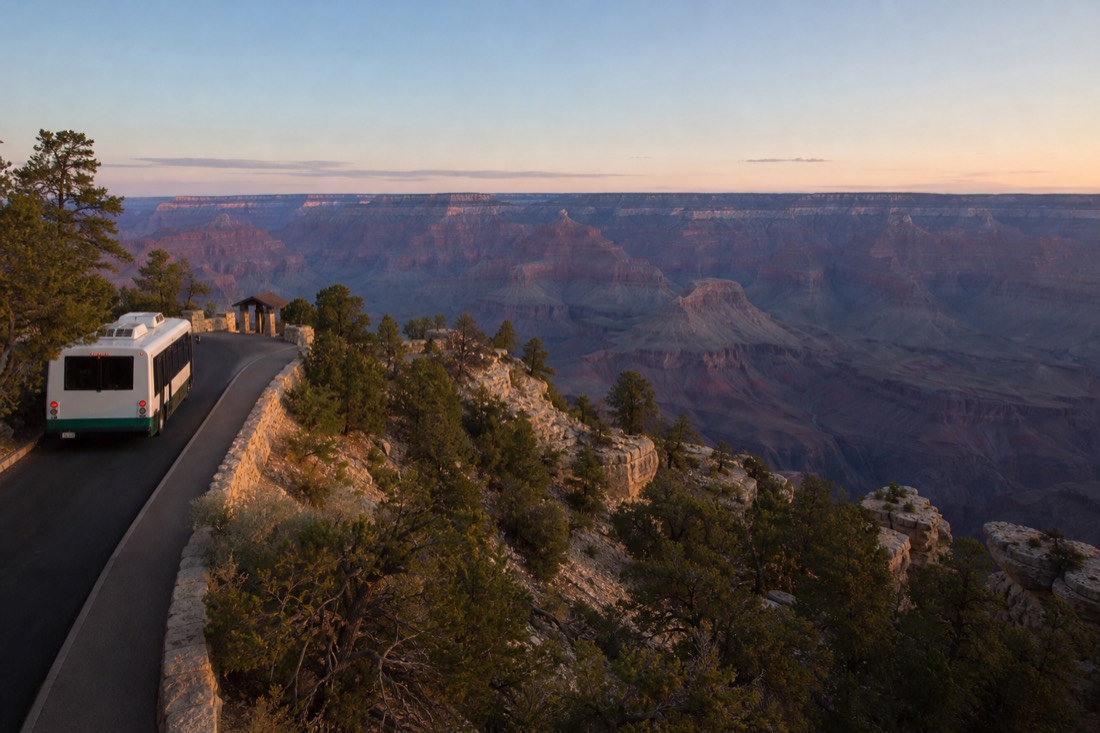
The 24-hour gate is the underrated fact here. Nothing about the park's setup stops a dawn start except your own alarm clock. Current fees and pass details sit on the NPS fee page, and note the change that catches international visitors now: from January 1, 2026, non-US residents 16 and older pay a $100 surcharge on top of standard entry, or $250 for the annual pass option.
Plan the shuttle ride out to Hopi Point with margin. The buses fill before sunset, and after the light dies everyone wants the same ride back at once. If you are fitting this into a single canyon day, the one-day itinerary shows where the dawn and dusk sessions slot around everything else.
Does the season change the sunrise-or-sunset answer?
Not the answer, but the experience around it. Summer means crowds at Mather Point even at dawn and packed sunset shuttles; winter means thin crowds, hard cold before sunrise, and occasional snow on the rim. The light itself rewards both ends of the year, so pick your season for the conditions you can live with.
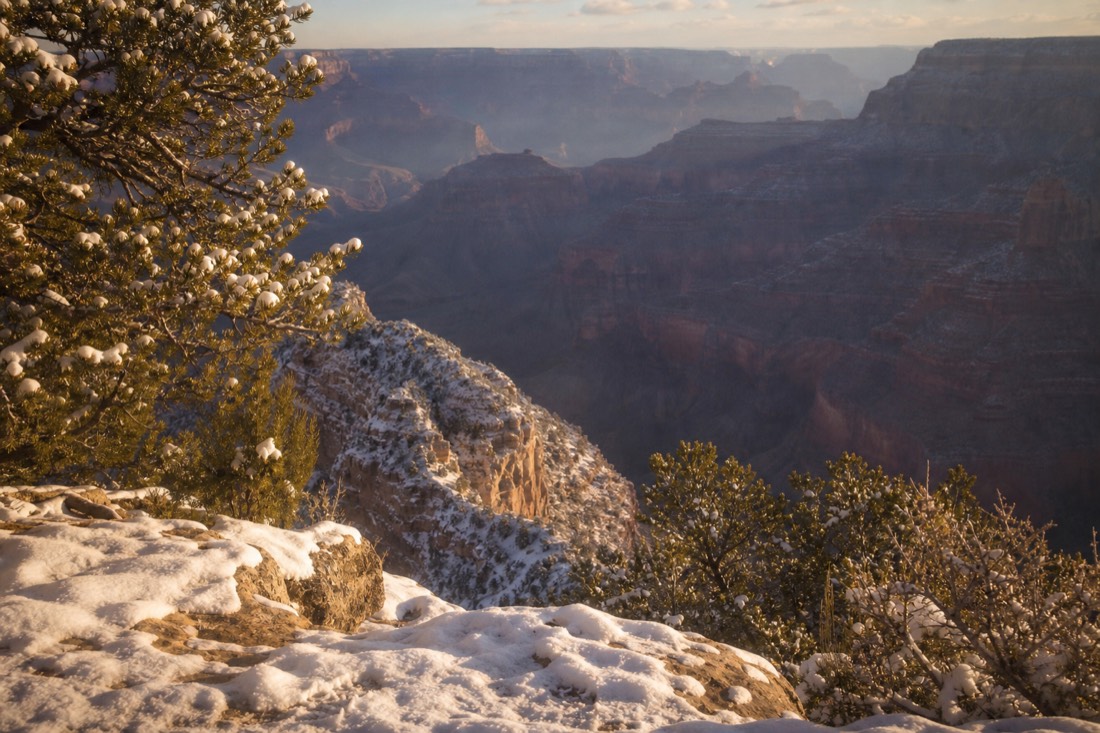
| Season | Dawn at Mather Point | Evening on Hermit Road |
|---|---|---|
| Summer | Crowded even before sunrise, mild temperatures | Busy shuttles, long post-sunset queues |
| Spring and fall | Moderate crowds, cold starts | Comfortable, the sweet spot for most people |
| Winter | Quiet railings, genuinely cold, possible snow | Sparse crowds, check shuttle status for the season |
I will take a cold quiet railing over a warm crowded one every time, but that is a personal trade. Sunrise chasing pairs naturally with photography plans, and the photo spots post covers which overlooks earn the tripod. Wherever you land, get to the railing early, stay after the obvious peak, and let the canyon finish the show.
Make the day fit your trip
Check your date before arranging the rest
Initial editorial suggestion. Use the optional choices to narrow this article’s shortlist; confirm individual eligibility with the operator.
South Rim sunset safari
An off-road forest approach and South Rim viewpoints, finishing at Grandview Point at sunset.
Meet at 408 AZ-64 in Tusayan; English guide and water included. No hotel pickup. Nonresident park charges and tips extra. Bumpy vehicle; not recommended during pregnancy or for spinal or cardiovascular conditions. Minimum booking: two guests.
Compare options and tailor this choice
Why choose an alternative?
South Rim sunset safari · Tusayan · 3 hours to allow
An off-road forest approach and South Rim viewpoints, finishing at Grandview Point at sunset. Meet at 408 AZ-64 in Tusayan; English guide and water included. No hotel pickup. Nonresident park charges and tips extra. Bumpy vehicle; not recommended during pregnancy or for spinal or cardiovascular conditions. Minimum booking: two guests.
Vegas sunrise and Antelope day tour · Las Vegas · 22 hours to allow
An overnight start from Las Vegas for a South Rim sunrise, Horseshoe Bend and Antelope Canyon. Published duration is 17–18 hours, but hotel pickup-to-return windows can span 22 hours. Starts the previous night; select the English-guided option. Minimum age five. Admissions to Grand Canyon, the selected Antelope Canyon and Horseshoe Bend are included; nonresident park fees extra. Not recommended for spinal or cardiovascular conditions or pregnancy. Departure needs four travelers overall.
Compare your own quotes
Enter totals for the same party and inclusions, in one currency. Include transport, entry, meals and extras in both quotes.
Viator scheduled departures
Select a date to see the published schedule. Seats, final price and booking are confirmed on Viator.
Affiliate booking link: we may earn a commission at no extra cost to you.