The Grand Canyon Photo Spots Everyone Asks About
Mather Point, Hopi Point, Desert View, Horseshoe Bend, the Skywalk, and the view from the air: where the famous Grand Canyon photos actually get taken, and what light and access each spot demands.
 By Daniel Begay, Southwest canyon-country tour guide & Navajo cultural specialist
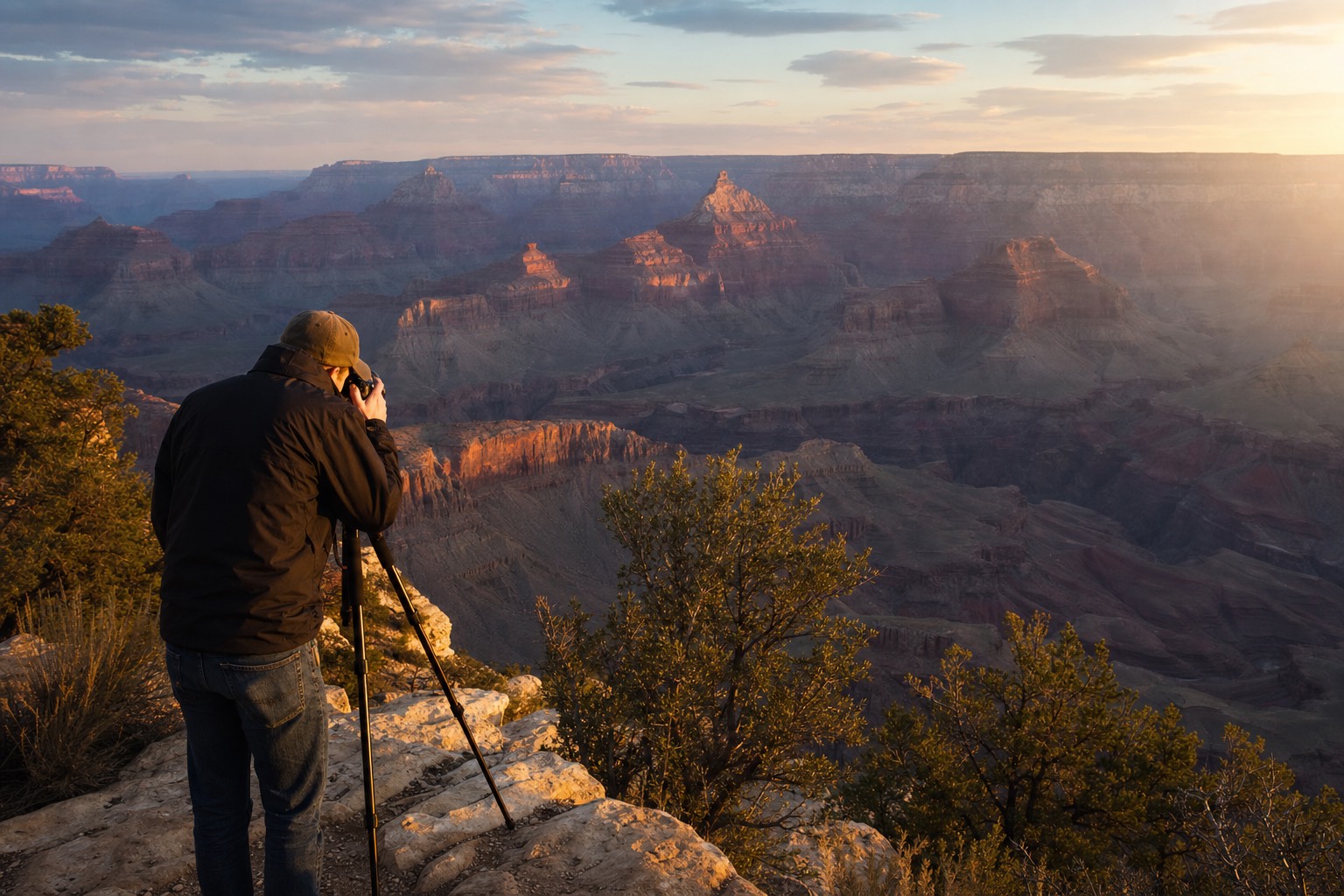
Most of the Grand Canyon photos you have ever admired were taken from about five places. That is not a criticism; it is geography. I photograph red rock for a living out in Monument Valley, a few hours east of the South Rim, and I can tell you that in canyon country the famous shots cluster where the light, the access road, and a good promontory happen to line up. The canyon has a handful of those alignments, and everyone asks about the same ones.
What are the most photographed Grand Canyon viewpoints?
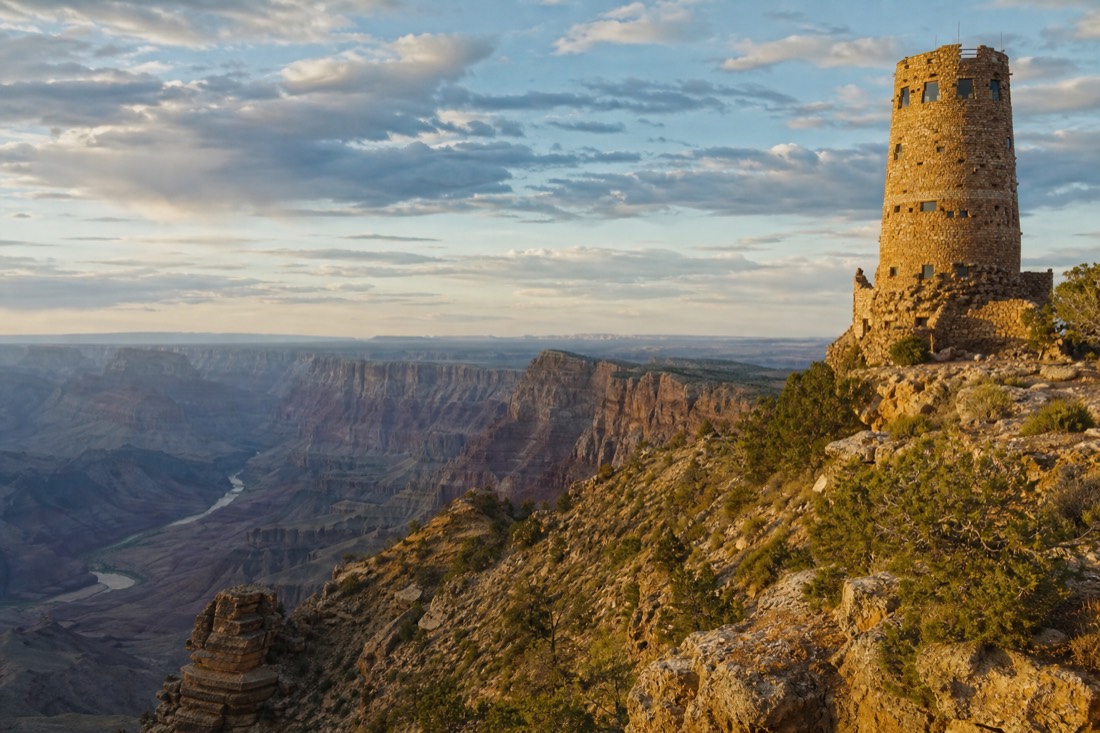
They cluster on the South Rim: Mather Point beside the main visitor center, Hopi Point out along Hermit Road for sunset, and the Desert View Watchtower at the east end of the park drive. Between them they cover dawn, dusk, and the one spot where the Colorado River bends into clear view with architecture in the frame.
Here is the working list, with the light and the logistics that go with each.
| Spot | Best light | Access |
|---|---|---|
| Mather Point | Sunrise | Short walk from the main visitor center |
| Hopi Point | Sunset, the classic | Hermit Road shuttle most of the year |
| Desert View Watchtower | A drive-out stop with river views | Your own car on Desert View Drive |
| Skywalk (Grand Canyon West) | Midday works; it is about the glass, not the glow | ~2 h from Las Vegas, separate $99 all-access ticket |
| Horseshoe Bend | Famous, but not in the park | Near Page, AZ, on combo itineraries |
The deeper reason these spots photograph so well is the geology itself: nearly two billion years of exposed rock stacked in colored bands, which the park's geology pages explain better than any caption. I walk through the timing question for the first two overlooks in the Mather Point sunrise-or-sunset post.
Is Horseshoe Bend actually in the Grand Canyon?
No, and this surprises almost everyone. The famous curve of the Colorado River sits near Page, Arizona, well outside Grand Canyon National Park. You will not find it on any rim drive. It shows up instead on the combo itineraries that pair the South Rim with Antelope Canyon on the same swing through northern Arizona.
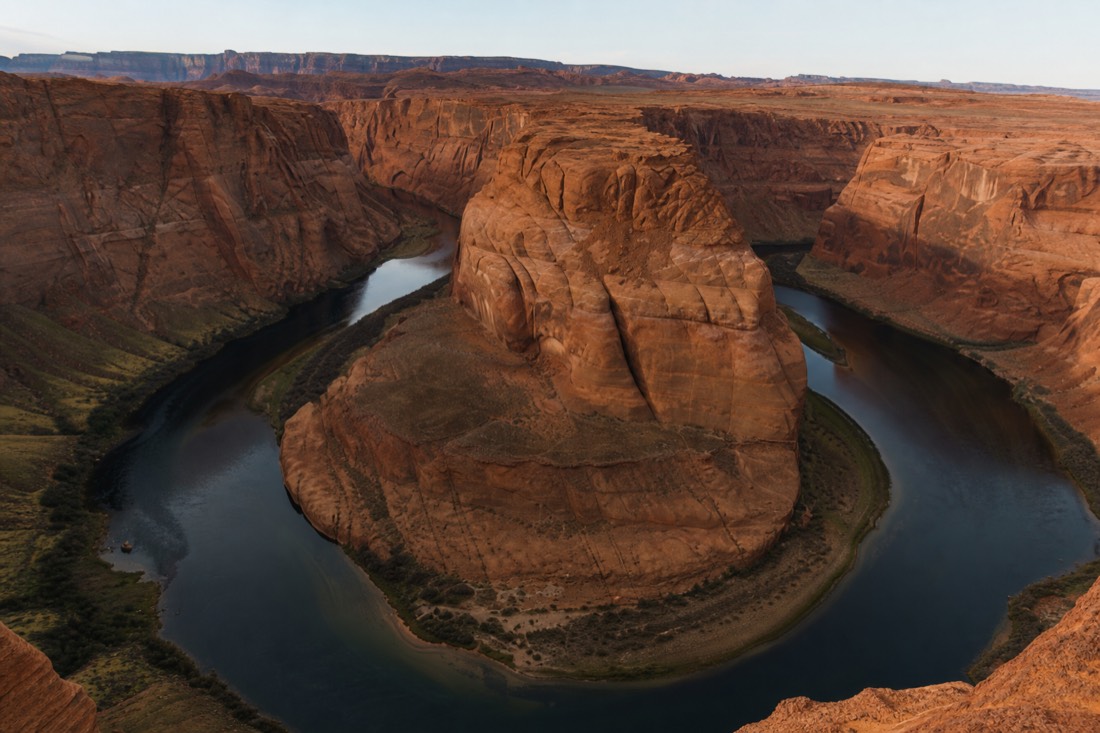
The confusion is understandable. Same river, same red rock, same state, and the photo often gets captioned "Grand Canyon" by people who were never told otherwise. But if you drive to the South Rim expecting to walk out to that overhead river curve, you will spend the afternoon asking rangers where it went. The canyon proper, as the standard reference lays it out, runs 277 river miles, and Horseshoe Bend sits upstream of the park boundary near Glen Canyon.
Practical fix: book it as part of a loop. The multi-stop departures from Las Vegas commonly stack the South Rim, Antelope Canyon, and Horseshoe Bend into one itinerary, which is the sane way to collect all three photos without re-planning your whole trip. Browse those on the Las Vegas tours page.
Can you take photos on the Skywalk now?
Yes, you can use a personal phone on the Skywalk at your own risk. Separate cameras, bags and similar belongings remain prohibited on the glass bridge. Keep your arm inside the railing when taking photos; professional photographs remain an optional purchase.
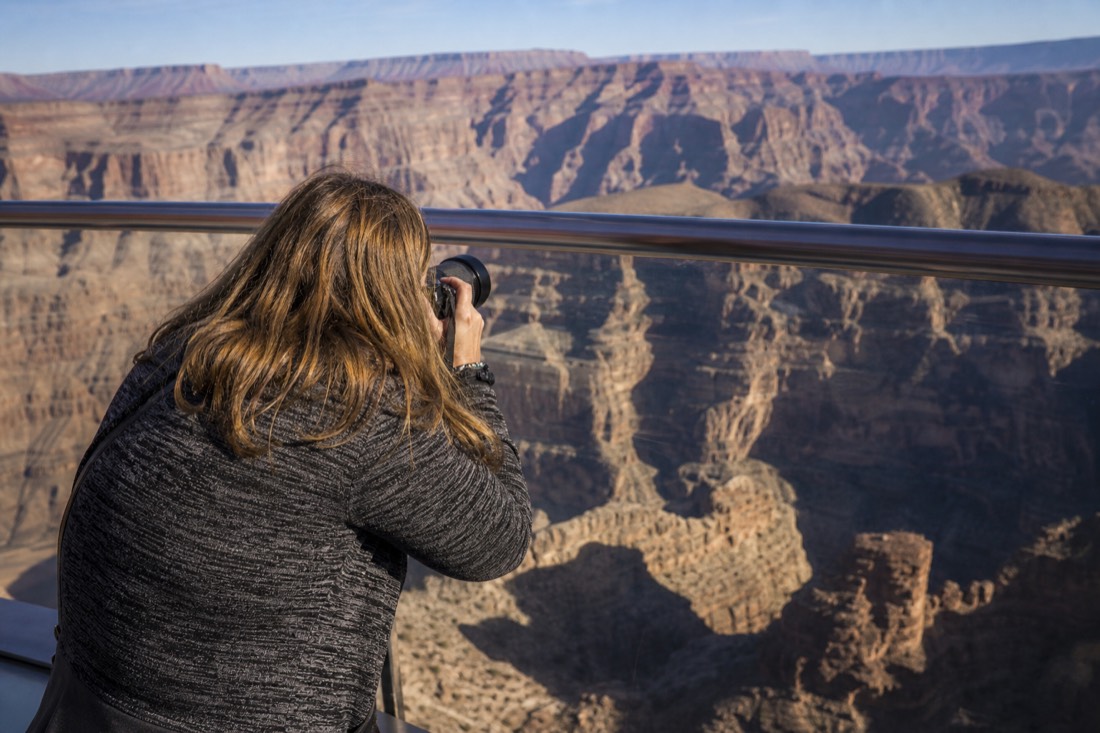
This changes the calculus for the West Rim as a photo destination. Under the old policy your Skywalk memories belonged to the staff photographers; now the shot of your own boots over the void is yours to take, though a dropped phone out there is nobody's problem but yours, so strap or pocket it between frames. The full story of the rule change, the $67 versus $99 ticket tiers, and whether the bridge earns a day of your trip is in the Skywalk camera-ban post, with the current policy wording on the Grand Canyon West FAQs.
One framing note from someone who shoots red rock daily: the Skywalk photo is a novelty shot, the glass and the drop. The landscape shots at Grand Canyon West come from the rim viewpoints around it. Treat the bridge as one frame in the day, not the whole roll.
Are the air tours worth it for photography?
For one specific picture, yes: the canyon's full depth and the river in a single frame, which no railing on the rim can give you. The Grand Canyon Airlines plane runs panoramic windows and holds a 4.8 rating across 1,554 reviews, and helicopter flights get you the same over-the-edge perspective with a landing stop on some itineraries.
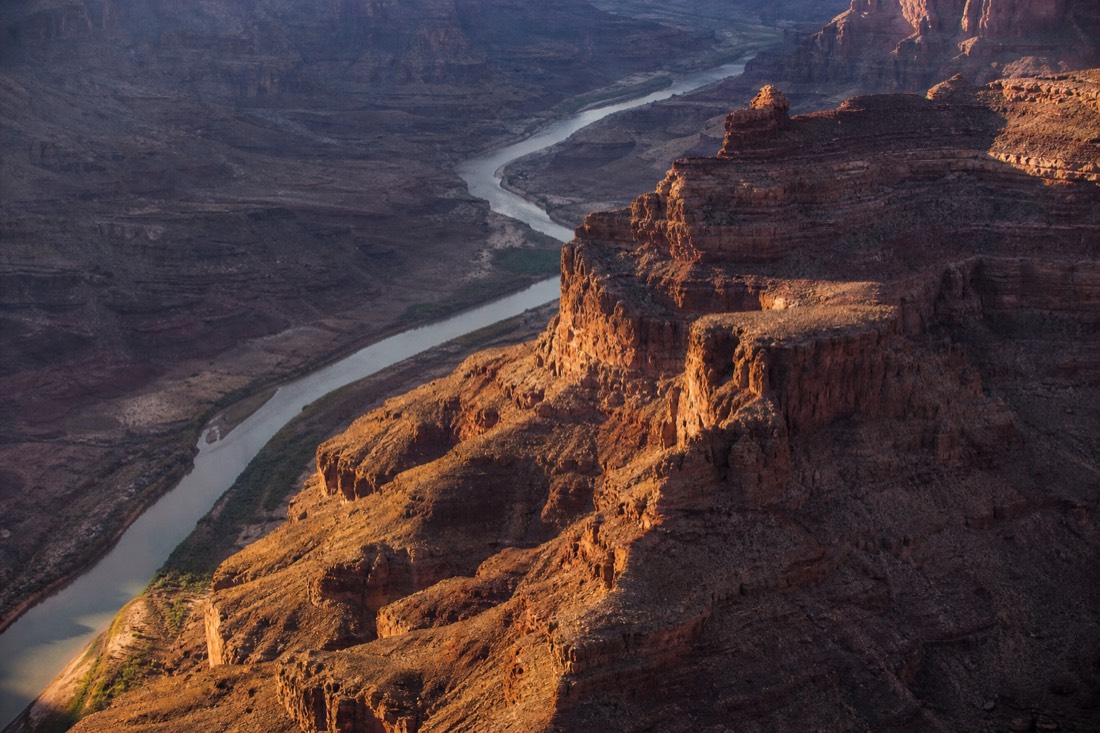
From the rim, the canyon is a wall of scenery; from the air, it becomes a map. That shift is what you are paying for. Shooting through aircraft glass takes a little care, so get the lens close to the window to kill reflections and keep your shutter speed up against vibration.
| Ground (rim viewpoints) | Air (plane or helicopter) | |
|---|---|---|
| Cost | Park entry $35 per vehicle | A tour purchase on top of your trip |
| The shot | Classic railing panoramas, golden hour color | Full depth, river bends, scale in one frame |
| Effort | Shuttle rides and short walks | Show up, board, shoot |
| Light control | You pick your hour, dawn to dark | You shoot whatever hour the flight flies |
Compare rotor against fixed wing in the helicopter vs airplane guide, browse the flight lineup on the helicopter tours page, and check live availability and prices on GetYourGuide for the landing flight.
When is the light actually good, and what should you pack?
Golden hour, the first and last hour of sun, beats midday every time at the canyon; by noon, haze flattens the buttes into a blue-grey soup. A modern phone handles the railing shots fine, and a dedicated camera earns its weight mainly for reach and low-light dawn work. Nothing you pack matters more than staying behind the railing.
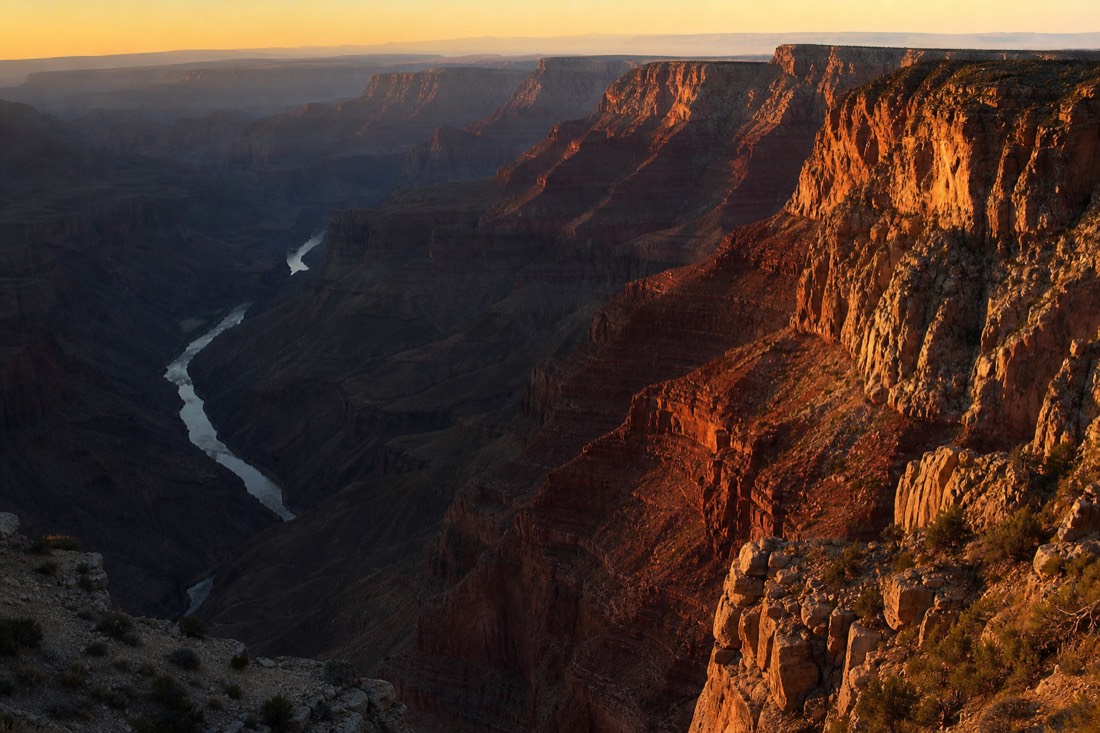
Midday is when the canyon photographs worst and gets photographed most. The low sun does two jobs at once: it cuts through the haze and it rakes shadows across the buttes so the depth reads in a flat image. Plan your shooting around the edges of the day and spend noon eating lunch.
| Phone only | Camera kit | |
|---|---|---|
| Railing panoramas | Excellent, wide lenses shine here | Excellent, more cropping room |
| Dawn and dusk color | Good, steady it on the rail | Better, especially on a small tripod |
| Distant buttes and the river | Digital zoom gets mushy | A telephoto earns its place |
| Weight on the Rim Trail | Nothing | A real consideration in summer heat |
And the line I will not soften: no photo is worth stepping past a railing. People do it every season for a slightly cleaner foreground, and the edge here is not a place that forgives. The frame from behind the rail is the same canyon. Take that one, then go scout your next spot with the South Rim viewpoints guide.
Make the day fit your trip
Check your date before arranging the rest
Initial editorial suggestion. Use the optional choices to narrow this article’s shortlist; confirm individual eligibility with the operator.
South Rim sunset safari
An off-road forest approach and South Rim viewpoints, finishing at Grandview Point at sunset.
Meet at 408 AZ-64 in Tusayan; English guide and water included. No hotel pickup. Nonresident park charges and tips extra. Bumpy vehicle; not recommended during pregnancy or for spinal or cardiovascular conditions. Minimum booking: two guests.
Compare options and tailor this choice
Why choose an alternative?
South Rim sunset safari · Tusayan · 3 hours to allow
An off-road forest approach and South Rim viewpoints, finishing at Grandview Point at sunset. Meet at 408 AZ-64 in Tusayan; English guide and water included. No hotel pickup. Nonresident park charges and tips extra. Bumpy vehicle; not recommended during pregnancy or for spinal or cardiovascular conditions. Minimum booking: two guests.
South Rim airplane flight · Tusayan · 2 hours to allow
A 40-minute sightseeing flight over the canyon, with an optional Hummer tour sold separately. Own arrival at Tusayan airport; allow check-in time beyond the flight. English audio available. At 300 lb or more, an extra seat is required. Under-twos may ride on a lap with proof of age; confirm boarding needs directly.
Grand Canyon West All Access · Grand Canyon West · 7 hours to allow
Skywalk entry and the shuttle between Eagle Point and Guano Point in one self-arrival ticket. Drive yourself to Grand Canyon West. Includes zipline subject to weather and size restrictions; no Las Vegas transfer. Meal credit is $10 on a purchase of $20 or more. National park passes do not cover this ticket. This bookable listing starts at age three; confirm arrangements for younger children directly.
Vegas sunrise and Antelope day tour · Las Vegas · 22 hours to allow
An overnight start from Las Vegas for a South Rim sunrise, Horseshoe Bend and Antelope Canyon. Published duration is 17–18 hours, but hotel pickup-to-return windows can span 22 hours. Starts the previous night; select the English-guided option. Minimum age five. Admissions to Grand Canyon, the selected Antelope Canyon and Horseshoe Bend are included; nonresident park fees extra. Not recommended for spinal or cardiovascular conditions or pregnancy. Departure needs four travelers overall.
Compare your own quotes
Enter totals for the same party and inclusions, in one currency. Include transport, entry, meals and extras in both quotes.
Viator scheduled departures
Select a date to see the published schedule. Seats, final price and booking are confirmed on Viator.
Affiliate booking link: we may earn a commission at no extra cost to you.